Bartter and Gitelman syndromes
1.Bartter syndrome#
- AR; 但type V是AD
- 1/100W( 比Gitelman syndrome少 , 可能是因為prenatal or neonatal death(尚未診 斷出來就死了)); 其實heterozygotes也有影響,但影響較小
- Mutation
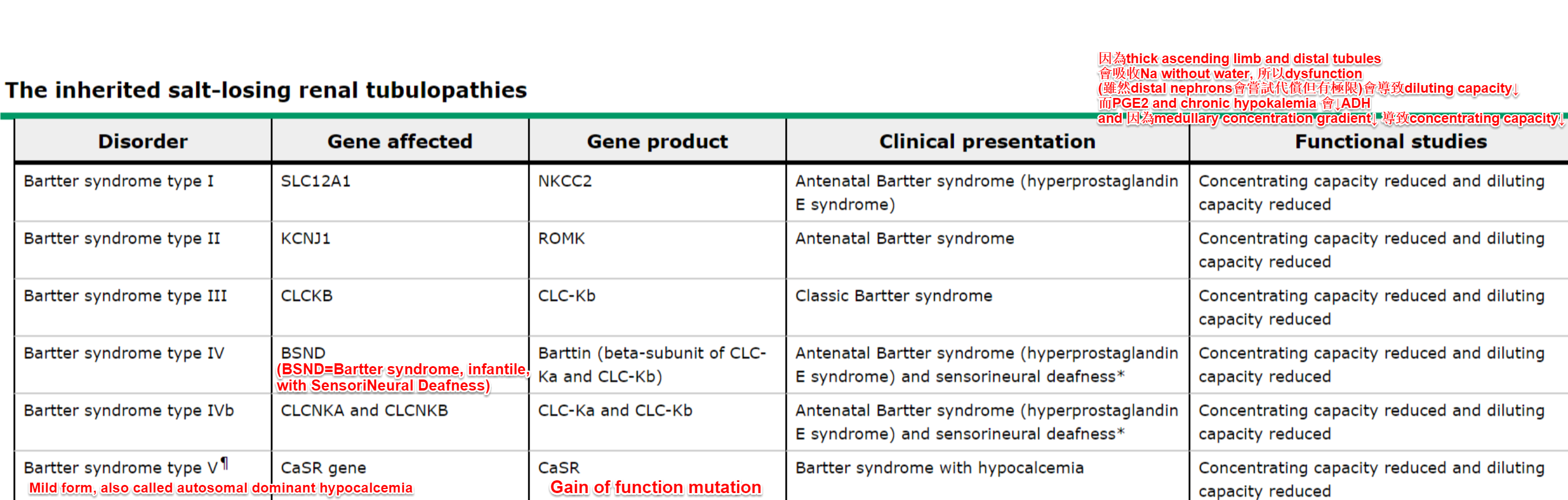
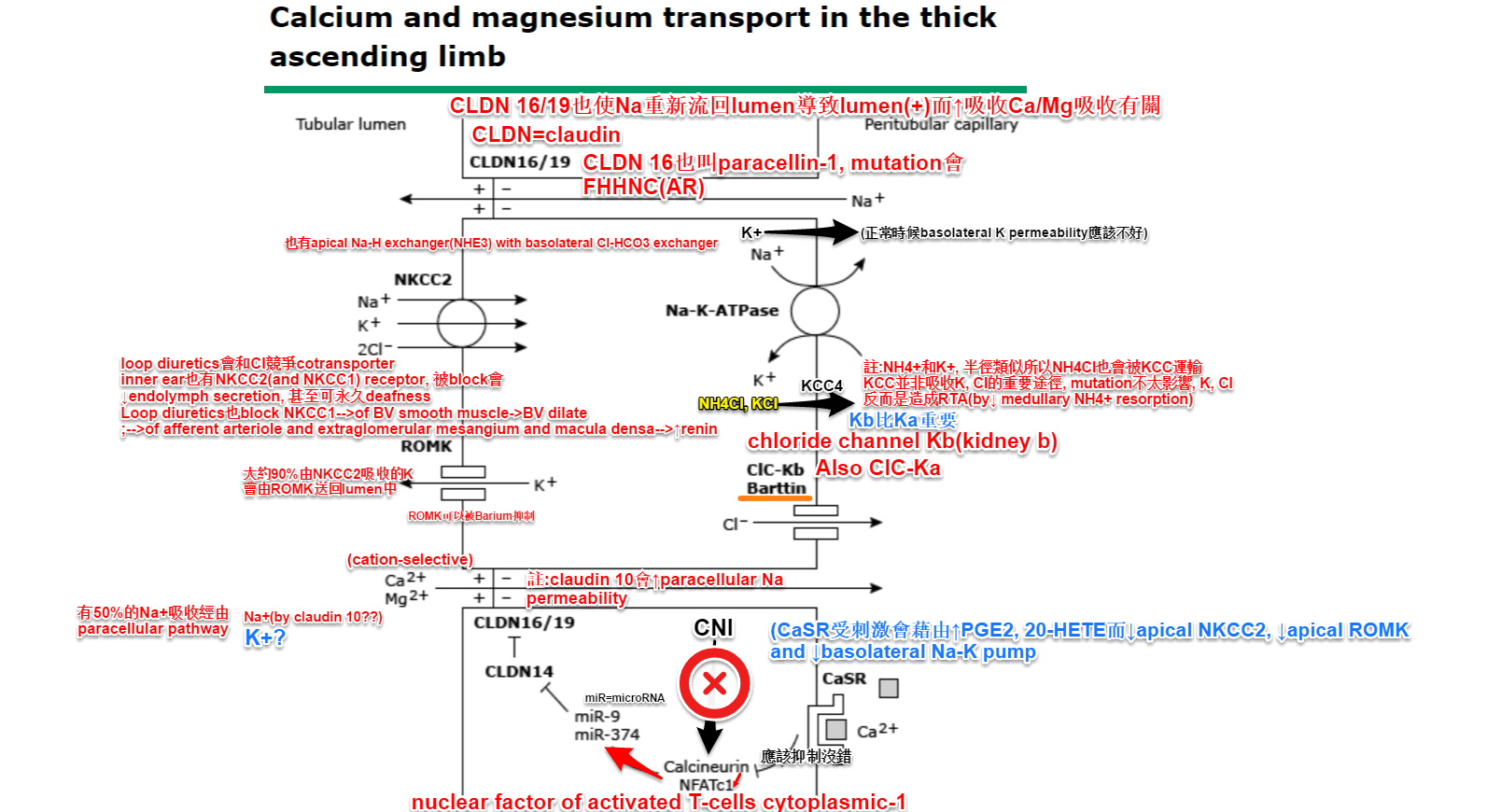
- Sensorineural deafness occurs because ClC-Ka and CLC-Kb are highly expressed in the inner ear and interact with other transport proteins (ex: NKCC1 (註:loop diuretics也可以block NKCC1-->BV dilate and potential hearing impairment)) to maintain the high K+ concentration in the endolymph that is required for normal hearing
- Type I-II(IV, IVb應該也是吧?)常polyhydramnios(所以多antenatal presentation) and severe; type II常develop neonatal hyperkalemia(因為此時BK channel尚未成熟), 不過當其他離子通道(如 BK channel)成熟後會變成hypokalemia, 不過serum K level仍比其他type高一些
- Cystic fibrosis者似乎也會ROMK dysfunction而有一點 Bartter's syndrome type II表現(見離子通道綜合圖離子通道綜合圖)
- Type III 多less severe and develop later in life, 因為還有ClC-Ka ; type III 可表現一些 Gitelman syndrome的features, 因為ClC-Kb在distal tubule也有(如下下圖, 其實ClC-Kb到處都有, tDL可能沒有(?), tAL似乎只 有ClC-Ka), Gitelman syndrome的features如hypomagnesium or hypocalciuria(所以原則上沒有nephrocalcinosis) or unresponsive to thiazide...
- ClC-Kb mutation者的表現各不相同, 有些偏Bartter有些偏 Gitelman , 可能是因為其他各種receptor代償不同?
- Type IV and IVb常severe disease with antenatal presentation and congenital deafness , 雖然 nephrocalcinosis也比較少 (因為也有 Gitelman syndrome的features?), 但是 more progressive renal function loss (why?因為more severe-->more RAAS↑?)
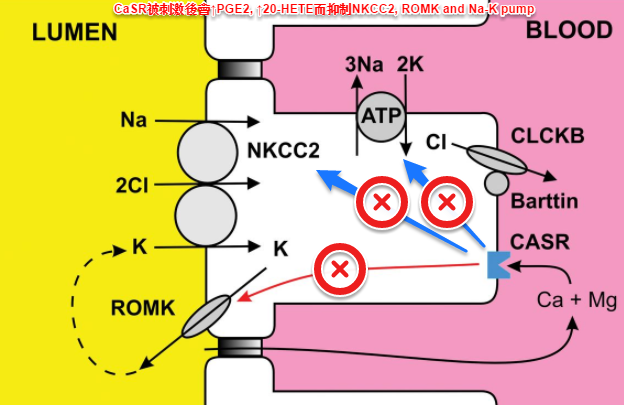
- Type V(見hypocalcemiahypocalcemia-Autosomal dominant hypocalcemia/hypoparathyroidism(ADH)=Bartter syndrome type V(iPTH↓)(= mirror image of FHH )), CaSR gain of function mutation, 導致↓paracellular reabsorption, ↓NKCC2, ↓ROMK, ↓basolateral Na-K pump(見下圖 and 下下圖), 多less severe and develop later in life
- 會hypocalcemia其他type較不會 (或許主要原因是iPTH↓ due to CaSR(in parathyroid) activation)
- Mechanism
- S/S
- Since childhood, growth↓
- 如同吃Lasix
- K↓(increased distal Na delivery+secondary RAAS↑)
- hypercalciuria and nephrocalcinosis(可ESRD)
- 但Type III, IV因為有一些Gitelman's feature所以不太有 nephrocalcinosis
- 但只有type V會hypocalcemia(因為還影響PTH)
- P↓(occasional, maybe due to secondary hyperparathyroidism)
- Mg (大多 normal(vs. Gitelman's syndrome) or 但也 可mild↓ )
- 1/3 Pts hypomagnesium
- 應該Type III, IV(上有Gitelman's syndrome features) and V比 較會↓??
- Metabolic alkalosis
- Polyuria(機制包含 PGE2↑↑ and chronic hypokalemia(見hypokalemiaNDI) and decreased concentration ability(因為loss of medullary concentration gradient))
- Secondary RAAS↑ due to hypovolemia(usually mild but sometimes severe)+PGE2↑↑
- 因為 impaired NaCl進入macula densa-->PGE2↑↑(in type I,II, IV, IVb) (type III呢?因為還有ClC Ka所以影響不大?)(type V比 較mild??)-->1.Renin↑, 2.Na reabsorption of Henles loop↓, 3.拮抗collecting duct的ADH作用(ADH resistance, 造成多尿; 不是中樞ADH分泌↓)
- Gitelman syndrome原則上PGE2不太會上升, NSAID理論 上幫助不大, but clinical and genetic spectrum of renal tubule salt-wasting disorders is broad(也就是說可能有 overlap features)--->所以NSAID也可以試試看
- Lower BP (比一般人還低) due to hypovolemia and renal release of PGE2
- 因為 impaired NaCl進入macula densa-->PGE2↑↑(in type I,II, IV, IVb) (type III呢?因為還有ClC Ka所以影響不大?)(type V比 較mild??)-->1.Renin↑, 2.Na reabsorption of Henles loop↓, 3.拮抗collecting duct的ADH作用(ADH resistance, 造成多尿; 不是中樞ADH分泌↓)
- D/D
- Transient antenatal Bartter syndrome
- X-linked , melanoma-associated antigen D2 ( MAGED2 ) gene mutation, 導致 NKCC2 and NCC of distal tubules dysfunction; 之後會緩解原因未知...
- Aminoglycosides/Colistin/CNI(only CsA?)
- Due to 1.direct drug induced tubular injury; 2. 可激活CaSR 導致type V Bartter syndrome
- Transient antenatal Bartter syndrome
1-1.Bartter vs. Gitelman 鑑別總表(高頻考點)#
| 鑑別項目 | Bartter syndrome | Gitelman syndrome |
|---|---|---|
| 致病基因 | I(NKCC2), II(ROMK), III(ClC-Kb), IV(Barttin), V(CaSR gain) | SLC12A3(NCC) |
| 作用小管段 | TAL(同 loop diuretics) | DCT(同 thiazide) |
| 發病年齡 | 產前/嬰兒期(羊水過多、早產、生長遲緩;III/V 型較晚) | 晚期兒童或成年(疲倦、肌無力、手足搐搦、關節痛) |
| 尿鈣(UCa/Cr) | 高尿鈣(>0.2 mg/mg),常合併腎鈣化 | 低尿鈣(<0.15 mg/mg),無腎鈣化 |
| 血鎂 | 正常或輕微偏低(~30%) | 顯著低血鎂(軟骨鈣化/假性痛風) |
| 尿濃縮能力 | 受損(髓質滲透壓梯度流失) | 正常或近正常(僅稀釋能力受損) |
| 尿 PGE2 / NSAID | PGE2 顯著↑;NSAID 治療有效 | PGE2 多正常;NSAID 效果不顯著 |
2. Gitelman syndrome(also called tubular hypomagnesemia-hypokalemia with hypocalciuria)#
- AR ; 其實heterozygotes也有影響,但影響較小
- 1/4W(所以是Bartter's syndrome的25倍?)
- Mutation
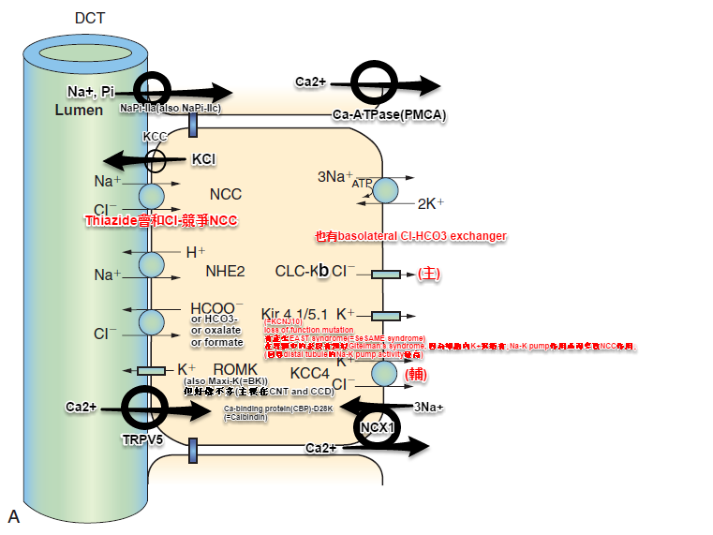
- SLC12A3 mutation which encodes NCC
- Concentrating capacity normal/near normal(因為concentrating能力 主要看thick ascending limb(interstitial medullary concentration gradient) and maximal ADH response)(不過chronic hypokalemia會 NDI)
- Diluting capacity reduced(因為NCC↓)
- SLC12A3 mutation which encodes NCC
- S/S
- 多late childhood(>6 y/o) or adults才發現, 少growth↓(因為沒有 hypercalciuria?)
- 如同吃thiazide
- Salt craving(universal feature)
- K↓↓(increased distal Na delivery+secondary RAAS↑+hypomagnesium)
- Polyuria(due to chronic hypokalemia->NDI)
- Normocalcemia with hypocalciuria
- 雖然hypocalciuria, 但 不影響Ca, P, iPTH, vitamin D level !!! , 原因??可能堆積到bone?因為如同使用thiazide, Gitelman's syndrome者也被發現bone density較高
- Mg↓↓↓ (因為TRPM6 downregulation?)
- 容易cramping due to hypomagnesium and hypokalemia
- 因為hypomagnesium所以可以 chondrocalcinosis (=pseudogout)(risk factors:低鎂磷, 高PTH, 高鈣, hemochromatosis)
- 機制未知, 因為Mg會抑制Ca沉積?
- Metabolic alkalosis
- Secondary RAAS↑ due to hypovolemia(usually mild but sometimes severe)
- Lower BP(比一般人還低) due to hypovolemia
- 有些人中老年會HTN, 原因未知, 或許和長期RAAS↑有關?(但是為 什麼Bartter syndrome不會?因為Bartter's syndrome還有 PGE2↑↑的緣故?)
- D/D
- EAST(=SeSAME) syndrome
- Rare congenital disease( AR )
- KCNJ10 gene loss of function mutation, which encodes K+ channel( Kir 4.1/5.1 ) that is expressed in the basolateral membrane of the distal nephron and brain
- Epilepsy, ataxia, sensorineural deafness , tubulopathy(salt wasting, hypokalemia, hypomagnesium, metabolic alkalosis, normal BP, hypocalciuria)
- 見-離子綜合通道圖
- Rare congenital disease( AR )
- EAST(=SeSAME) syndrome
3. Diagnosis#
- Hypokalemia, metabolic alkalosis with normal/low BP
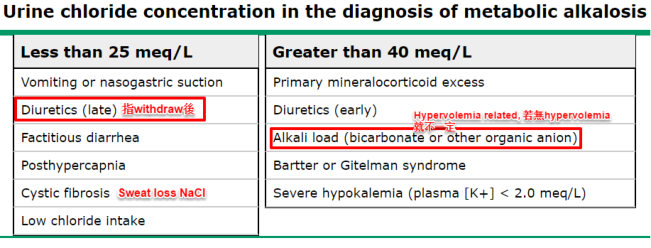
- Exclude vomiting(UCl low) or laxative abuse/chloride diarrhea(UCl low) or diuretics(UCl high) use; Bartter or Gitelman syndrome的UCl=intake量 (所以基本上也是>40mM)
- 小心厭食症催吐+使用利尿劑
- Cisplatin(見CKD/AKI/ACKD evaluation-Cisplatin) and sjogren's syndrome 可mimic Bartter and Gitelman syndrome
- Exclude vomiting(UCl low) or laxative abuse/chloride diarrhea(UCl low) or diuretics(UCl high) use; Bartter or Gitelman syndrome的UCl=intake量 (所以基本上也是>40mM)
- UCa to D/D Bartter or Gitelman syndrome (注意質量比與莫耳比單位換算陷阱:鈣40 mg/mmol,肌酸酐113 mg/mmol,莫耳比 = 質量比 x 2.825)
- 單次尿質量比(Mass ratio, mg/mg creatinine):
- Gitelman syndrome:低尿鈣,UCa/Cr <0.15 mg/mg (<150 mg/g Cr;KDIGO 2017定義成人空腹隨機尿 <0.20 mg/mg)
- Bartter syndrome:高尿鈣,UCa/Cr >0.20 mg/mg (常 >0.25-0.30 mg/mg,即 >200-300 mg/g Cr),常合併腎鈣化
- 莫耳比(Molar ratio, mmol/mmol creatinine):
- Gitelman syndrome:UCa/Cr <0.4-0.5 mmol/mmol (極度低尿鈣時可 <0.15 mmol/mmol,約相當於 <53 mg/g Cr)
- Bartter syndrome:UCa/Cr >0.5-0.6 mmol/mmol (若 >0.2 mmol/mmol 換算質量比僅約 71 mg/g Cr,切勿將莫耳比 0.2 與質量比 0.2 混淆)
- 註:見-hypokalemiahypokalemia-4.Approach
- 註:請見Summary of electrolyte imbalance(also normal Fe? and GI secretion concentration)
- 單次尿質量比(Mass ratio, mg/mg creatinine):
- Genetic test
- Increasingly available (次世代定序 NGS 為重疊表型確立診斷之關鍵工具)
- KDIGO 2017 Gitelman 共識指引(Kidney Int 2017; PMID 28003083):
- 定義診斷三聯徵:低血鉀代謝性鹼中毒 + 顯著低血鎂 + 低尿鈣(成人發病,AR,SLC12A3 突變致遠曲小管 NCC 功能喪失)〔PMID 28003083〕
- 治療基石:寬鬆自由攝取鹽分與水分(Liberal salt and fluid intake) + 口服有機鎂鹽補充(Magnesium aspartate, citrate, lactate, gluconate,生體可用率優於無機 MgO 且較不易腹瀉) + 補鉀〔PMID 28003083〕
- NSAIDs 使用原則:Gitelman 症候群之 PGE2 多為正常,指引不建議常規使用 NSAIDs(無顯著益處且具慢性腎毒性風險,與 Bartter 症候群截然不同);難治性嚴重低血鉀可考慮保鉀型利尿劑(Amiloride, Eplerenone)
4.Tx( 簡單來講就是RAAS blockage+補K, Mg (補Na會↑kaliuresis要小心), RAAS blockage 之後可改善metabolic alkalosis, hypokalemia, partially improve hypomagnesium; 就機制 而言RAAS blockage僅Bartter's syndrome比較有效但Gitelman's syndrome仍可以試試看)#
- For Bartter syndrome
- If antenatal presentation with polyhydramnios(理論上是type I, II, IV, IVb) 應使用NSAID until GA 31W, 31W後較不能使用NSAID以免premature closure of ductus arteriosus(見-hyponatremiahyponatremia-EP4)(若仍需NSAID應定期追 蹤cardiac echo來看是否TR), 31W後若severe polyhydramnios也可考慮 intermittent drainage of the amniotic fluid
- 基本上會使用 NSAID ( Celecoxib or indomethacin )[小心GI and renal toxicity]
- 可再加上 Aldactone /Eplerenone/amiloride(typical dosage is high with 300mg/d, 150mg/d and 40mg/d)(Eplerenone 效力約為 spironolactone 的 50-60%, 故劑量需 1.5-2 倍, 約 100-200mg/d;優點是高選擇性、無男性女乳症)(見-Primary hyperaldosteronism)(另外,理論上 MRA應該比amiloride好...)
- 可解決hypokalemia, metabolic alkalosis and partially correct hypomagnesium(因為當使用K-sparing diuretics時, Na無法由 lumen進入cells, 產生electrical gradients-->促進Ca, Mg再吸收 (見hypomagnesiumhypomagnesium))
- 可再加上 Aldactone /Eplerenone/amiloride(typical dosage is high with 300mg/d, 150mg/d and 40mg/d)(Eplerenone 效力約為 spironolactone 的 50-60%, 故劑量需 1.5-2 倍, 約 100-200mg/d;優點是高選擇性、無男性女乳症)(見-Primary hyperaldosteronism)(另外,理論上 MRA應該比amiloride好...)
- 也有人用 ACEI/ARB(小心hypotension)
- For Gitelman syndrome
- 首選口服有機鎂鹽 + 補鉀;鼓勵高鹽飲食(Liberal salt and fluid intake,因腎臟鹽分流失,切勿盲目限鹽);指引不建議常規使用 NSAID(PGE2 多正常且具腎毒性);若頑固低鉀可審慎併用 Amiloride/Eplerenone
- 【Leon 原文警語保留與新舊觀點並陳(未決爭議,兩者並列缺一不可,由讀者自行判斷)】:
- Leon 原文警語:Discouraging excessive dietary Na intake(原因為大量補鈉會增加遠端腎元之 distal Na delivery,在皮質集尿管刺激 ENaC-ROMK 偶聯而增加尿鉀流失/補鈉會↑kaliuresis,反彈加劇低血鉀與代謝性鹼中毒)。
- 新舊觀點並陳:KDIGO 2017 指引立足於對抗鹽分流失所致之慢性容積收縮與低血壓,故主張寬鬆攝取鹽分(Liberal salt intake);而傳統生理學原文警語則著眼於防範高鈉傳遞惡化排鉀。兩者在機轉上皆屬真實存在之考量,臨床應依病患容積狀態與低血鉀頑固程度個別化評估,此處並列兩者供應試後輩批判性判讀。
- 大多仍需要補K and Mg after drugs
- 因為1.hypomagnesium-->↑urine K loss by disinhibition ROMK 2.RAAS blockage後primary defect仍在3.補起來serum level↑-->urine loss↑
- ESRD者(due to dehydration, NSAID, RAAS↑, chronic hypokalemia(會IFTA), nephrocalcinosis(Bartter's syndrome only))可renal transplantation