Metabolic alkalosis
0.代償與二分架構(必背⭐)#
- 呼吸代償公式: 預期 PaCO2(mmHg) = 0.7 × [HCO3⁻] + 20 ± 5(另一常用式: PaCO2↑0.6 per HCO3↑1)
- 實測 PaCO2 高於預期上限 → 合併呼吸酸中毒(常見於 COPD 患者過度代償); 低於下限 → 合併呼吸鹼中毒
- Saline-responsive vs. resistant(用 UCl 判讀, 尿 Cl >20-25 即「resistant/持續刺激」):
| Saline-responsive(UCl<10-20) | Saline-resistant(UCl>20-25) | |
|---|---|---|
| 機轉 | Cl 耗損+容量收縮→RAAS↑ | 持續 mineralocorticoid 作用或腎性 HCO3 排出障礙 |
| 常見原因 | 嘔吐/NG 抽吸、利尿劑(停用後)、contraction alkalosis、posthypercapnic、chloride diarrhea、milk-alkali(部分) | 原發性皮質醛酮症、Cushing、Liddle、Bartter/Gitelman症候群、利尿劑(使用中)、renin-secreting tumor、嚴重低鉀、外源 mineralocorticoid(licorice/fludrocortisone) |
| 治療 | NaCl 輸液(±KCl——低鉀本身維持鹼中毒) | 治療原發病: spironolactone/amiloride/enzyme blockade; 勿盲目補鹽 |
| 血壓 | 通常正常/低 | 常高血壓(除 Bartter/Gitelman/嘔吐偽裝者) |
- 註: 嚴重低血鉀(<2)時即使 saline-responsive 也可能對鹽水反應差——先補 K
Data from Uptodate:
Causes of metabolic alkalosisThe milk-alkali syndromeClinical manifestations and evaluation of metabolic alkalosisPathogenesis of metabolic alkalosisTreatment of metabolic alkalosis
1.S/S#
- Related to underlying and associated electrolyte imbalance
- 本身造成的S/S
- ↑Alb and Ca binding -->↓iCa-->paresthesias, spasm, seizure, coma, arrhythmia...(=hypocalcemia的症狀)
- 註:即使severe metabolic alkalosis, PCO2代償極限為55-60 mmHg(受限於低血氧對周邊化學感受器之通氣刺激;若實測 PaCO2 > 60 mmHg 必合併次發性呼吸性酸中毒,如 COPD 或通氣衰竭)
- 註:即使severe metabolic acidosis, PCO2不太會代償<10-15mmHg
- 註:即使severe respiratory alkalosis, HCO3-不太會代償<15mM
- 註:即使severe respiratory acidosis, HCO3-不太會代償>45mM
2.Bicarbonate physiology#
- 見HypokalemiaHypokalemia-2.Regulation of K
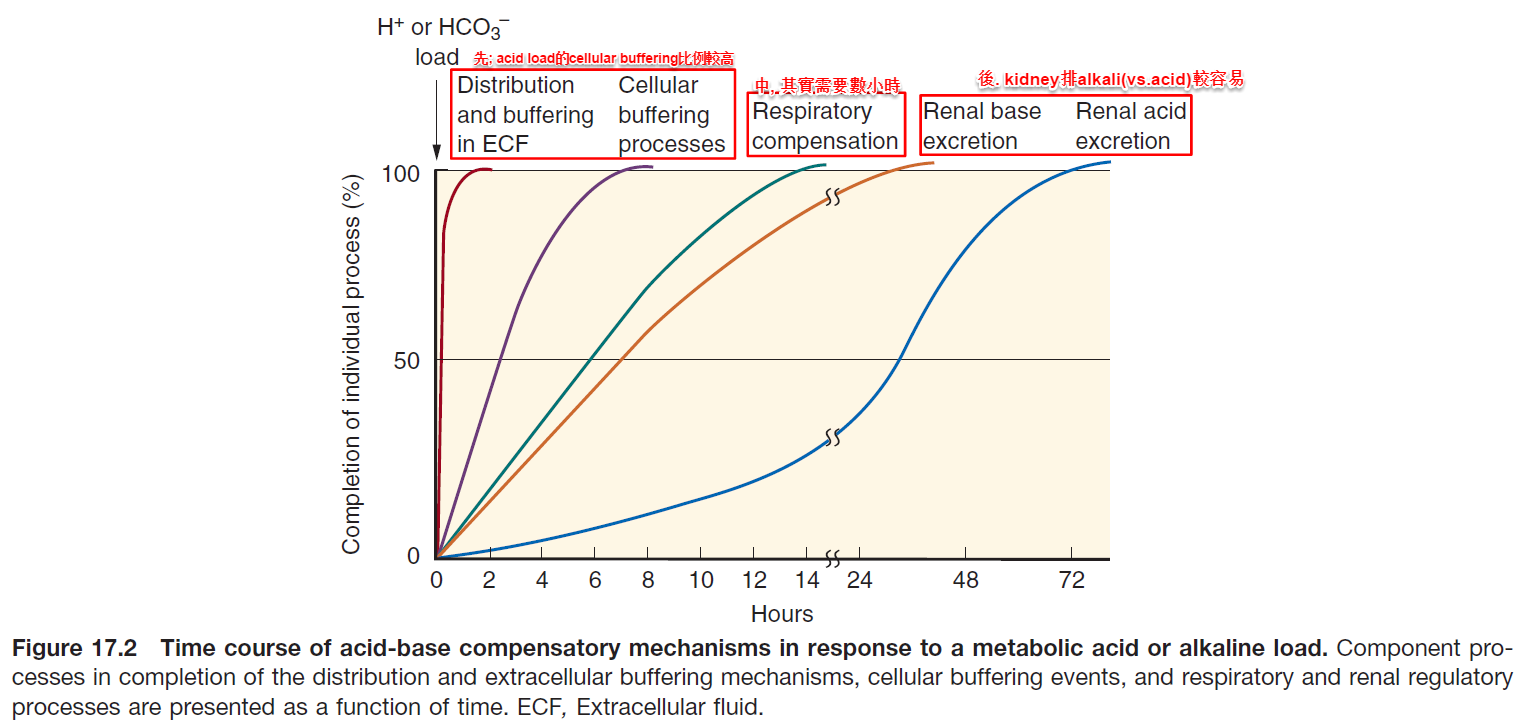
- 註:when alkali loading, alkali 2/3會先分布在ECF, 1/3會 buffered by cells(包含Na-H exchanger, Cl-HCO3- exchanger, alkalosis而↑PFK而↑lactate產生), 之後呼吸代償, 之後腎臟慢慢把alkali排掉(p. tubules維持吸收定量HCO3(所以吸收比例↓, 所以到distal nephron HCO3-變多), ↓distal nephrons排H+(by↓NH3 and other titratable acids excretion), ↑type B intercalated cells排HCO3-); acid loading時身體的代償相反, 不過buffered by cells的比例較高
3.Etiology#
- Initial events(vs. non-AG metabolic acidosis)
- Intracellular shifting, non-renal loss/gain, renal, drugs, contraction, post-compensation(functional)
- Maintenance factors
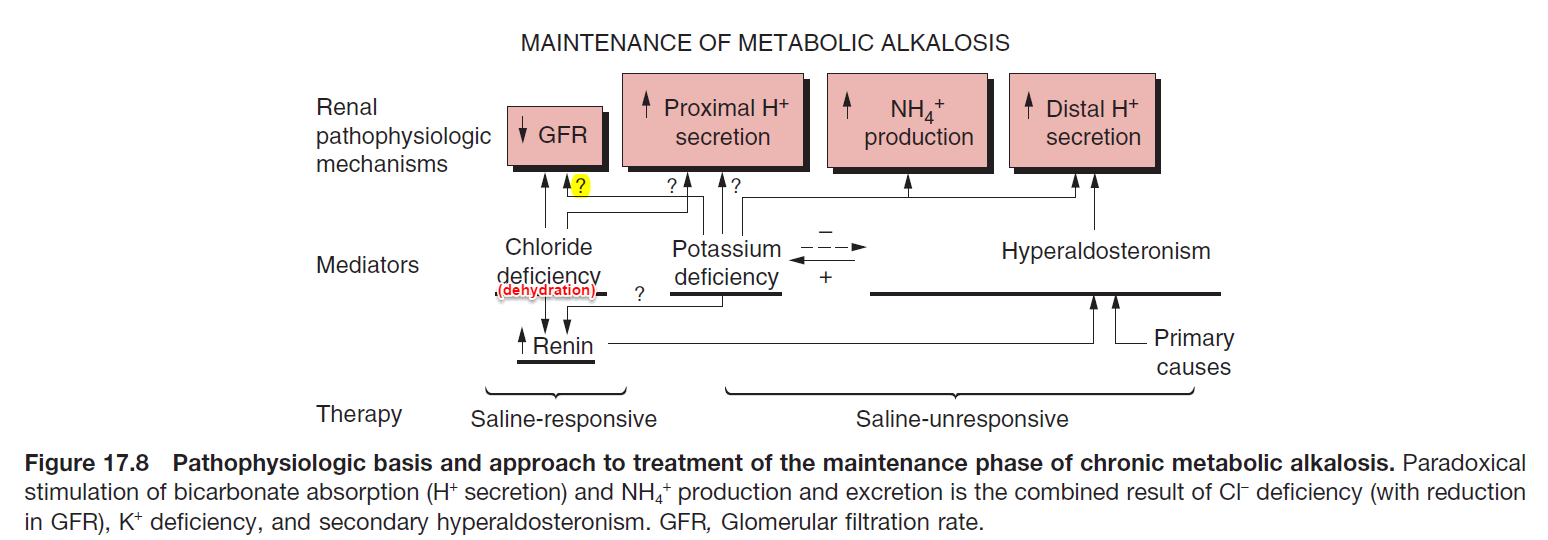
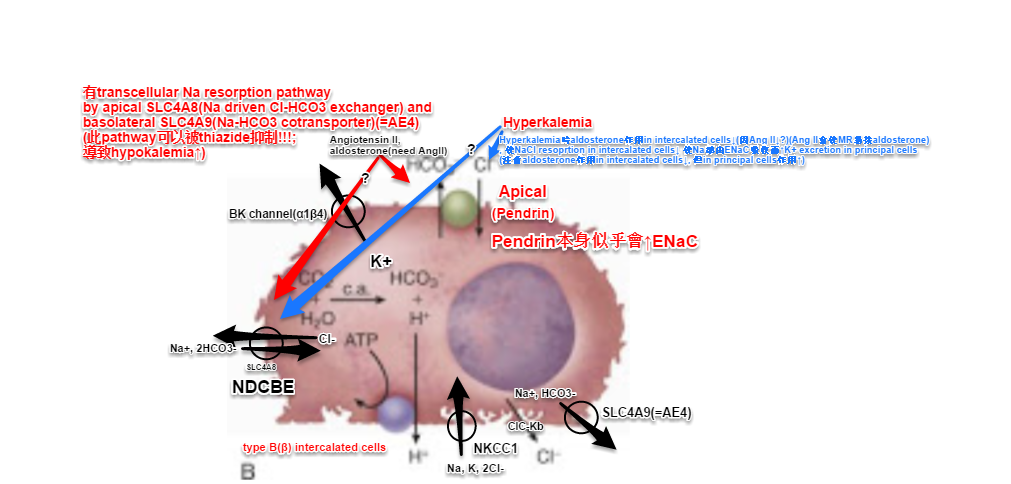
- GFR↓, (effective arterial volume↓→RAAS↑), other mineralocorticoid excess syndromes↑, increased Na delivery(↓p tubules再吸收NaHCO3(salt diuresis) but↑collecting ducts排H+), hypokalemia)(上述5者使kidney維持metabolic alkalosis), chloride depletion(=dehydration?; Cl↓本身似乎↓distal tubule HCO3 secretion(animal models), 此外也導致type B intercalated cell的Pendrin無法做Cl-HCO3 exchange)
- 也就是說Maintenance factors就是在問Why is the excess HCO3 not being excreted in the urine?
- 由(前->後; GFR->proximal tubules製造NH3↑(hypokalemia)->RAAS↑->hypochloremia)
- Hypokalemia使intracellular acidosis而↑p. tubules NHE3, ↑p. tubules製造NH3, 也↑type A intercalated cell的apical H+-K+ ATPase; 也因為↑Ang II而↑p. tubules NHE3/Na/water resorption; 以上綜合維持metabolic alkalosis
- UCl<20mM
- NG decompression, vomiting
- 導致Liver, pancreas, GI secrete出來的HCO3-不和H+ react而直接被再吸收(=loss H+)
- 某些Antacid(MgO, Al(OH)3, CaCO3)不會metabolic alkalosis(因為雖然會局部↓H+, 但Mg, Al, Ca等陽離子會再和HCO3- bind而loss in stools)
- 但若同時給Resonium因為會使Na-cation exchange, 導致HCO3-被和Na再吸收-->metabolic alkalosis
- Chloride diarrhea(congenital(AR, loss of function mutation of ileal/colon Cl-HCO3 exchanger; SLC26A3; 可用PPI治療) or villous adenomas(可能主要來自於hypokalemia and volume depletion, 因為stool仍呈鹼性...) or laxative abuse(小心這些人也可能偷用diuretics and 催吐(為了減肥or厭食症)))
- Also hypokalemia
- 注意:一般的diarrhea是non-AG metabolic acidosis, 而因為stool中的chloride少, 所以排出很多NH4Cl(==>high UCl); laxative abuse可以表現成一般的diarrhea or chloride diarrhea
- Cystic fibrosis(sweat loss NaCl, K+)
- 不是說也會ROMK dysfunction而類似Bartter's syndrome type II?
- Sweating(可normal pH or metabolic alkalosis)
- Previous loop/thiazide diuretic use(利尿劑使用中為高 UCl >20-25,但停藥數天後因續發性容積收縮活化 RAAS,UCl 轉為 <10-20 mEq/L,轉為 Saline-responsive,補鹽水可校正)
- Posthypercapnic alkalosis
- 小心OsA者可能半夜hypercapnia而代償性HCO3-↑, 到了早上抽gas時已無hypercapnia但殘存posthypercapnic alkalosis!!
- Dehydration(雖然secondary RAAS↑ 不過UCl↓, 是因為p. tubules再吸收NaCl也↑?)(renin-secreting tumor 因續發性高醛固酮+高血壓+容積擴張, 持續排鉀排氫, UCl 為高(>20-25 mEq/L), 屬 saline-resistant)
- Due to ↓GFR and secondary RAAS↑(↑HCO3 resorption by p. tubules(因為Ang II↑apical NHE3 and H+ATPase and ↑basolateral NBC1) and ↑H+ secretion by collecting ducts)
- 機轉可見-hypokalemiahypokalemia-2.Regulation of K
- Due to ↓GFR and secondary RAAS↑(↑HCO3 resorption by p. tubules(因為Ang II↑apical NHE3 and H+ATPase and ↑basolateral NBC1) and ↑H+ secretion by collecting ducts)
- Contraction alkalosis
- Any etiology cause loss high NaCl and low HCO3- concentration fluid, and dehydration...
- Milk-alkali syndrome(急性嘔吐與脫水期 UCl <20;若合併明顯高血鈣利尿與重碳酸尿, UCl 可波動上升)
- Mechanism
- Intake of Ca(->hypercalcemia->本身促進renal H+ secretion(why?為了避免Ca-P沉積?); 註:但hypercalcemia本身也可以type I RTA(due to Ca-P depositions??)...) + antacid(Soda) +/- vomiting ==> metabolic alkalosis(本身促Ca, Mg, P reuptake by distal tubules, 見hypercalcemiahypercalcemia-Physiology of Ca regulation; 此外metabolic alkalosis也會激活CaSR-->diuresis-->dehydration; 註:感覺很奇怪, 有促進CaSR排鈣但又促進distal tubules吸收鈣...) + NDI(hypercalcemia) + dehydration(->RAAS↑ and ↑proximal tubules reuptake NaHCO3) + AKI(->↓GFR->retention of HCO3)
- 只↑Intake of Ca不太會hypercalcemia, 因為身體會↓calcitriol, 除非Ca intake>10-15g/d
- 但有些人的Calcitriol不太會被suppressed, 原因未知(但吃Ca片可造成mild hypophosphatemia(若Ca來源是milk則不會, 因為milk很多P)-->increased calcitriol-->可能是造成milk alkali syndrome的原因之一)
- 小心一些Ca來源:betel nuts, nicotine-substitute chewing gum
- 只↑Intake of Ca不太會hypercalcemia, 因為身體會↓calcitriol, 除非Ca intake>10-15g/d
- Intake of Ca(->hypercalcemia->本身促進renal H+ secretion(why?為了避免Ca-P沉積?); 註:但hypercalcemia本身也可以type I RTA(due to Ca-P depositions??)...) + antacid(Soda) +/- vomiting ==> metabolic alkalosis(本身促Ca, Mg, P reuptake by distal tubules, 見hypercalcemiahypercalcemia-Physiology of Ca regulation; 此外metabolic alkalosis也會激活CaSR-->diuresis-->dehydration; 註:感覺很奇怪, 有促進CaSR排鈣但又促進distal tubules吸收鈣...) + NDI(hypercalcemia) + dehydration(->RAAS↑ and ↑proximal tubules reuptake NaHCO3) + AKI(->↓GFR->retention of HCO3)
- Risk factors:elderly, pregnancy(elevated calcitriol level), eGFR↓(含用ACEI/ARB/NSAID...), dehydration
- 可acute~chronic
- Tx
- DC Ca, DC vitamin D, DC antacids
- NaCl hydration +/- Lasix
- 通常回復蠻快的, even transient hypocalcemia(due to longterm suppression of PTH而暫時代償不好)
- Mechanism
- After Tx of L-lactic acidosis/ketoacidosis
- 因為lactate/ketone代謝回HCO3- + 外加Rolikan + 腎臟之前努力排酸 +/- volume contraction/hypokalemia
- Massive nonreabsorbable anions(penicillin...)(典型 UCl <20;因 Na 多與該陰離子共同排出而非與 Cl 共排, 且管腔負電位↑促進排鉀排氫)
- 因為distal nephron lumen中負電↑, 所以排K+, 排H+↑
- Alkali loading(含HCO3, citrate(RCA, TPE, transfusion...), lactate, acetate...) without volume overload
- 單純的Alkali loading若沒有maintenance factors不太會metabolic alkalosis
- Non-severe hypokalemia
- Vs.下述severe hypokalemia
- NG decompression, vomiting
- UCl>20(25)mM (常>40mM)
- Bartter/Gitelman's syndrome[(UCl 多>40mM), 因為equal to intake]
- Loop/thiazide diuretics use
- 抑制NKCC2, NCC, 導致distal site↑Na resorption(=↑ENaC?), 搭配bicarbonaturia, Cl- distal delivery↑, secondary RAAS↑, 導致distal H+ and K+ secretion↑
- Also [volume depletion(->secondary RAAS+contraction alkalosis) and hypokalemia]-->increase proximal tubules NaHCO3 resorption
- UCl會高高(用diuretics時)低低(藥效過時)(vs. Bartter's syndrome, Gitelman's syndrome會persistent UCl高)
- Hyperaldosteronism/mineralocorticoid excess-like status(見hypokalemia(also RAAS表)-RAAS↑ (UCl high) [RAAS系列, diuretics系列, vomiting]) (including steroid use)
- Renin↓+Ang II↓=>proximal tubules NaHCO3 resorption↓(though hypokalemia本身-->↑proximal tubules NaHCO3 resorption↑(因為intracellular acidosis?)), overall NaHCO3, NaCl resorption↓=>Na delivery to distal tubules↑
- Na delivery to distal tubules↑ + hyperaldosteronism ==>metabolic alkalosis + hypokalemia
- Though Cl delivery to distal tubules↑-->↑type B intercalated cells Cl-HCO3 exchange 但也↑電位差使K+, H+ secreted by collecting ducts↑(因為Cl...等anions吸收比Na慢)
- Alkali loading(含HCO3, citrate(RCA, TPE, transfusion...), lactate, acetate...) with volume overload
- UCl>20的原因還是volume overload導致proximal tubules↓吸收NaCl, NaHCO3(→ 見上文 Alkali loading without volume overload)
- 所以若沒有volume overload UCl可<20
- UCl>20的原因還是volume overload導致proximal tubules↓吸收NaCl, NaHCO3(→ 見上文 Alkali loading without volume overload)
- Severe hypokalemia(K<2)(UCl↑ due to impaired distal tubular Cl reabsorption(機制未知)->導致電位差更大-->loss K+, H+↑)
- 註:Non-severe hypokalemia可UCl<20
- (見HypokalemiaHypokalemia-1.S/S-Renal abnormalities)
- 小心from hypomagnesemia(除了會↑hypokalemia之外, 本身也會↑renin)
- Hypomagnesemia
- 除了因為會hypokalemia之外, 本身也會↑renin
- Pendred syndrome
- AR; SLC26A4 (solute carrier family 26, member 4 gene), located on chromosome 7 (7q31) mutation
- 註:SLC26AX好像都和Cl- transport or exchanger有關
- 下圖的Type B intercalated cell的apical HCO3-Cl- exchanger(=Pendrin) loss of function mutation, 平常沒有electrolyte nor metabolic alkalosis(因為NCC...會代償), 但若使用thiazide, 會導致severe metabolic alkalosis and hypovolemia
- 此外因為Pendrin也和thyroid glands uptake iodide and inner ear electrolyte balance有關, 所以也會primary hypothyroidism with goiter and sensorineural deafness
- AR; SLC26A4 (solute carrier family 26, member 4 gene), located on chromosome 7 (7q31) mutation
4.Approaching#
- 大多by history即可知原因
- 若沒有明顯原因
- Check UCl(見上述), UpH(意義?, 主要是配合UNa看, 因為if UpH>7表bicarbonaturia超過proximal tubules吸收上限, 此時雖然就算脫水RAAS↑, UNa仍不會<25), UNa(UNa其實不太有意義, 因為雖然volume depletion-->RAAS↑-->↓UNa, 但(Na or K)HCO3 lost in urine(UpH>7)-->可使UNa↑如前述), Alb, SCa, K
- If high UCl-->Also check ACTH/Cortisol, renin/aldosterone
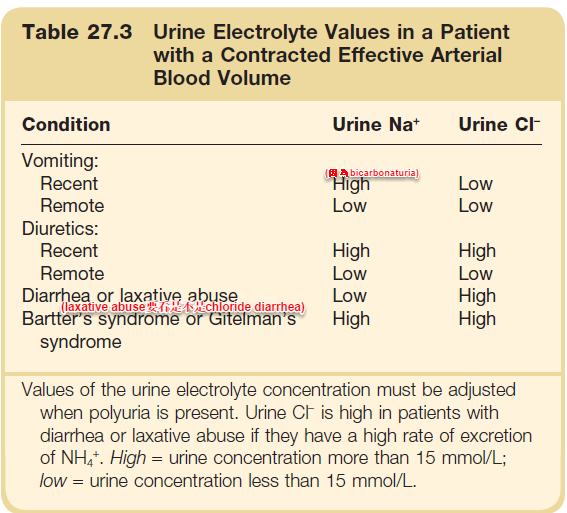
- Check UCl(見上述), UpH(意義?, 主要是配合UNa看, 因為if UpH>7表bicarbonaturia超過proximal tubules吸收上限, 此時雖然就算脫水RAAS↑, UNa仍不會<25), UNa(UNa其實不太有意義, 因為雖然volume depletion-->RAAS↑-->↓UNa, 但(Na or K)HCO3 lost in urine(UpH>7)-->可使UNa↑如前述), Alb, SCa, K
5.Tx#
- Tx of underlying causes(hypokalemia, GI, drugs, bicarbonate origin, hyperaldosteronism, dehydration...)
- 若refractory vomiting or persistent NG decompression/drainage
- Consider H2 blocker or PPI
- If fluid overload with effective arterial volume不足者; 如:CHF, LC...
- 不可NaCl hydration; Tx hypokalemia by KCl
- Consider Amiloride, Aldactone(先) +/- Azol(後)(250-500mg QD-BID, 注意Azol ↑K+ loss due to ↑distal delivery of NaHCO3, 要補回來)
- In ACKD/AKI/reduced GFR
- Consider low HCO3 RRT
- If (severe metabolic alkalosis(like pH>7.55 or HCO3 >50mM) or failed to conventional Tx) and (無法RRT)
- Consider NH4Cl(=NH3+HCl; NH3會metabolized to Urea(所以其實liver不好或GFR↓不太能用))
- Consider ArginineHCl(but 1.not FDA-approved 2.may cause hyperkalemia(因為Cationic arginine進入cells會把K交換出來))
- 若refractory vomiting or persistent NG decompression/drainage
- NaCl/KCl hydration if UCl<20 except (fluid overload with effective arterial volume不足者; 如:CHF, LC..., 不過這些人若hypokalemia仍要矯正)
- 會先NaHCO3/KHCO3 lost in urine(因為no dehydration and ↓RAAS-->↓proximal resorption of HCO3 and ↓distal H+ secretion) and Cl is retained(因為Cl-在p. tubules的paracellular resorption permeability比HCO3-好, 所以給NaCl時, 會先吸收Cl而非HCO3-?), then after chloride and volume repletion-->↓proximal Cl resorption使Cl-到type B intercalated cells做Cl-HCO3 exchange繼續排HCO3)
- 給予Na/K with non-resorbable anions會無法矯正metabolic alkalosis, 因為non-resorbable anions會和NH4+ or H2PO4 or Na+ or K+一起排出去(1.會維持collecting ducts電位差-->loss K+, H+↑; 2.無法做Cl-HCO3 exchange)-->導致維持metabolic alkalosis and hypokalemia
- 有study研究Cl- repletion甚至比K+ repletion更重要, 不過當然仍要K+ repletion