D/D and evaluation of glomerular diseases(含EP/IFE介紹)
1.Glomerular hematuria vs. extra-glomerular hematuria#
| Glomerular | Extraglomerular | |
|---|---|---|
| Color | Dark brown, smoky brown, or "Coca-Cola or tea" | Red or pink |
| Clots | 不會clots | 可以clots |
| Proteinuria | 常>0.5g/day | 多<0.5g/day |
| RBC casts | 可(+) | (-) |
| RBC morphology | dysmorphic(但可沒看到); acanthocytes(dysmorphic RBC的一種subtype) | normal |
| Clinical | No urinary voiding S/S, 可HTN(even malignant HTN), edema, AKI, Underlying diseases可造成其他S/S | 可有Urinary voiding S/S, 較少HTN, edema, AKI, 除非塞住 |
2.D/D of glomerular disease#
- Age(as below)、Race、family history、是否AKI、U/A、nephritic or nephrotic pattern、degree of proteinuria、systemic presentations(SLE, vasculitis...)對鑑別診斷很重要
- Age
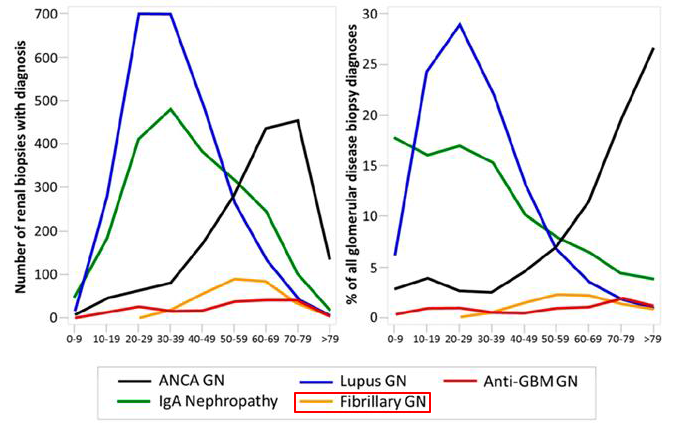
- Reference:ANCA Glomerulonephritis and Vasculitis(2017 JASN)
- Race
- In nephrotic range + primary GN + exclude secondary causes(SLE, PSGN....)
- 黑人:FSGS(57%)>MGN(24%)>MCD(14%)>others(多1-2%); 非洲裔FSGS/高血壓ESRD與APOL1 G1/G2雙變異高度相關〔PMID 20647424〕
- 白人:MGN(36%)>FSGS(23%)>MCD(20%)>IgA nephropathy(8%)>MPGN(6%)>immunotactoid glomerulopathy(6%)
- In nephrotic range + primary GN + exclude secondary causes(SLE, PSGN....)
- FH
- Thin basement membrane nephropathy(benign familial hematuria):多AD
- Alport syndrome:80% X-linked; 不過可AD/AR; 家人也會洗腎; 也有sensorineural hearing loss, ocular abnormalities
- AD form損失renal function較慢(多45-60y/o ESRD; AR/X-linked則多16-35y/o ESRD), AD form無deafness nor ocular abnormalities
- FSGS:有些是congenital, 可AD/AR
- ...
- Systemic presentations
- Pulmonary hemorrhage
- ANCA, anti-GBM, SLE, APS
- AGN with fluid overload->pulmonary edema->hemorrhage
- Rare:HSP(?!), IE
- Hematuria following URI
- Common
- IgA nephropathy, PSGN(詳參IgA nephropathy-D/D:PSGN vs IgA nephropathy)
- Less common
- MPGN中的C3GN
- Alport syndrome(多<2天after URI)
- TBMD
- Atypical infection with AIN-->hematuria
- Common
- Pulmonary hemorrhage
- Race
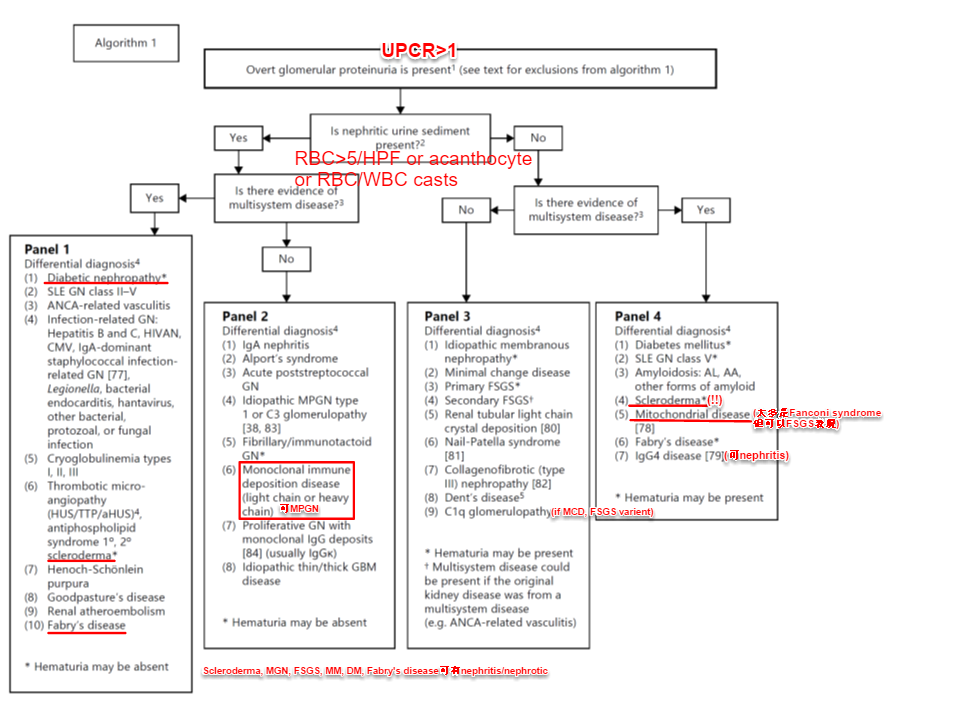
- Nephritic pattern is characterized by RBC +/- WBC(所以可以有WBC, 尤其PSGN那類很多neutrophils浸潤glomerulus的) +/- Casts + variable degree of proteinuria(有些覺得像GN的, renal biopsy結果其實是IN)
- Mild GN(active urine sediment without renal insufficiency nor nephrotic syndrome)
- <15 y/o:PSGN(可輕可重, later stage可nephrotic syndrome, 大人比較嚴重), IgAN(也可輕可重可nephrotic syndrome, 不過IgAN多20-30 y/o, <10y/o少見), HSP(peak at 5 y/o), mesangial proliferative GN, TBMD, hereditary nephritis(Alport syndrome)
- 15-40 y/o:(PSGN), IgAN, mesangial proliferative GN, TBMD, hereditary nephritis(Alport syndrome), SLE
- >40 y/o: IgAN
- Moderate to severe GN(active urine sediment with renal insufficiency and variable proteinuria(include nephrotic syndrome))
- <15 y/o:PSGN, (IgAN?), MPGN
- 15-40 y/o:(PSGN), IgAN, MPGN, (FSGS?), RPGN(crescentic GN*3; anti-GBM disease各年齡層都有, AAV偏老年, immunocomplex偏?), fibrillary GN(偏中老年)
- >40 y/o:PSGN(>60 y/o也有peak), IgAN, MPGN, FSGS, RPGN(crescentic GN*3), fibrillary GN, cryoglobulin
- 若gross hematuria, 會比較像IgAN or Alport's syndrome; 但其他GN也可以gross hematuria
- Mild GN(active urine sediment without renal insufficiency nor nephrotic syndrome)
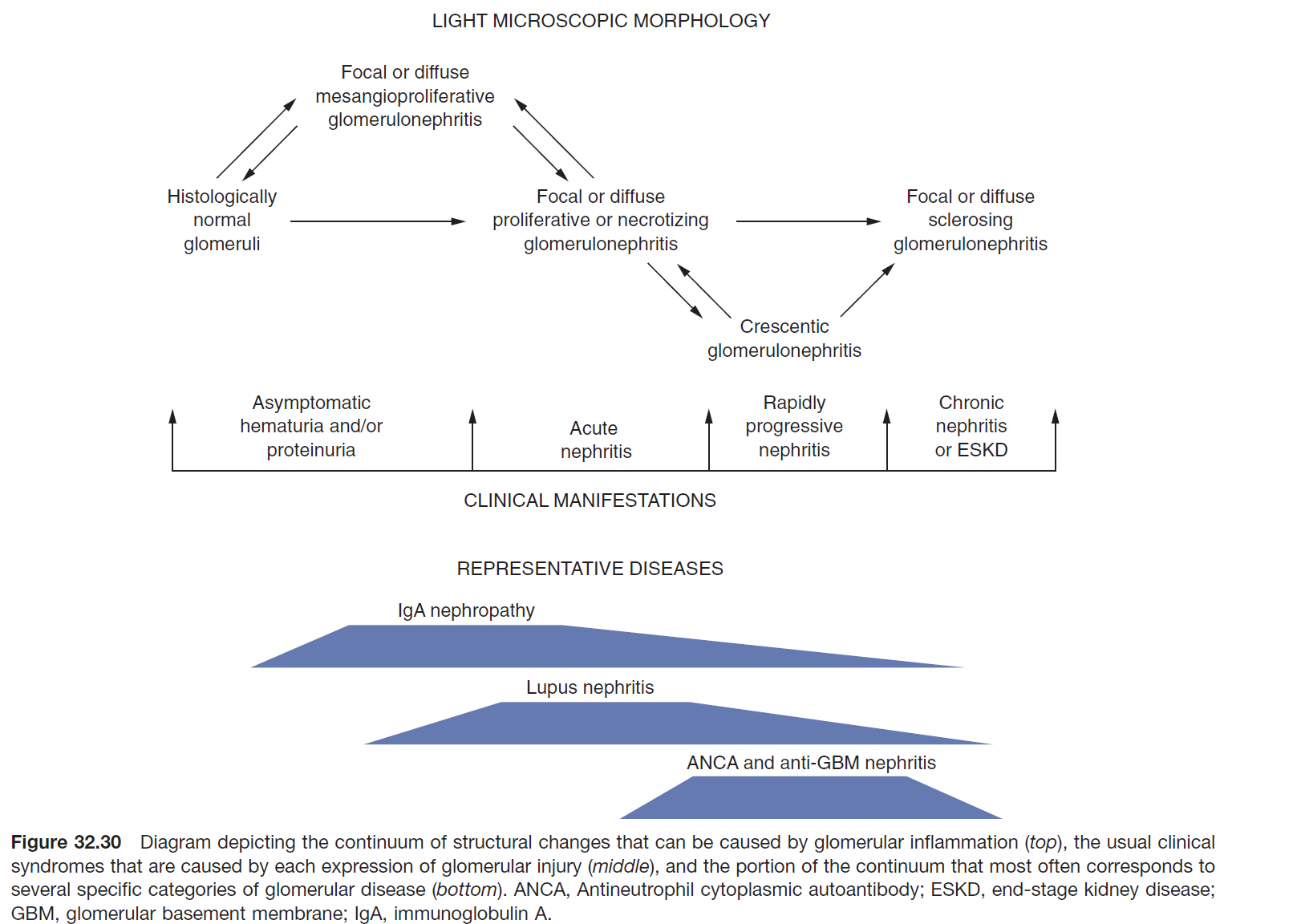
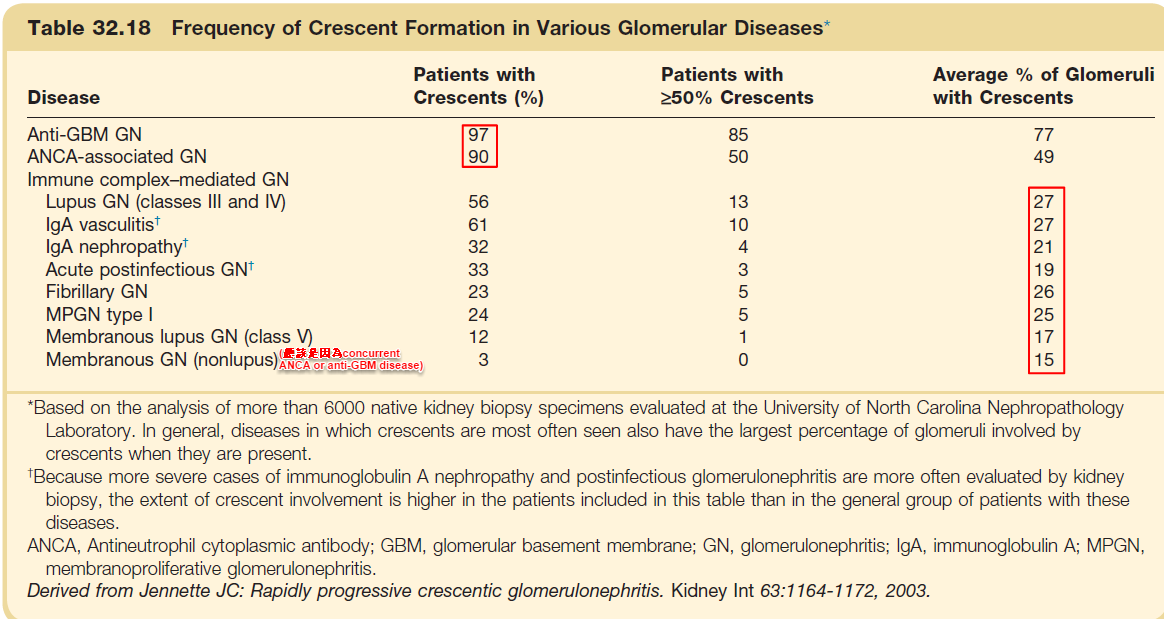
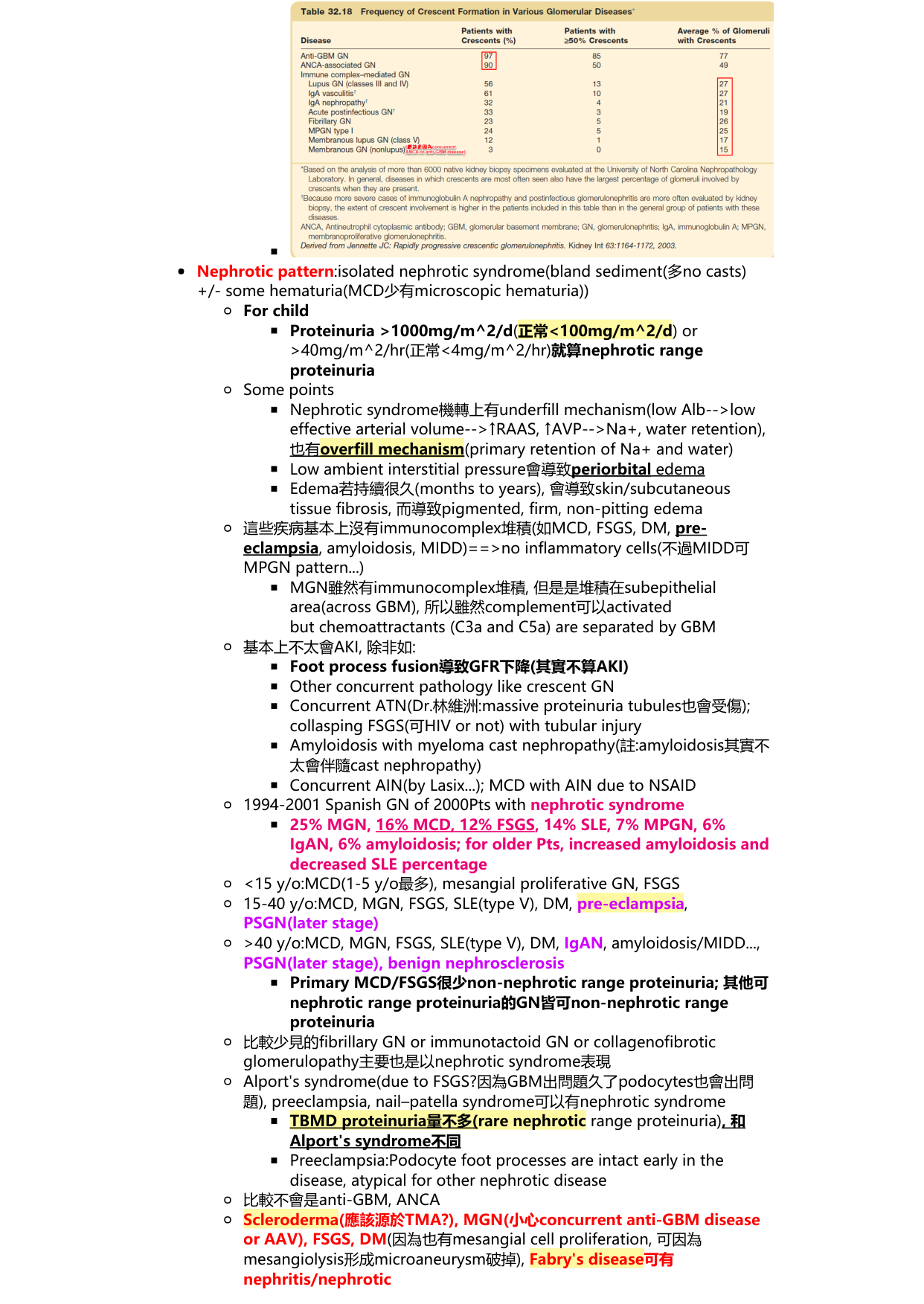
- 各種GN有crescent的比例
- Nephrotic pattern:isolated nephrotic syndrome(bland sediment(多no casts) +/- some hematuria(MCD少有microscopic hematuria))
- For child
- Proteinuria >1000mg/m^2/d(正常<100mg/m^2/d) or >40mg/m^2/hr(正常<4mg/m^2/hr)就算nephrotic range proteinuria
- Some points
- Nephrotic syndrome機轉上有underfill mechanism(low Alb-->low effective arterial volume-->↑RAAS, ↑AVP-->Na+, water retention), 也有overfill mechanism(primary retention of Na+ and water)
- Low ambient interstitial pressure會導致periorbital edema
- Edema若持續很久(months to years), 會導致skin/subcutaneous tissue fibrosis, 而導致pigmented, firm, non-pitting edema
- 這些疾病基本上沒有immunocomplex堆積(如MCD, FSGS, DM, pre-eclampsia, amyloidosis, MIDD)==>no inflammatory cells(不過MIDD可MPGN pattern...)
- MGN雖然有immunocomplex堆積, 但是是堆積在subepithelial area(across GBM), 所以雖然complement可以activated but chemoattractants (C3a and C5a) are separated by GBM
- 基本上不太會AKI, 除非如:
- Foot process fusion導致GFR下降(其實不算AKI)
- Other concurrent pathology like crescent GN
- Concurrent ATN(massive proteinuria 對 tubules 也會造成損傷); collapsing FSGS(可HIV or not) with tubular injury
- Amyloidosis with myeloma cast nephropathy(註:amyloidosis其實不太會伴隨cast nephropathy)
- Concurrent AIN(by Lasix...); MCD with AIN due to NSAID
- 1994-2001 Spanish GN of 2000Pts with nephrotic syndrome
- 25% MGN, 16% MCD, 12% FSGS, 14% SLE, 7% MPGN, 6% IgAN, 6% amyloidosis; for older Pts, increased amyloidosis and decreased SLE percentage
- <15 y/o:MCD(1-5 y/o最多), mesangial proliferative GN, FSGS
- 15-40 y/o:MCD, MGN, FSGS, SLE(type V), DM, pre-eclampsia, PSGN(later stage)
- >40 y/o:MCD, MGN, FSGS, SLE(type V), DM, IgAN, amyloidosis/MIDD..., PSGN(later stage), benign nephrosclerosis
- Primary MCD/FSGS很少non-nephrotic range proteinuria; 其他可nephrotic range proteinuria的GN皆可non-nephrotic range proteinuria
- 比較少見的fibrillary GN or immunotactoid GN or collagenofibrotic glomerulopathy主要也是以nephrotic syndrome表現
- Alport's syndrome(due to FSGS?因為GBM出問題久了podocytes也會出問題), preeclampsia, nail–patella syndrome可以有nephrotic syndrome
- TBMD proteinuria量不多(rare nephrotic range proteinuria), 和Alport's syndrome不同
- Preeclampsia:Podocyte foot processes are intact early in the disease, atypical for other nephrotic disease
- 比較不會是anti-GBM, ANCA
- Scleroderma(應該源於TMA?), MGN(小心concurrent anti-GBM disease or AAV), FSGS, DM(因為也有mesangial cell proliferation, 可因為mesangiolysis形成microaneurysm破掉), Fabry's disease可有nephritis/nephrotic
- For child
3.Lab for evaluation of GN#
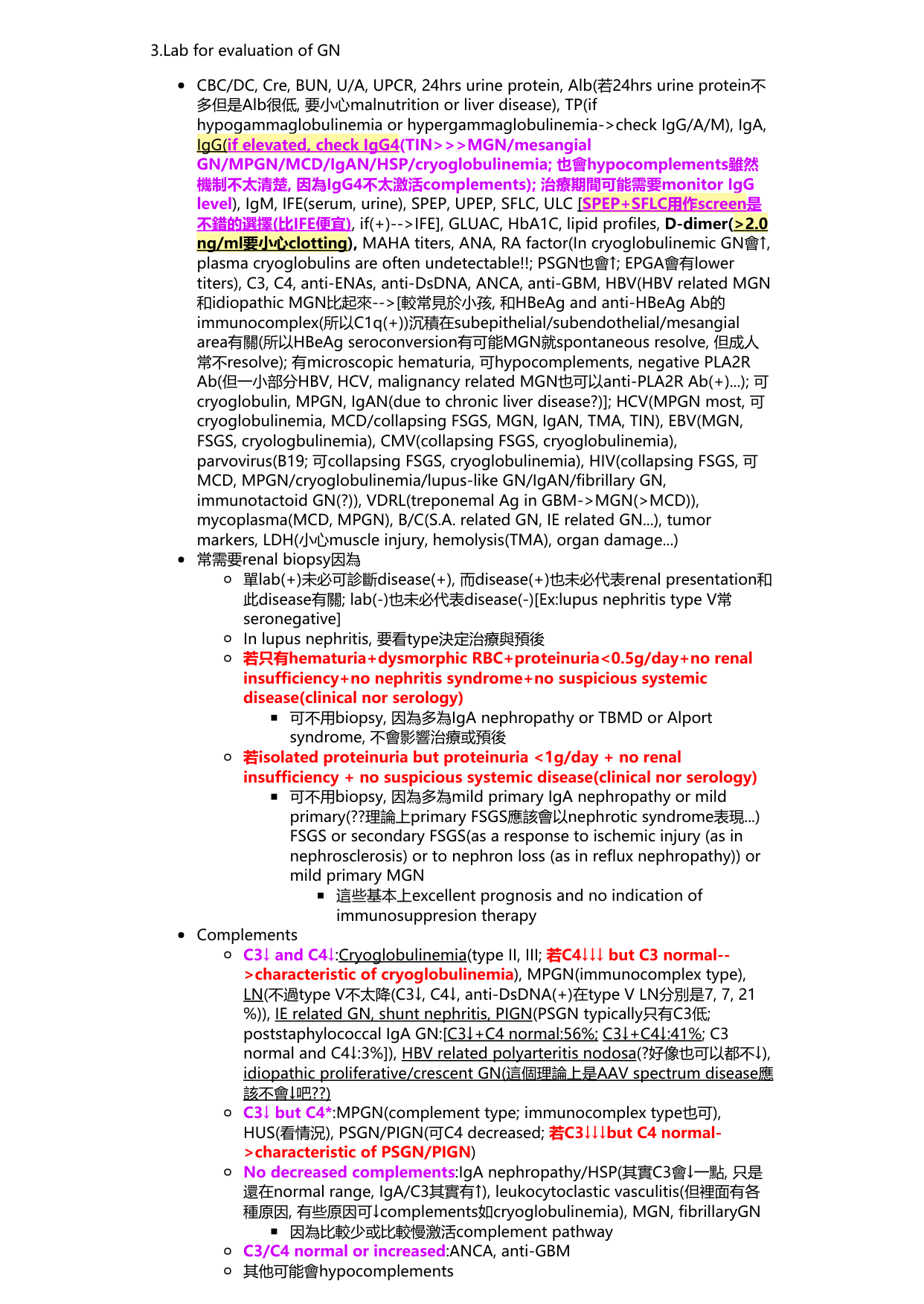
- CBC/DC, Cre, BUN, U/A, UPCR, 24hrs urine protein, Alb(若24hrs urine protein不多但是Alb很低, 要小心malnutrition or liver disease), TP(if hypogammaglobulinemia or hypergammaglobulinemia->check IgG/A/M), IgA, IgG(if elevated, check IgG4(TIN>>>MGN/mesangial GN/MPGN/MCD/IgAN/HSP/cryoglobulinemia; 也會hypocomplements雖然機制不太清楚, 因為IgG4不太激活complements); 治療期間可能需要monitor IgG level), IgM, IFE(serum, urine), SPEP, UPEP, SFLC, ULC [SPEP+SFLC用作screen是不錯的選擇(比IFE便宜), if(+)-->IFE], GLUAC, HbA1C, lipid profiles, D-dimer(>2.0 μg/mL要小心clotting), MAHA titers, ANA, RA factor(In cryoglobulinemic GN會↑, plasma cryoglobulins are often undetectable!!; PSGN也會↑; EGPA會有lower titers), C3, C4, anti-ENAs, anti-DsDNA, ANCA, anti-GBM, HBV(HBV related MGN和idiopathic MGN比起來-->[較常見於小孩, 和HBeAg and anti-HBeAg Ab的immunocomplex(所以C1q(+))沉積在subepithelial/subendothelial/mesangial area有關(所以HBeAg seroconversion有可能MGN就spontaneous resolve, 但成人常不resolve); 有microscopic hematuria, 可hypocomplements, negative PLA2R Ab(原發約70%陽性〔PMID 19571279〕; 但一小部分HBV, HCV, malignancy related MGN也可以anti-PLA2R Ab(+)...); 可cryoglobulin, MPGN, IgAN(due to chronic liver disease?)]; HCV(MPGN most, 可cryoglobulinemia, MCD/collapsing FSGS, MGN, IgAN, TMA, TIN), EBV(MGN, FSGS, cryoglobulinemia), CMV(collapsing FSGS, cryoglobulinemia), parvovirus(B19; 可collapsing FSGS, cryoglobulinemia), HIV(collapsing FSGS, 可MCD, MPGN/cryoglobulinemia/lupus-like GN/IgAN/fibrillary GN, immunotactoid GN(?)), VDRL(treponemal Ag in GBM->MGN(>MCD)), mycoplasma(MCD, MPGN), B/C(S.A. related GN, IE related GN...), tumor markers, LDH(小心muscle injury, hemolysis(TMA), organ damage...)
- 常需要renal biopsy因為
- 單lab(+)未必可診斷disease(+), 而disease(+)也未必代表renal presentation和此disease有關; lab(-)也未必代表disease(-)[Ex:lupus nephritis type V常seronegative]
- In lupus nephritis, 要看type決定治療與預後
- 若只有hematuria+dysmorphic RBC+proteinuria<0.5g/day+no renal insufficiency+no nephritis syndrome+no suspicious systemic disease(clinical nor serology)
- 可不用biopsy, 因為多為IgA nephropathy or TBMD or Alport syndrome, 不會影響治療或預後
- 若isolated proteinuria but proteinuria <1g/day + no renal insufficiency + no suspicious systemic disease(clinical nor serology)
- 可不用biopsy, 因為多為mild primary IgA nephropathy or mild primary(??理論上primary FSGS應該會以nephrotic syndrome表現...) FSGS or secondary FSGS(as a response to ischemic injury (as in nephrosclerosis) or to nephron loss (as in reflux nephropathy)) or mild primary MGN
- 這些基本上excellent prognosis and no indication of immunosuppression therapy
- 可不用biopsy, 因為多為mild primary IgA nephropathy or mild primary(??理論上primary FSGS應該會以nephrotic syndrome表現...) FSGS or secondary FSGS(as a response to ischemic injury (as in nephrosclerosis) or to nephron loss (as in reflux nephropathy)) or mild primary MGN
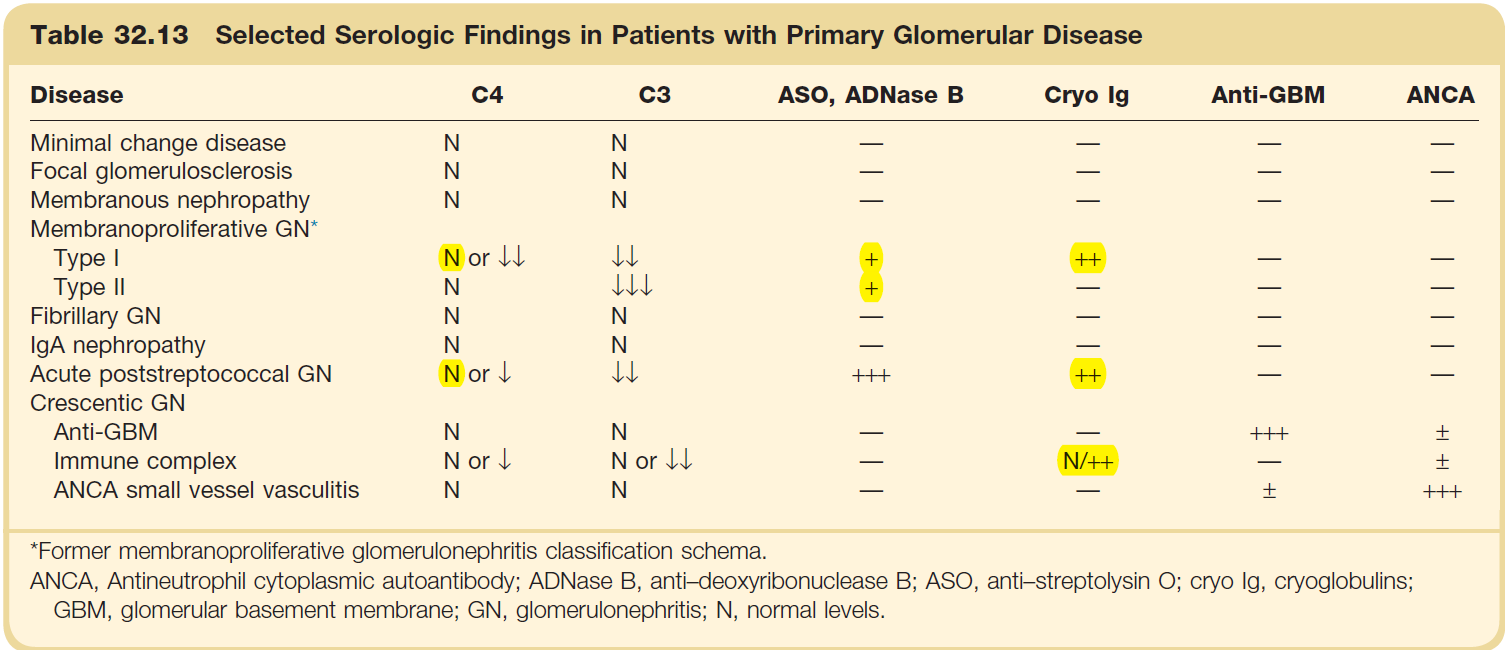
- 【必考低補體鑑別三大核心矩陣】(Brenner 11e Ch 30):
- C3↓ 且 C4↓ (古典路徑 Classical Pathway 活化):
- 狼瘡性腎炎 (LN, 尤增生型 Class III/IV;單純 Class V 膜性 C3/C4 常正常)
- 冷凝球蛋白血症 (Cryoglobulinemia, 典型 C4↓↓ 顯著低下甚至測不到,伴隨 RF 陽性)
- 感染性心內膜炎相關腎炎 (IE-associated GN)
- 腦室腹腔分流腎炎 (Shunt nephritis)
- 免疫複合體型 MPGN (IC-MPGN)
- C3↓ 但 C4 正常 (替代路徑 Alternative Pathway 活化):
- 急性鏈球菌感染後腎炎 (PSGN, C3 顯著低下但 C4 正常;>8-12 週未回升需切片)
- C3 腎絲球病變 (C3G: 包括 DDD 與 C3GN,補體替代路徑調控異常)
- 溶血性尿毒症候群 (STEC-HUS / 部分 aHUS)
- 金黃色葡萄球菌相關腎炎 (SAGN, ~56% 僅 C3 低,41% 雙低)
- C3 與 C4 皆正常 (無全身性低補體血症):
- 原發性 IgA 腎病 (IgAN / HSP, 補體多在正常範圍)
- 少免疫型 ANCA 相關血管炎 (AAV, 補體正常或作為急性反應物反應性偏高;若低下提示預後極差或重疊 IC-GN)
- 抗 GBM 疾病 (anti-GBM disease)
- 微小病變 (MCD) 與原發性/次發性局灶節段硬化 (FSGS)
- 膜性腎病變 (Primary MGN, 補體多正常)
- 其他罕見低補體原因: 膽固醇結晶栓塞 (Atheroembolic renal disease, 短暫低補體+嗜酸性球增多)、RA 血管炎、重鏈沉積症 (HCDD)
- C3↓ 且 C4↓ (古典路徑 Classical Pathway 活化):
4.圖#
Electrophoresis#
- 註:for non-nephrotic range proteinuria, 用urine protein中Albumin/total protein的比例可來區別proteinuria type, <0.4 favor non-glomerular proteinuria
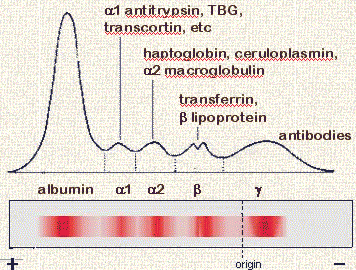
- Liver cirrhosis(LC)
- Albumin↓, α↓, β-γ↑(due to IgA↑)

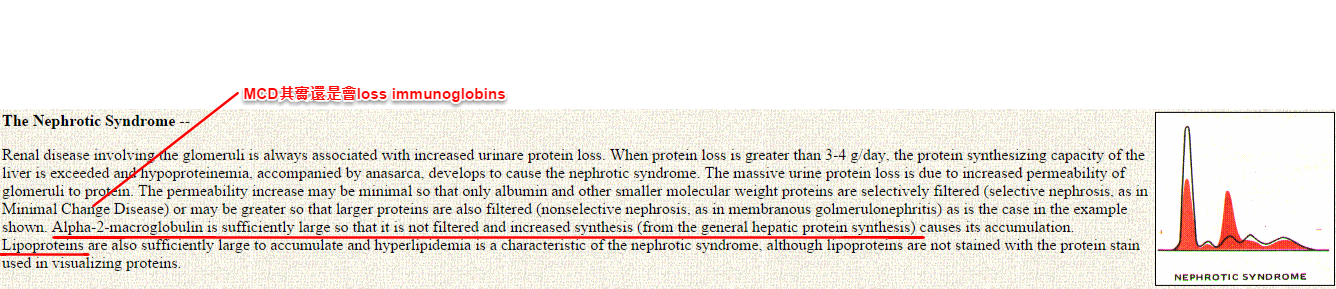
- Nephrotic syndrome
- All↓, except α2 macroglobulin↑(因為分子太大漏不出去)
- Acute inflammation
- Alb↓, α↑(acute phase proteins), β-γ no change

- Chronic inflammation
- Alb↓, α↑, β-γ↑

- Monoclonal gammopathy
- Alb no change, α no change, γ↑↑

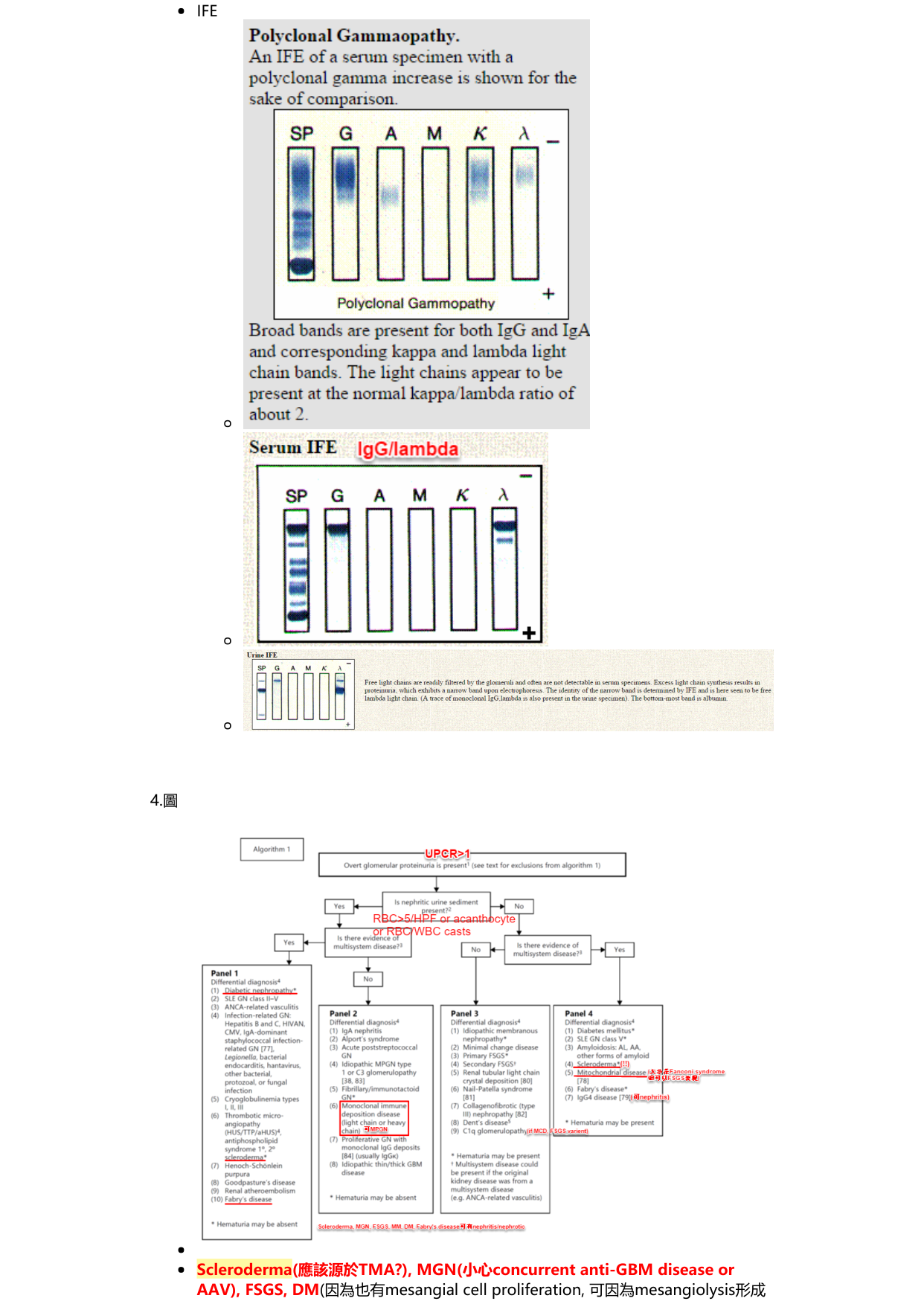
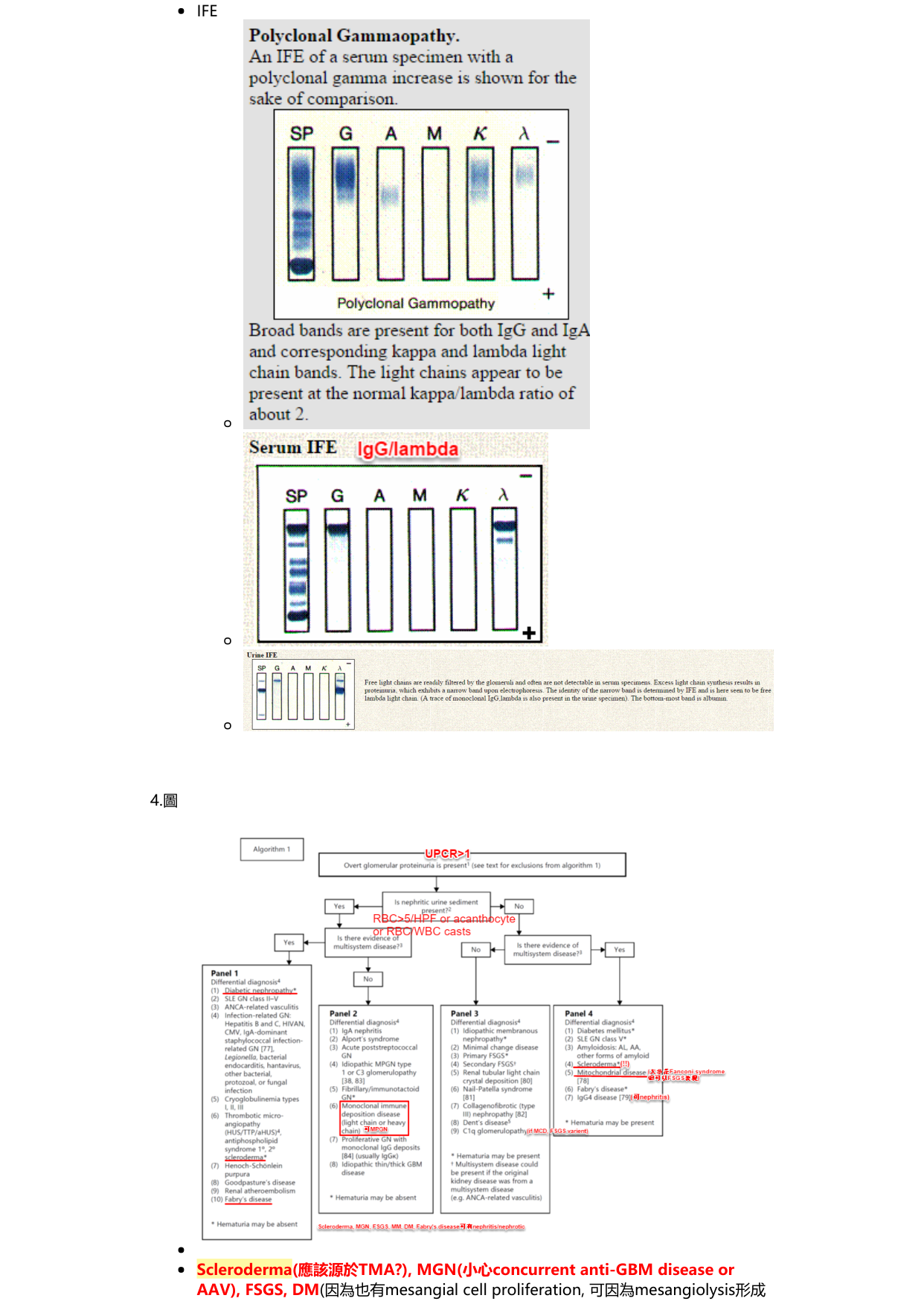
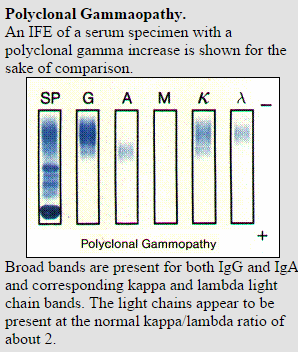
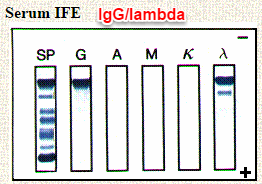
- IFE

5.Some special diseases#
- 1.Nail–patella syndrome
- Genetic disorder(AD)
- LMX1B(LIM homeobox transcription factor 1β; 和Podocin and CD2AP有關; 和nail-patella syndrome有關)-->所以會FSGS
- 見-FSGSFSGS-TRPC6
- LMX1B(LIM homeobox transcription factor 1β; 和Podocin and CD2AP有關; 和nail-patella syndrome有關)-->所以會FSGS
- S/S
- Dystrophic nails
- Bones and joints deformities
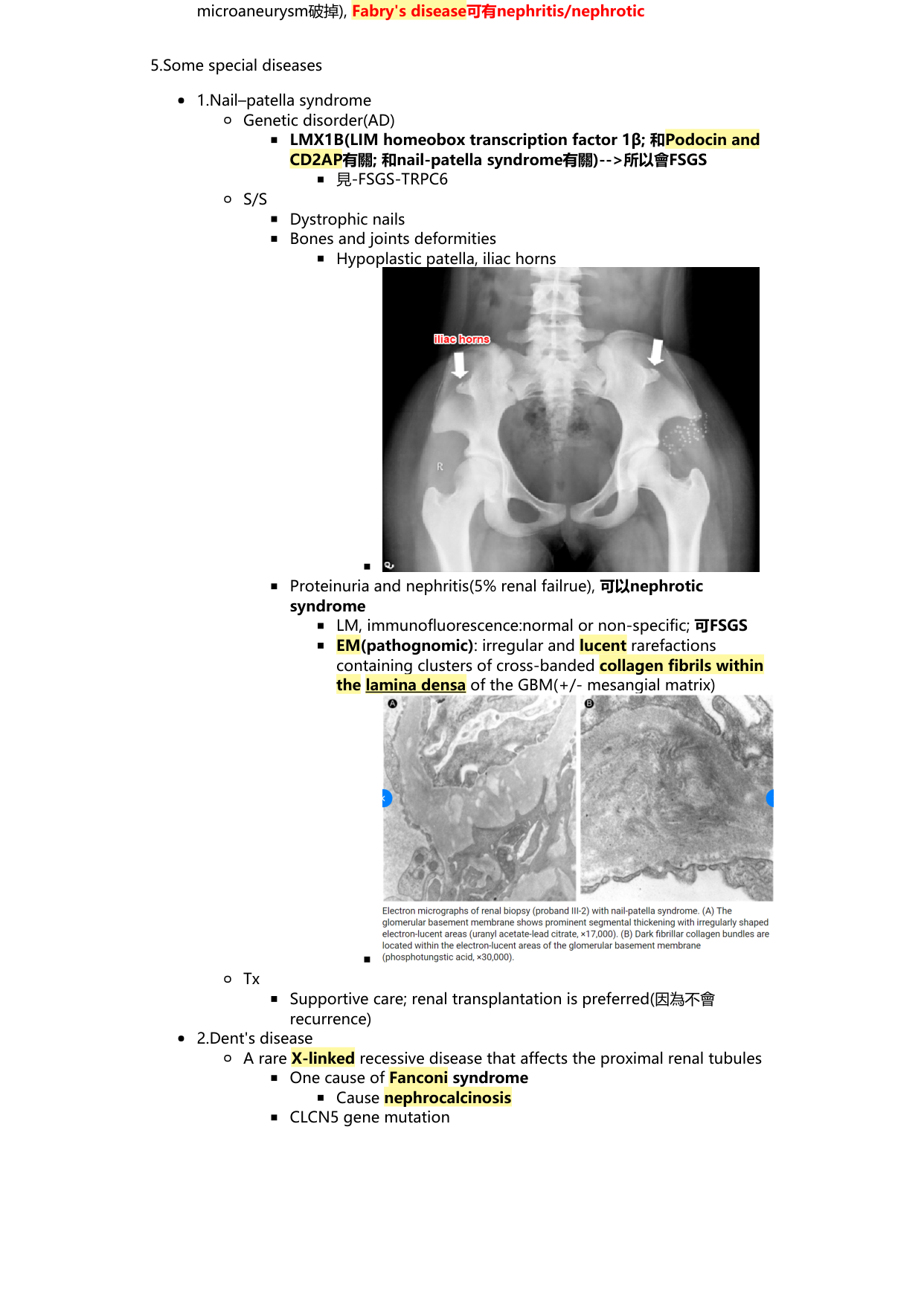
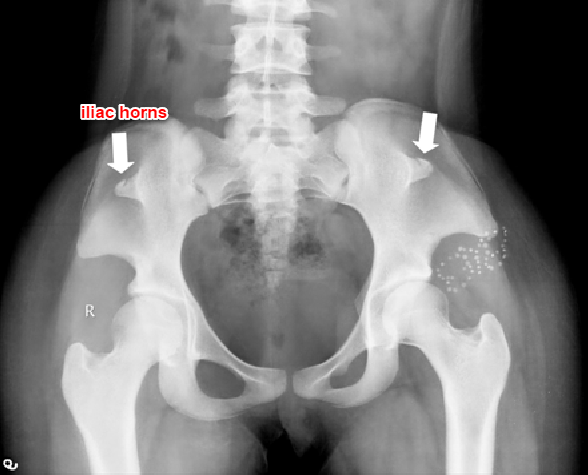
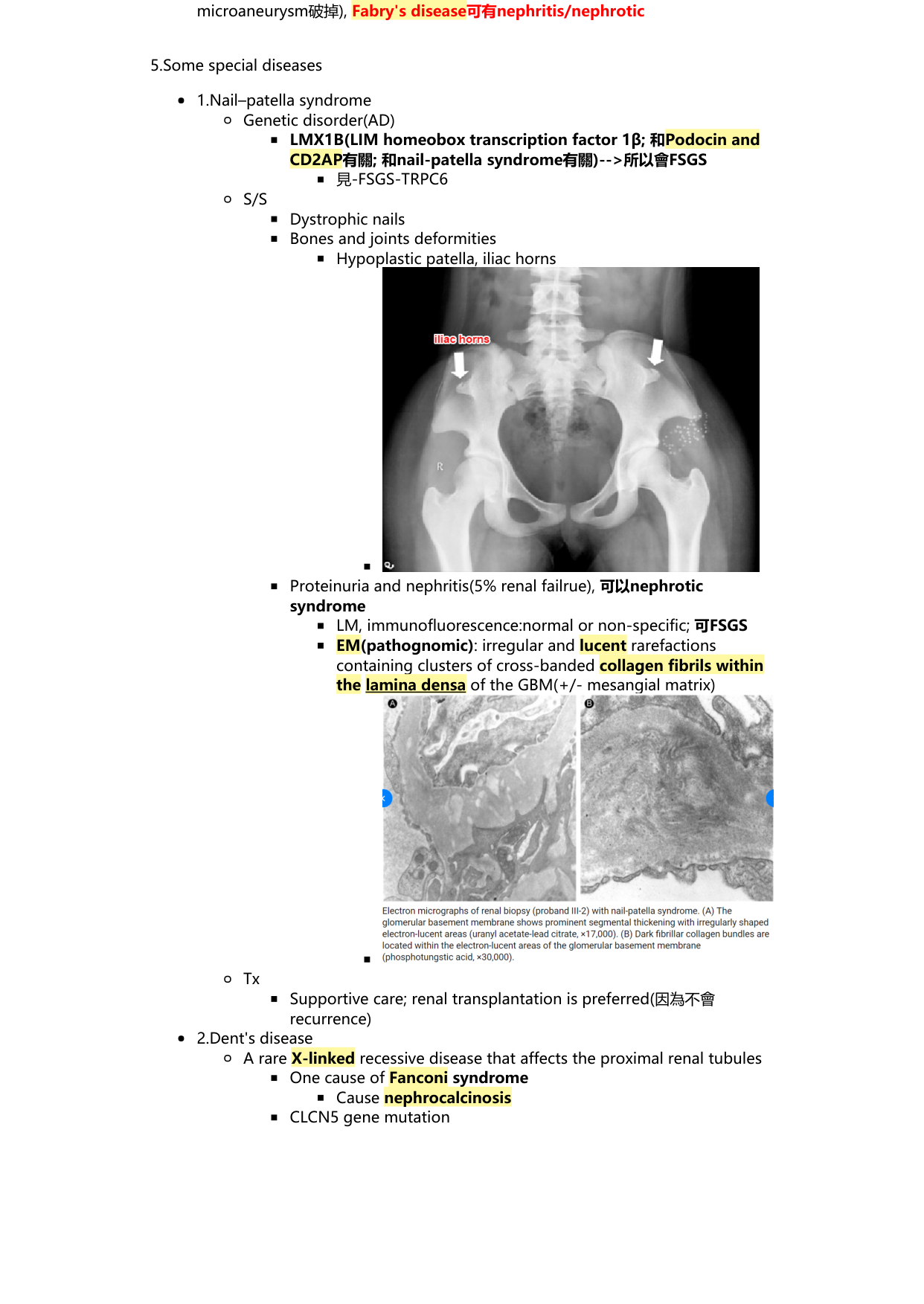
- Hypoplastic patella, iliac horns
- Genetic disorder(AD)
- Proteinuria and nephritis(5% renal failure), 可以nephrotic syndrome
- LM, immunofluorescence:normal or non-specific; 可FSGS
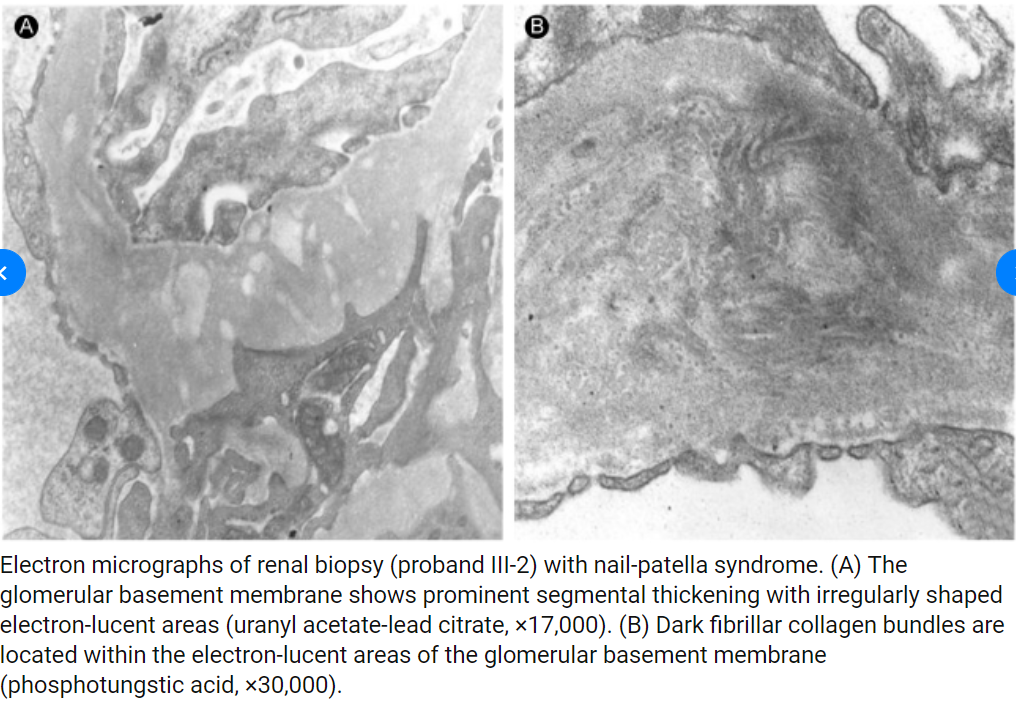
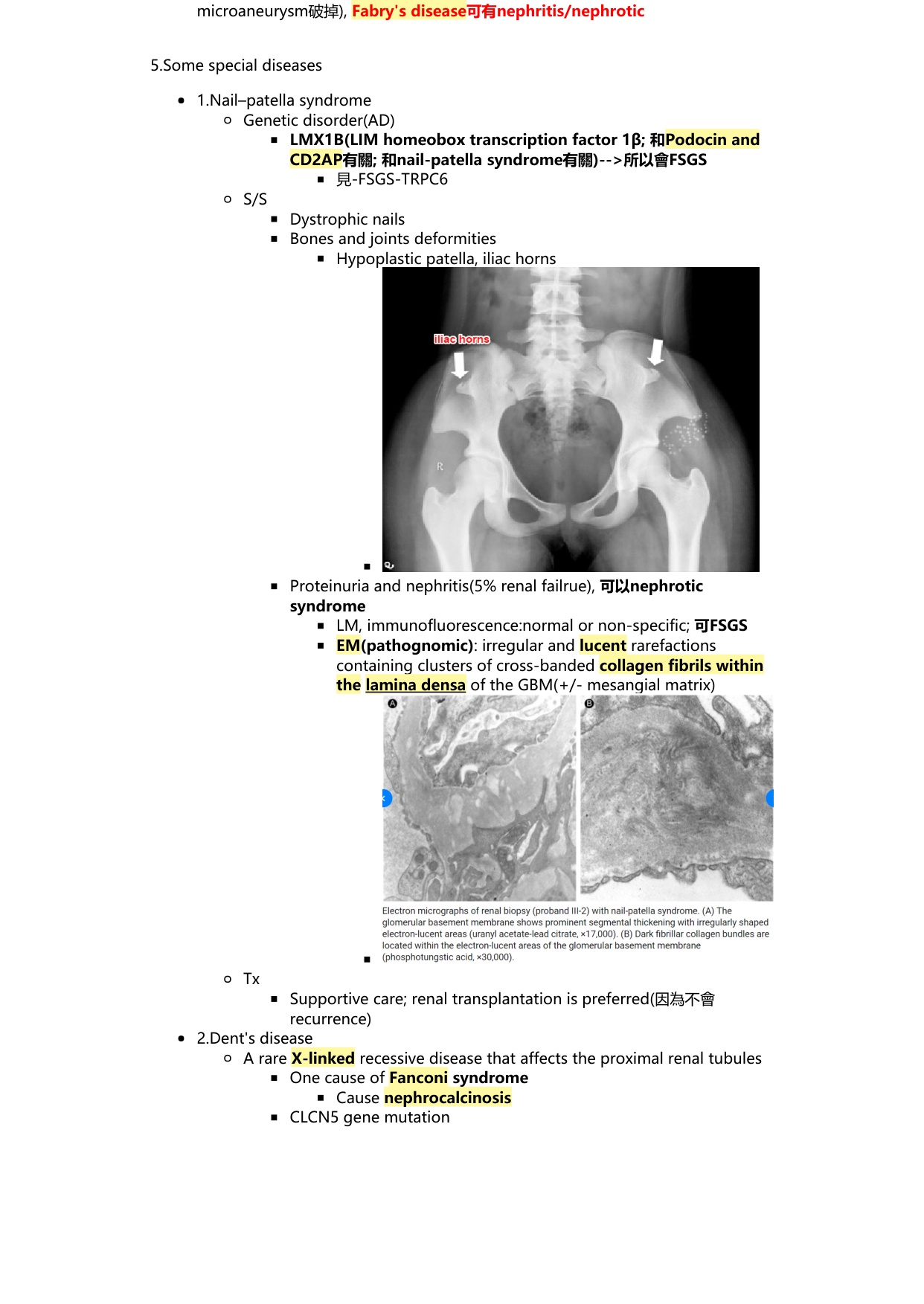
- EM(pathognomic): irregular and lucent rarefactions containing clusters of cross-banded collagen fibrils within the lamina densa of the GBM(+/- mesangial matrix)
- Tx
- Supportive care; renal transplantation is preferred(因為不會recurrence)
- 2.Dent's disease
- A rare X-linked recessive disease that affects the proximal renal tubules
- One cause of Fanconi syndrome
- Cause nephrocalcinosis
- CLCN5 gene mutation
- One cause of Fanconi syndrome
- A rare X-linked recessive disease that affects the proximal renal tubules