Hypomagnesium(also diuretics and tubules mechanism)
1.Normal physiology#
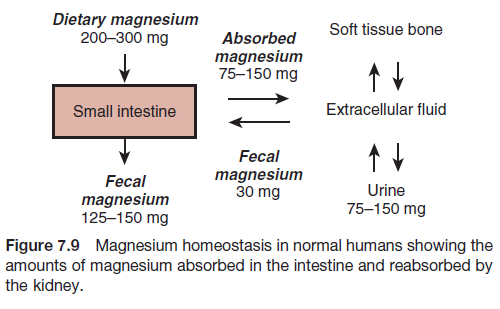
- Average intake:15mmol/d with 1/3(=口服吸收率) absorbed:小腸(空腸與迴腸)佔80-90%吸收,主要為被動旁細胞擴散(passive paracellular diffusion);大腸(盲腸與結腸)則為主動跨細胞吸收,由頂端側 TRPM6 通道媒介(DCT亦表現此通道)〔PMID 16298425, 25540137〕
- 回思Mg可以當瀉劑, 所以吸收率當然沒有很好...
- 所以約5mmol reabsorption
- 所以TPN者一天補5mmol(=10mEq)差不多(和之前臨床經驗差不多...)
- Intestinal/pancreatic secretion約1.7mmol; large bowel reabsorption約0.8mmol
- 註:stool:7.5mmol/L Mg
- 上消化道液體的Mg concentration低, 所以僅diarrhea會使Mg↓; gastric drainage, biliary fistula, pancreatic fistula, intestinal drainage, even ileostomy都不太會使Mg↓
- Urine excretion約4.1mmol
- 達到進出平衡
- Brenner的圖
- 體內最多儲存Mg的地方是bone(53%), 第二是muscle(27%), 第三是soft tissue(19%), 不過bone/muscles不太會因為血中的Mg level而釋放/儲存Mg; Intracellular Mg約8-15mmol/L, 多bound to ATP, enzymes, nucleotides; 1% Mg在ECF, ECF中Mg 30% bound to Alb(Vs. Ca2+約40% bound to Alb/proteins; vs. P約10% bound to proteins)
- Renal handling of Mg
- 70% of total plasma Mg filtered(因為約30% bound to Alb, 55% free form(ionized form), 15% bound to phosphate, citrates...)
- 其中20% of filtered Mg reabsorbed passively by p. tubules(機轉不是很清楚,不過似乎也是透過Na再吸收後的paracellular reabsorption); 5% of filtered Mg reabsorbed passively by d. tubules(回思FeMg正常是3-5%, 所以剩約5%); 剩下70%由loop of henles的TAL再吸收(NKCC2 area)
- 相反的Na, Cl, K, Ca, P多由p. tubules再吸收!
- 其中20% of filtered Mg reabsorbed passively by p. tubules(機轉不是很清楚,不過似乎也是透過Na再吸收後的paracellular reabsorption); 5% of filtered Mg reabsorbed passively by d. tubules(回思FeMg正常是3-5%, 所以剩約5%); 剩下70%由loop of henles的TAL再吸收(NKCC2 area)
- 70% of total plasma Mg filtered(因為約30% bound to Alb, 55% free form(ionized form), 15% bound to phosphate, citrates...)
- Na-K-ATPase使細胞內Na↓↓, 使Na由tubular lumen入cell內, 連帶使K, Cl藉NKCC2入cell內(against K, Cl的electrochemical gradients)
- tubular lumen的K非常低, 故cell內的K會再經由ROMK跑到tubular lumen內, Cl則由ClC-Kb跑到peritubular capillary內, 導致tubular lumen become more positively charged compared to the cell and peritubular space-->paracellular reabsorption of Na, K, Ca, Mg
- Loop diuretics抑制NKCC2, 進而使ROMK無法back leakage of K而loss electrical gradient-->Mg loss↑
- 註:loop diuretics(註:Lasix是kidney代謝, Burinex是liver代謝, 所以renal function不好者用Lasix小心因為accumulation而ototoxicity)/thiazides為organic anions, >90% bound to protein(所以才要和Alb一起用...), 由peritubular capillary->經p. tubules(S2)baselateral side的OAT(organic anion transporter)1(主) and OAT 3入p. tubules then 出p. tubules by MRP(multidrug resistance–associated protein)4 至p. tubules lumens (not by filtration)
- 註:此secretion pathway和Uric acid and Tenofovir secretion方式一樣
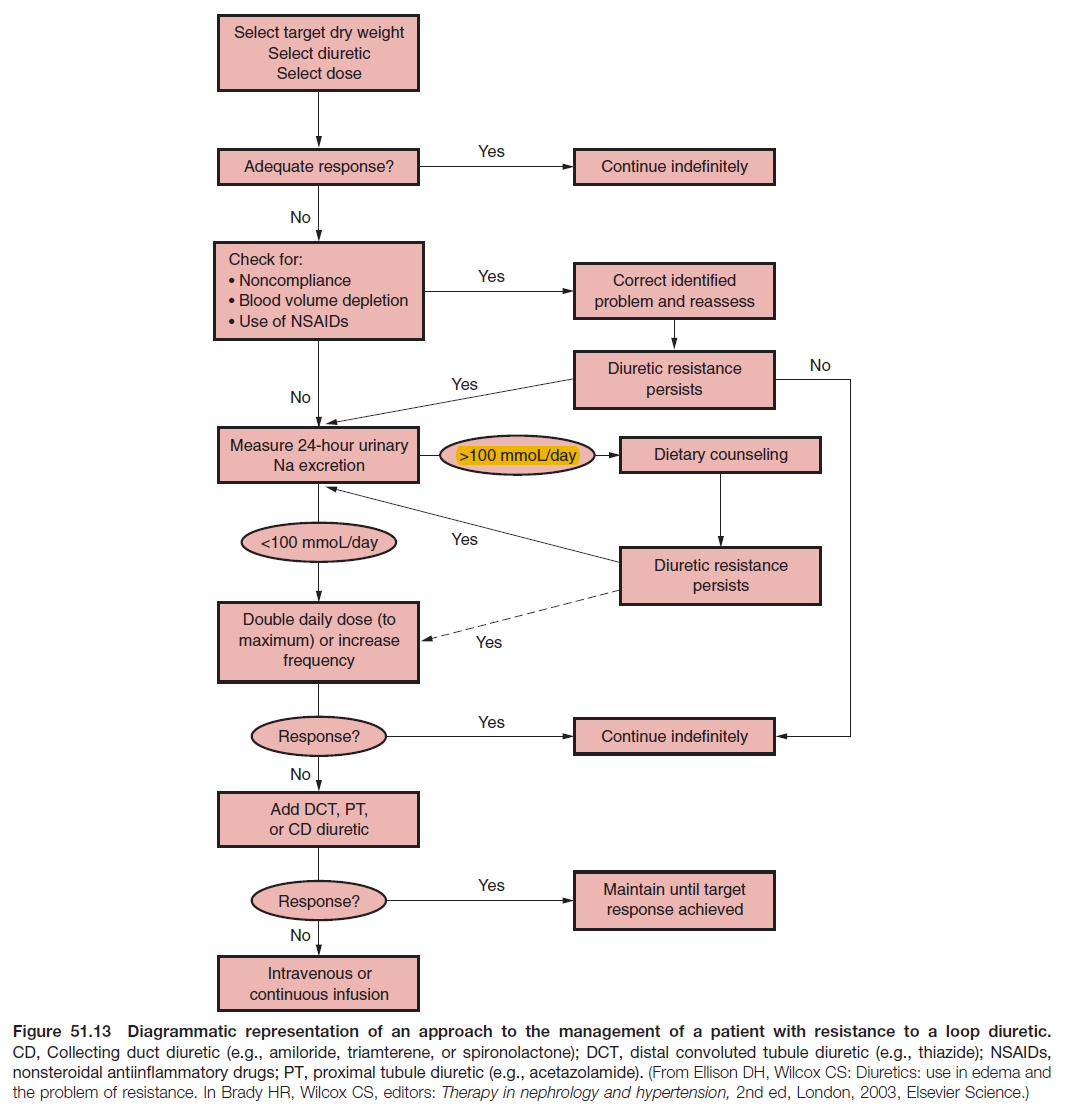
- 所以low renal BF(pre-renal, 含hypotension, cardiorenal syndrome, liver cirrhosis, elderly...), hypoproteinemia(會↓diuretics secretion and ↑diuretics metabolism), tubular dysfunction(no adequate secretion of loop diuretics/thiazide) or Probenecid/NSAID(抑制OAT) or GI edema導致PO吸收slowly 皆可導致loop diuretics/thiazide resistance
- 註:Metabolic alkalosis也會導致loop diuretics tolerance(因為1.Cl- depletion:本來就↓NKCC2了, 再加上loop diuretics幫助不大, 2.alkalosis導致NKCC2 glycosylation↑而function changed, 3.Alkalosis導致NCC function↑
- 註:用loop diuretics 3天後會tolerance, 原因主要是distal tubules再吸收Na+↑(所以用thiazide會有效)而非RAAS↑ or volume depletion
- 註:CKD/uremia時也會loop diuretics resistance, 因為1.RBF↓ 2.uremia/anions↑/UA↑/metabolic acidosis↑都會(↓ or 競爭)OAT
- 註:diuretics resistance也要小心non-compliance or Na+ intake太多
- 註:loop diuretics(註:Lasix是kidney代謝, Burinex是liver代謝, 所以renal function不好者用Lasix小心因為accumulation而ototoxicity)/thiazides為organic anions, >90% bound to protein(所以才要和Alb一起用...), 由peritubular capillary->經p. tubules(S2)baselateral side的OAT(organic anion transporter)1(主) and OAT 3入p. tubules then 出p. tubules by MRP(multidrug resistance–associated protein)4 至p. tubules lumens (not by filtration)
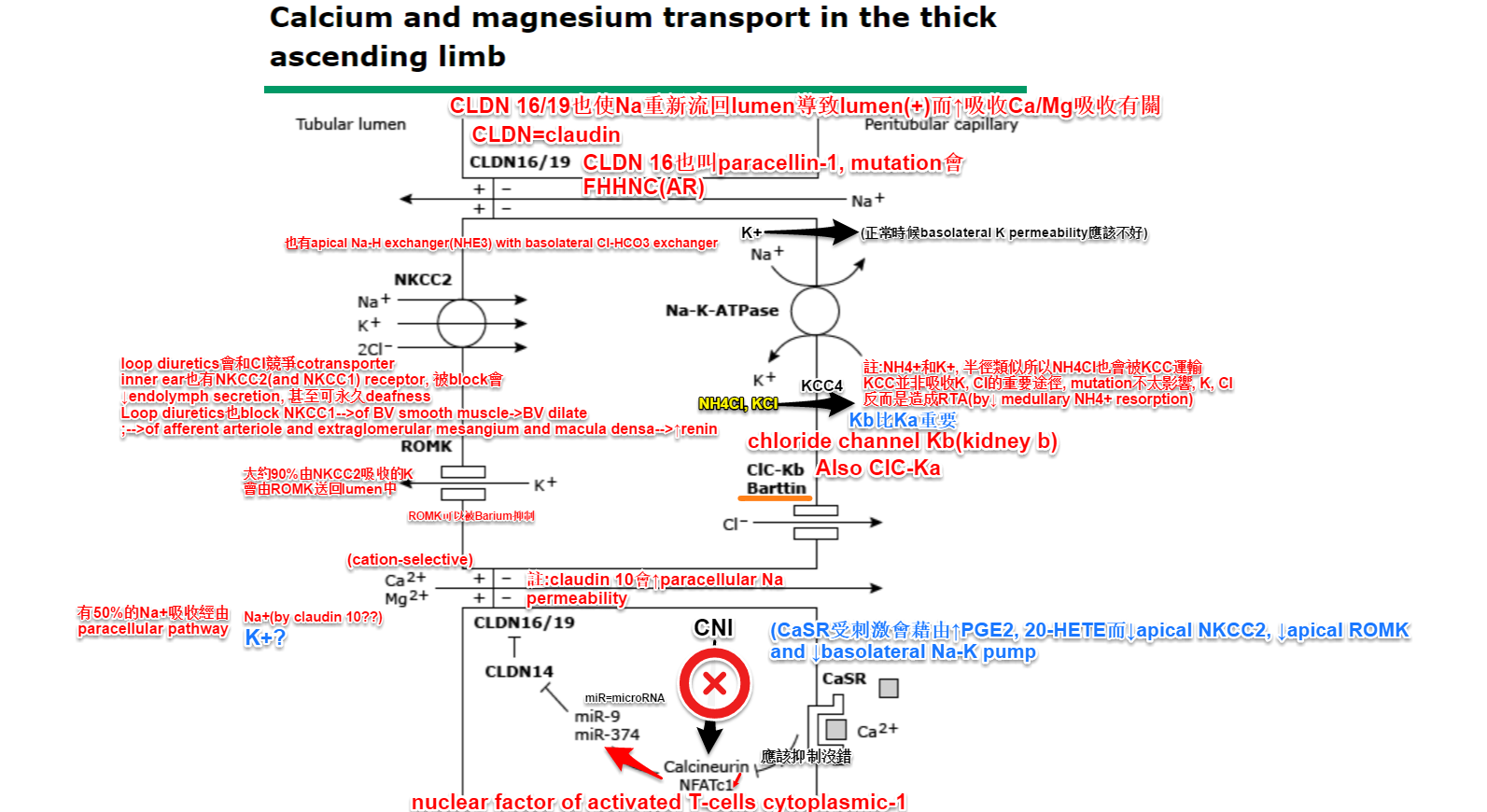
- 所以hypomagnesium disinhibit ROMK, 使NKCC2作用而製造電位差, 進而吸收Ca and Mg?, 此外hypomagnesium也upregulate CNNM2(見下圖); 而hypermagnesium/hypercalcemia藉由激活CaSR, 進而抑制Claudin 16/19而使Ca, Mg loss
- Hormones
- iPTH, calcitonin, beta-2 receptor, AVP, Glucagon似乎都能影響NKCC2 and change paracellular permeability...但最後對Mg的影響?
- PTH似乎會↑renal Mg2+ resorption, 不過若血鈣也高, 兩個effects加起來Mg level不變
- iPTH, calcitonin, beta-2 receptor, AVP, Glucagon似乎都能影響NKCC2 and change paracellular permeability...但最後對Mg的影響?
- Others(unknown mechanism)
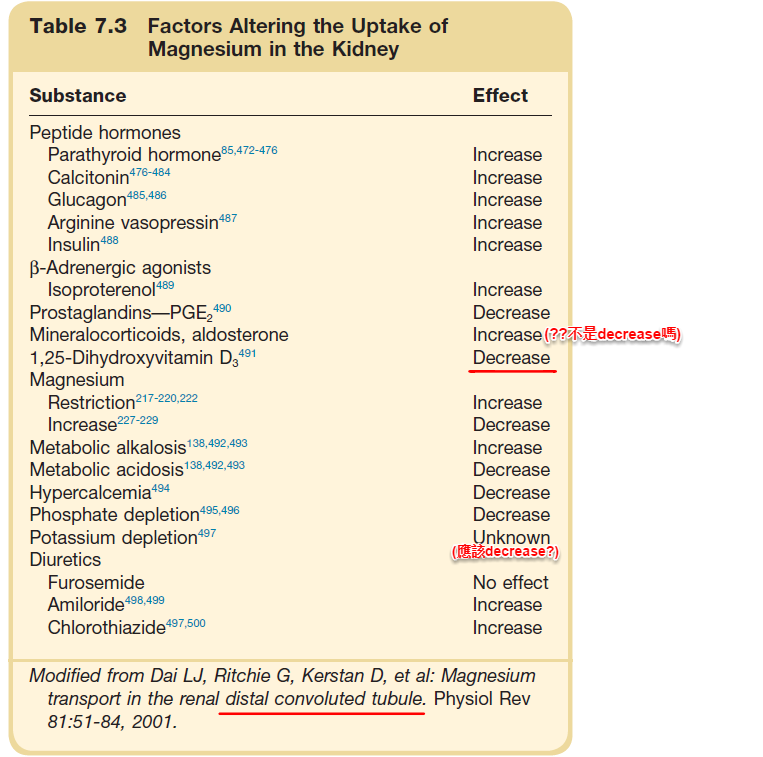
- Metabolic alkalosis會促進Mg再吸收at loop of Henles
- 註:metabolic alkalosis也會促進Ca, P再吸收
- Metabolic acidosis, hypokalemia(本身抑制distal tubule and loop再吸收Mg(and Ca)), hypophosphatemia會導致Mg流失at loop of Henles
- 註:低K低P都會↑Ca, Mg由kidney loss
- 不過這些是in vitro study, in vivo怎樣未知; 此外SMg的變化似乎不太影響這些hormones的濃度, 所以好像也不是靠這些hormones來調控Mg的平衡
- Metabolic alkalosis會促進Mg再吸收at loop of Henles
- Algorithm for loop diuretics resistance
- (>100mmol/d, 可以check 24hrs UNa)
-
D. tubules
- Magnesium transport in the distal convoluted tubule
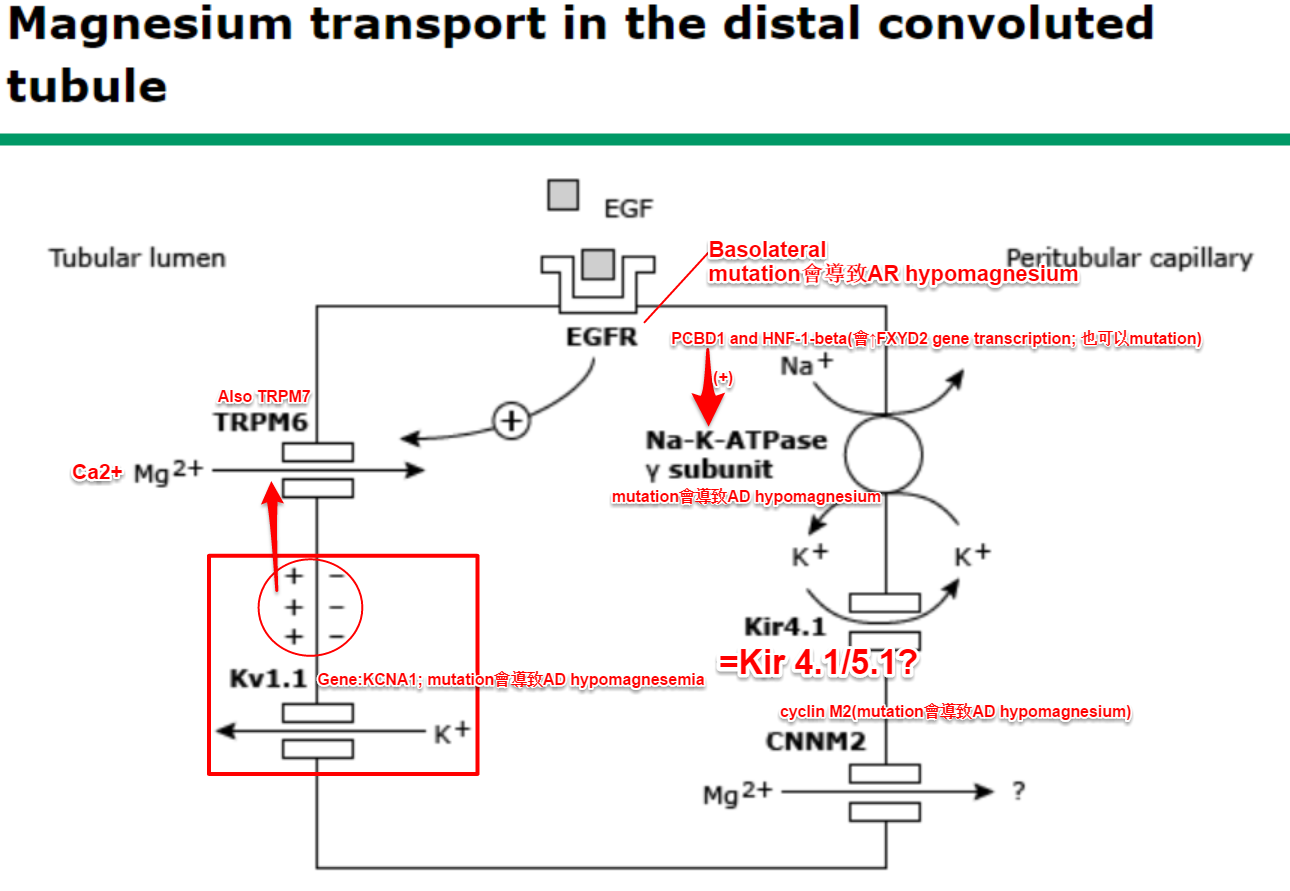
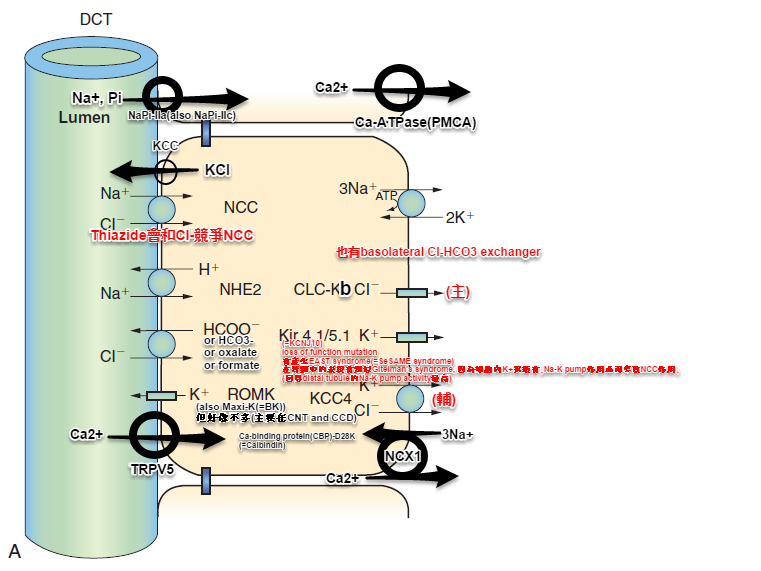
- 其實loop和distal tubules吸收Mg是類似的, 都是利用K+ and Cl-製造電位差吸收Mg(and Ca), 只是loop是用Claudin 16/19, distal tubules是用(TRPM6 or 7) and CNNM2
-
Collecting ducts
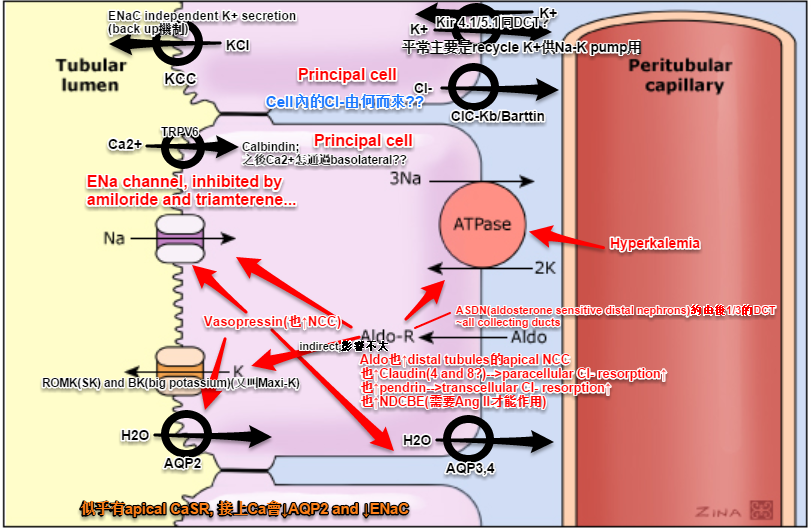
- 當使用K-sparing diuretics時, Na無法由lumen進入cells, 產生electrical gradients-->促進Ca, Mg再吸收, 抑制K, H+分泌
- 順便貼上type A intercalated cell(和Mg無關)
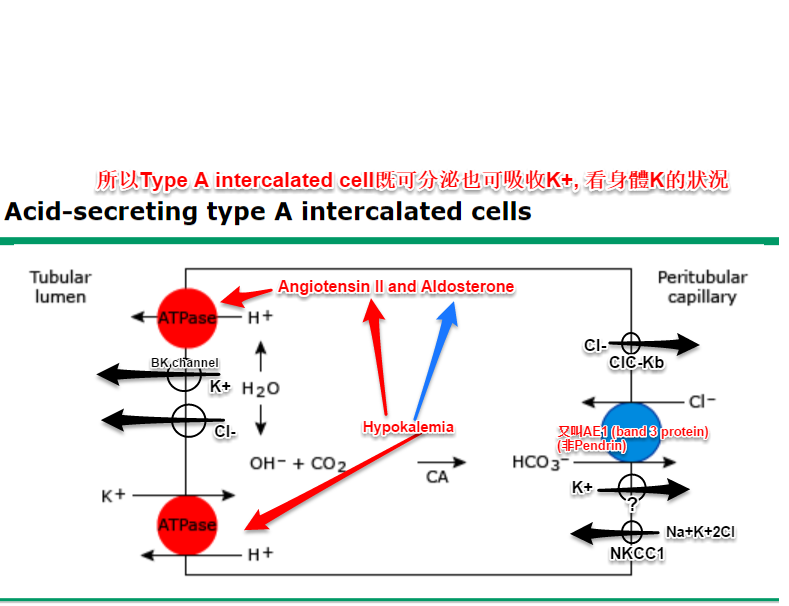
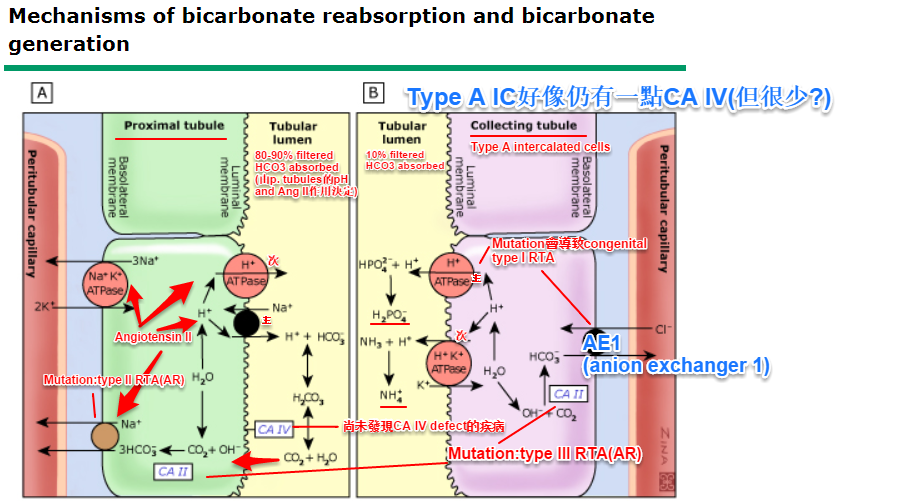
- Amiloride...等抑制ENa, 使lumen(+)而cell內(-), 使type A intercalated cells減少分泌H+-->type IV RTA
- 註:amiloride似乎也會抑制proximal tubules的apical Na-H exchanger
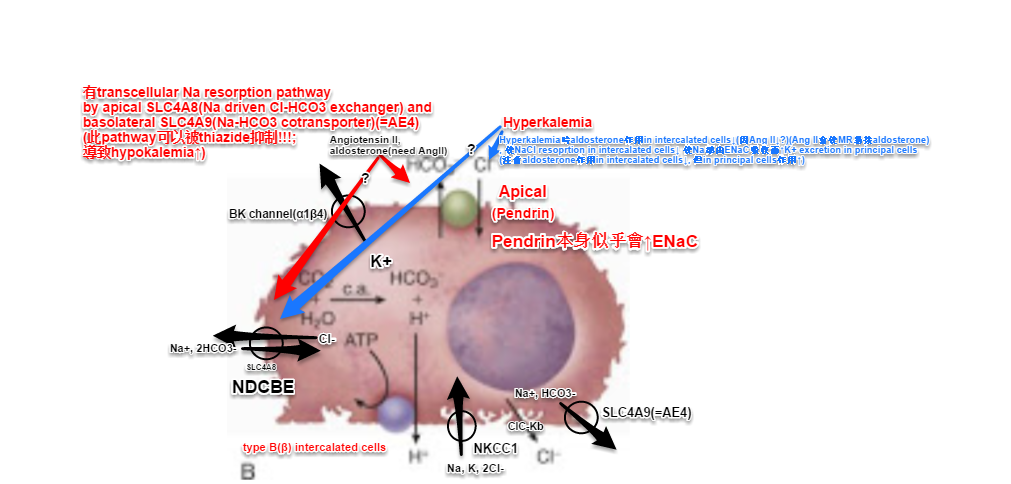
- 註:type B(β) intercalated cells作用相反如下圖; type A和type B cells會隨著身體的酸鹼而可以互相轉換, 正常type B比較沒作用因為不需要分泌鹼
2.Prevalence#
- 12% hospitalized Pts
- 60-65% ICU Pts(因為malnutrition/GI吸收↓, diuretics, drugs use)
- 和hypocalcemia的prevalence類似
3.S/S of Mg↓#
- 常合併K↓(50%)(因為disinhibition of ROMK channel or underlying disease導致2者皆低(如diarrhea, diuretics))
- 常合併Ca↓(因為PTH resistance↑(先) + PTH secretion↓(後) + 1,25 OH vitamin D↓(因為PTH↓?)=>可能也和osteoporosis有關; osteoporosis似乎還有其他機制, hypomagnesium會↓osteoblasts and ↑osteoclasts, 也會影響crystal formation); 多要Mg<0.5mM才會發生symptomatic hypocalcemia(但heart本身有問題者略低可能就會arrhythmia)
- 有些study有說一些chronic alcoholism(可Fanconi, malnutrition, vitamin D deficiency, diarrhea, pancreatitis)的病人有unknown cause of hypocalcemia, and normomagnesemic but intracellular/tissue magnesium depletion; 似乎在補充Mg之後改善hypocalcemia; 雖然證據不足但若unknown cause of hypocalcemia + renal function ok + at risk of Mg deficiency, 可try Mg supplement
- 註:hypermagnesium因為Mg會促進CaSR(parathyroid+renal), 也會導致hypocalcemia
- Na-K-ATPase function impaired
- 所以增加Digoxin toxicity
- Neuromuscular hyperexcitability(類似低血鈣)
- Due to increased intracellular Ca2+
- Unknown mechanism
- 註:鎂是intracellular and extracellular calcium channel blocker(見下述Tx, 補鎂建議不要併用CCB)
- 可weakness, muscle spasm, cramping(lower threshold for nerve stimulation)(可Chvostek's and Trousseau's signs), vertical nystagmus(rare, 發生在severe hypomagnesium; D/D wernicke encephalopathy(triad:OAC) or organic lesions; 所以若沒有organic lesions, D/D就只剩Mg↓ or vitamin B1 deficiency), seizure(正常Mg2+會↓glutamate刺激NMDA receptor, 所以hypomagnesium會↑glutamate activated depolarization)(sometimes triggered by loud noises), anxiety, psychosis, delirium, coma, 可chorea/dyskinesia
- Due to increased intracellular Ca2+
- Migraine
- Mg↓-->promoting spreading depolarization(aura S/S), alteration of neurotransmitter release, hyperaggregation of PLT, vasoconstriction
- CV
- EKG:PR prolongation, QRS widening, QTc prolongation, T peaking(但更嚴重的hypomagnesium, T會↓), 可U wave, APC, Af, VPC, VT/Vf
- EKG感覺有點像hyperkalemia的change除QTc
- Resting membrane potential變less negative-->容易depolarization而arrhythmia
- Intracellular K+↓-->repolarization delayed-->QTc↑
- Association(都是有association, 但是目前沒有RCT證實補充確實有好處)
- CAD
- Hypomagnesium似乎和CAD有association, 但supplement是否↓CAD待研究
- 可能是因為hypomagnesium ↑HTN, ↑cholesterol(?), ↑metabolic syndrome
- 因為hypomagnesium and hypophosphatemia都會↑insulin resistance
- Stroke
- Diet Mg較高者似乎比較少stroke(尤其ischemic stroke)
- Reference:Larsson SC等. Dietary magnesium intake and risk of stroke: a meta-analysis of prospective studies. (Am J Clin Nutr 2012; PMID 22205313)
- ACS
- Mg supplement in the first 24 hrs可能↓fatal ventricular arrhythmia, 可能因為↓ischemia-reperfusion injury(partly by ↑restoration of high-energy phosphates; why?因為↑Na-K pump??)
- CHF
- 若Mg<1mM ACM and CV mortality較高, 但補充有否幫助未知
- HTN
- Due to increased intracellular Ca2+; and aldosterone CV toxicity↑(?, 動物實驗發現補Mg可↓aldosterone CV toxicity)(註:hypomagnesium本身可↑renin, 也↑TXA2並↓other PG); or concurrent hypokalemia?
- 註:不過hyperaldosteronism 本身可導致hypomagnesium...(見下述)
- Essential hypertension者可能RBC中的free Mg不足, 補Mg可↓BP; 此外Mg也是vasodilator(因為block Ca2+?)
- Due to increased intracellular Ca2+; and aldosterone CV toxicity↑(?, 動物實驗發現補Mg可↓aldosterone CV toxicity)(註:hypomagnesium本身可↑renin, 也↑TXA2並↓other PG); or concurrent hypokalemia?
- TdP
- IV Mg is Tx of choice(even in no hypomagnesium者)
- Cardiopulmonary bypass
- Meta-analysis分析有Tx with Mg者, SVT較少; 不過hospital stay, ACS, ACM沒差
- ICU Pts
- Hypomagnesium者ACM較高, 但補充有否幫助未知
- General population(no CV disease)
- Hypomagnesium(even沒hypomagnesium但是吃比較少Mg)似乎較多Af, VPCs
- Reference:Nielsen FH等. Low dietary magnesium increases supraventricular ectopy. (Am J Clin Nutr 2002; PMID 11882495)
- CAD
- GI
- Higher diet Mg者colon CA似乎↓
- Reference:Folsom AR等. Magnesium intake and reduced risk of colon cancer in a prospective study of women. (Am J Epidemiol 2006; PMID 16443801)
- Asthma(因為Mg可relax airway smooth muscle, 回思嚴重asthma可以用IF Mg治療)
- Insulin resistance↑(↑DM), metabolic syndrome
- 所以DM若有hypomagnesium要處理
- 註:hypophosphatemia也會, 而hypophosphatemia也會促進hypomagnesium; 另外,hypokalemia會↓insulin secretion
- Chondrocalcinosis(=pseudogout)(risk factors:低鎂磷(猜測:1.低磷也會導致低鎂, 2.低磷導致Ca2+和其他物質沉積?), 高PTH, 高鈣, hemochromatosis)
- Higher diet Mg者colon CA似乎↓
- EKG:PR prolongation, QRS widening, QTc prolongation, T peaking(但更嚴重的hypomagnesium, T會↓), 可U wave, APC, Af, VPC, VT/Vf
4.Etiology#
- V
- MI(intracellular shifting of Mg due to catecholamine↑)
- 註:ACS也會hypokalemia
- ECF expansion(renal loss↑(因為↓吸收Na-->↓passive transport of Mg))
- 註:Osmotic diuresis可以低K, P, Mg, 高Na
- MI(intracellular shifting of Mg due to catecholamine↑)
- I
- Acute pancreatitis(皂化+GI吸收↓)
- 註:也可以hypocalcemia
- Sepsis(?)
- 註:critical illness者會因為各種原因而hypocalcemia, hypomagnesium, hypophosphatemia
- 和hungry bone syndrome的變化一樣~
- 註:critical illness者會因為各種原因而hypocalcemia, hypomagnesium, hypophosphatemia
- Acute pancreatitis(皂化+GI吸收↓)
- M
- Poor intake, malabsorption(pancreatic insufficiency, small bowel diseases...(和胃比較沒關係(vs. vitamin D)))(因為free fatty acid binds Mg2+), Diarrhea(GI吸收↓+loss 15mEq/L stool Mg); vomiting不常cause hypomagnesium(因為vomitus才1mEq/L Mg)
- Skin loss(excessive sweating(sweat可含有0.2mM的Mg(不是蠻少的...)), burns(40% hypomagnesium))
- DM(GI malabsorption + renal loss Mg↑, 機制不完全清楚(因為malnutrition, poor GI absorption due to diabetic autonomic neuropathy, osmotic diuresis, insulin insufficiency本身導致TAL, distal tubules吸收Mg↓); 相對的hypomagnesium會↑insulin resistance-->惡性循環; 所以DM若有hypomagnesium要處理)
- Alcoholism(20-25% Pts會hypomagnesium; 因為alcohol-induced tubular dysfunction(可Fanconi syndrome) + malnutrition + GI malabsorption + diarrhea + pancreatitis + refeeding; reversible within 4W after戒酒)
- Hyperaldosteronism
- Nature unknown, 可能due to 1.hypokalemia 2.aldosterone escape effect導致NKCC2少再吸收Na, 導致Mg paracellular reabsorption↓ 3.↓TRPM7(所以不會太嚴重, 因為renal主要是TRPM6 ?)
- Hungry bone(post-parathyroidectomy or post-thyroidectomy or post-correction of severe metabolic acidosis(回思metabolic acidosis會使骨頭釋放Ca, P)
- Hypokalemia(本身抑制distal tubule and loop再吸收Mg), hypercalcemia(因為Ca和Mg在TAL作用類似, hypercalcemia會激活Ca sensing receptors(CaSR)-->inhibit ROMK-->luminal K↓-->NKCC2 function↓-->↓paracellular reuptake of (Ca and Mg); 此外激活CaSR也會↓NKCC2, ↑claudin-14 expression(見下述))
- Drugs
- CNI(downregulation of TRPM6(見下述); 也increase claudin-14 expression, which would inhibit paracellular Mg2+ transport by ↓claudin-16 and ↓claudin-19), MMF(機轉未明)
- Cisplatin(可TMA(不過一般不會傷害glomerulus), damage to proximal tubules, loop of henles, collecting ducts, causing Fanconi syndrome, salt wasting, hypomagnesium(dosage >50mg/m^2/month者, 幾乎都會hypomagnesium, 不一定伴隨AKI(AKI usually occurs 3-5d after exposure, 雖然是dose dependent, 但single dose也可以AKI, AKI大多reversible, 不過>100mg/m^2可irreversible AKI), hypomagnesium(Fanconi and ↓TRPM 6)停藥後平均4-5月改善但可持續好幾年 or 永久damage, 此外也↓GI absorption), mimic Bartter or Gitelman syndrome, type I RTA, NDI(所以是non-oliguria), 但也可以SIADH; 其實carboplatin也可以ATN, hypomagnesium, 但是少見而且多為reversible)(註:Amifostine可↓cisplatin and ↓ifosfamide nephrotoxicity, 機轉似乎是透過↓toxic metabolites, ↑DNA repair, ↓ROS...)
- Hypomagnesium due to Fanconi and ↓TRPM 6
- 會hypocalciuria, nature??(可是不是也可以Fanconi syndrome??)
- Anti-EGFR monoclonal antibodies(Cetuximab, Panitumumab...)(50% hypomagnesium if Tx>6M!!; 大多用藥3M左右開始hypomagnesium, 而停藥後1-3M會改善); EGFR TKI(Iressa, Tarceva)其實也會不過比較少
- inhibition of EGFR signaling at the distal convoluted tubule(↓TRPM6, 見之前的圖)
- Groenestege(J Clin Invest 2007; PMID 17671655):EGF為DCT活化TRPM6之關鍵激素,cetuximab拮抗EGFR導致TRPM6活性不足引發腎臟鎂流失〔PMID 17671655〕
- Aminoglycoside(抑制proximal tubules; 可cause Fanconi syndrome and 可激活CaSR導致type V Bartter syndrome; 和accumulative dosage有關(所以藥物濃度正常也會), 多要>8g and >2W; 發生與否和AKI無關)
- Pentamidine(renal tubular dysfunction(可ATN); 註:題外話->也有amiloride效果所以會hyperkalemia/type IV RTA)
- Hypomagnesium平均用藥9天後出現; 停藥後要至少1-2M才改善
- Vancomycin(可IN, ATN)
- Ampho B(Increase cell membrane permeability of distal tubules導致K流出, Mg流出, H流入cell; 但會hypocalciuria, nature??; 和accumulative dosage有關, total 200mg以上即可發生...)
- 註:Ambisome可以pseudohyperphosphatemia)
- Foscarnet(會K↓, Ca↓, Mg↓, P↓)
- Loop diuretics, Thiazide(acute effect:renal reuptake↑(應該和↑Ca intake機制相同); chronic:renal reuptake↓(因為NCC inhibition會↓TRPM6 expression; 此外hypokalemia會抑制distal tubules再吸收Mg)
- PPI(GI吸收↓ by 抑制GI的TRPM6 and TRPM7 channel(見下述)(似乎不影響renal的channels));PPI vs H2RA薈萃分析(J Clin Pharm Ther 2021; PMID 34931328):PPI組hypomagnesemia風險較高(OR 2.16)〔PMID 34931328〕
- 多要>1yr才會
- FDA:用PPI應定期監測Mg
- M
- After OP(因為circulating FA可chelate Mg)
- C
- Bartter's syndrome (約1/3伴隨輕度低血鎂)
- Autosomal dominant hypocalcemia (ADH, 也叫autosomal dominant hypoparathyroidism, =type V Bartter's syndrome)
- 見-hypocalcemiahypocalcemia-Autosomal dominant hypocalcemia(ADH)
- Gitelman's syndrome (AR, 幾乎均伴隨顯著低血鎂與低尿鈣)
- Bartter 與 Gitelman 之基因型、尿鈣/血鎂對比與鑑別流程,見 Bartter and Gitelman syndromes。
- SeSAME syndrome
- 有點像Gitelman's syndrome
- Primary intestinal hypomagnesemia
- X linked recessive or AR
- If AR form, 為TRPM6 gene loss of function mutation(原function: apical magnesium entry channel of intestinal epithelia and renal distal convoluted tubules)
- 所以GI吸收Mg↓ with urine loss Mg↑
- If AR form, 為TRPM6 gene loss of function mutation(原function: apical magnesium entry channel of intestinal epithelia and renal distal convoluted tubules)
- X linked recessive or AR
- Familial hypomagnesemia with hypercalciuria and nephrocalcinosis (FHHNC)
- the most severe form of renal calcium and magnesium wasting!!!
- 因為mutation of Claudin-16 or mutation of Claudin-19(見上述)
- Claudin-19 mutation還會影響眼睛
- 導致hypocalcemia and hypomagnesium and hypercalciuria and hypermagnesuria; then nephrocalcinosis-->CKD, type I RTA
- Autosomal dominant isolated hypomagnesemia (Na-K-ATPase gamma subunit, Kv1.1 and cyclin M2(CNNM2) mutations)
- Autosomal recessive isolated hypomagnesemia (EGF mutation)
- Renal malformations and early-onset diabetes mellitus (HNF1-β mutation)
- H
- TPE with liver dysfunction(citrate也會chelate Mg)
- 只是↓ionized form Mg, total Mg應該不影響
- TPE with liver dysfunction(citrate也會chelate Mg)
- O
- Tubular dysfunction(如obstructive uropathy, post-ATN, post-renal transplantation...)
- TIN...
- Tubular dysfunction(如obstructive uropathy, post-ATN, post-renal transplantation...)
5.Approaching#
- By history as above
- FeMg:normal 3-5%
- FeMg=(UMg/Ucre)/[(PMg*0.7)/Pcre] (*0.7是因為約30% bound to Alb)
- 其他種離子如Ca為何沒有這樣算?
- 鑑別切點(前提:病患處於低血鎂狀態 <1.7 mg/dL 或 <0.7 mmol/L,且腎功能正常)〔PMID 9514041〕:
- 若 FeMg > 2-4% (或 24h 尿鎂 > 24-30 mg/d, >1 mmol/d) --> Renal loss of Mg (腎小管流失:利尿劑、Gitelman/Bartter、Cisplatin、CNI、Cetuximab、高血鈣等)
- 若 FeMg < 2% (或 24h 尿鎂 < 10-20 mg/d, <1 mmol/d) --> Non-renal loss of Mg (腎外流失:腸道腹瀉、營養不良、細胞內轉移)
- FeMg=(UMg/Ucre)/[(PMg*0.7)/Pcre] (*0.7是因為約30% bound to Alb)
6.Tx#
- Correct underlying diseases
- Consider K-sparing diuretics(可↑Ca,Mg再吸收) if 是上游loss Mg(如diuretics use, Bartter's syndrome, Gitelman syndrome, cisplatin...)
- 補Mg和其他electrolyte有所不同
- 1.Cellular uptake of Mg蠻慢的
- 所以normal renal function者即使Mg level被補到正常, 為了補cell內的Mg可再多補1-2天
- 2.Mg多在loop of Henle被再吸收, 但是acute rise of Mg level會促進CaSR而減少paracellular reabsorption of loop of Henles
- 所以IF給的Mg up to 50%會被excreted in urine
- 所以IF補應該要prolonged infusion or 改用oral form補if not emergent(oral form若能slow-released更好-->less diarrhea, slowly absorbed which ↓renal excretion)
- 不過NTUH沒有slow release form Mg, 只有MgO 250mg(=12.5mEq)/tab, 可一天800-1600mg(=40-80mEq) but frequent diarrhea
- 如前述, 正常GI function者口服吸收率約1/3
- 不過NTUH沒有slow release form Mg, 只有MgO 250mg(=12.5mEq)/tab, 可一天800-1600mg(=40-80mEq) but frequent diarrhea
- 1.Cellular uptake of Mg蠻慢的
- 小心補鎂最好不要併用CCB, 因為Mg是intracellular and extracellular calcium channel blocker
- 此外小心補鎂會↓SCa, 因為1.激活CaSR, 2.complexing of Ca2+ by sulfate
- If life threatening arrhythmia
- Mg 8-16mEq IV over 2-15mins
- If non-life threatening but severe symptomatic hypomagnesemia
- Mg 8-16mEq IF over 5-60mins
- If non-emergent (記法:約dosage and IF duration都砍半(因為IF越久越有效))
- Mg<0.4mM(severe)
- Mg 32-64mEq over 12-24hrs; could be repeated to keep Mg>1mM(可check Mg level 6-12hrs after IF Mg)
- =Q6H補1amp?
- Mg 32-64mEq over 12-24hrs; could be repeated to keep Mg>1mM(可check Mg level 6-12hrs after IF Mg)
- Mg 0.4-0.6mM(moderate)
- Mg 16-32mEq over 4-12hrs
- =Q12H補1amp?
- Mg 16-32mEq over 4-12hrs
- Mg 0.7-0.8mM(mild)
- Mg 8-16mEq over 1-2hrs
- =QD補1amp?
- Mg 8-16mEq over 1-2hrs
- 回思自己臨床經驗16mEq約上升serum 0.1mM, 不過有時會過量, 所以如下述 GFR<30者dose要減半(因為如上述正常腎功能者補Mg約一半lossed in urine)
- 在unknown cause of hypocalcemia, and normomagnesemic but suspected intracellular/tissue magnesium depletion-->可32-64mEq/d for 3-5d
- Mg<0.4mM(severe)
- Asymptomatic hypomagnesium沒有臨床證據證實補充有幫忙, 不過補了也沒有壞處
- Brenner(p810):supplement if S/S(+), underlying cardiac or seizure disorders, concurrent hypocalcemia or hypokalemia, SMg<0.6mM
- If GFR<30
- Dosage減半且給下個dose前要check level