PR3, MPO都是neutrophils的內含物, ANCAs induce a premature degranulation and activation of neutrophils at the time of their margination and diapedesis, which leads to the release of lytic enzymes and toxic oxygen metabolites at the site of the vessel wall; 此外PR3, MPO本身也會造成inflammation
IFA(Immunofluorescence assay):by肉眼看, sensitive but not specific; atypical P-ANCA會(+)[所以有許多inflammatory disease會(+)]
ELISA:more specific, atypical P-ANCA(-)
若ELISA(+)則positive predictive value:90%
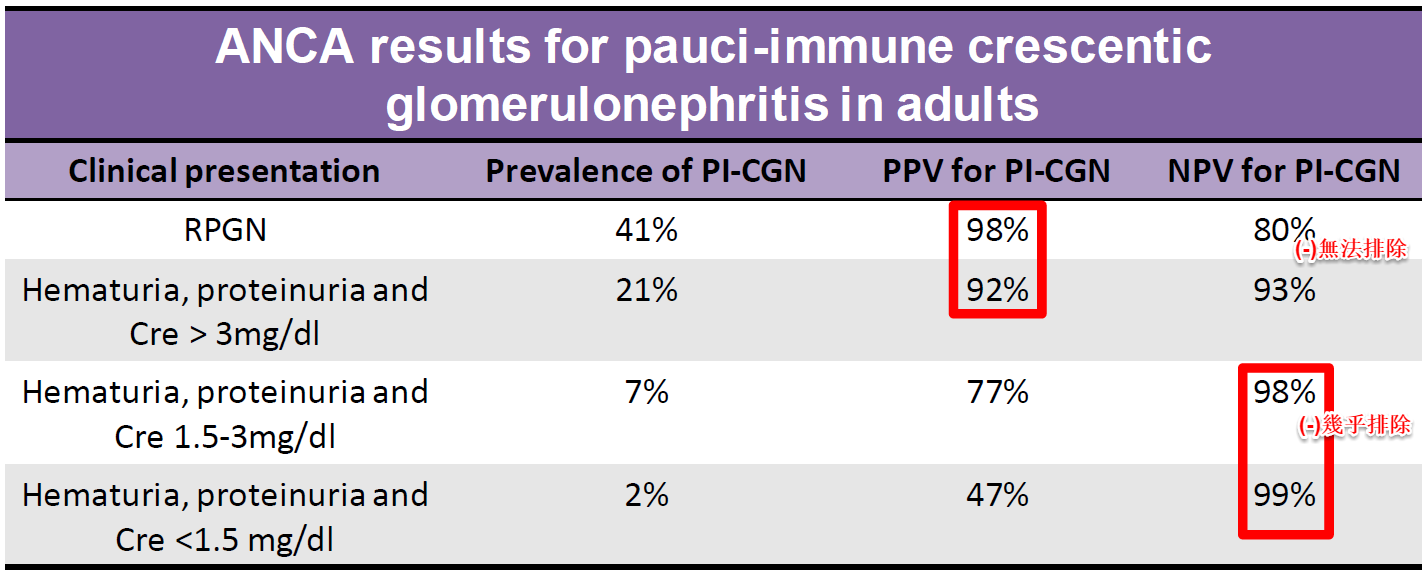
ANCA(-)but disease(+, Ex:ANCA(-) pauci-immune crescent GN(為GPA/MPA spectrum disease))可能是因為ANCA masked by circulating fragments of enzymatically degraded ceruloplasmin(?, ceruloplasmin是MPO的inhibitor)(註: α1-Antitrypsin是in vivo PR3 inhibitor), disease剛開始(?) or 表示有相似的antigen or Ab只是未被檢驗出??
ANCA as above(10% Pts are ANCA(-)), leukocytosis, thrombocytosis, anemia of chronic disease(ACD), increased inflammatory markers(CRP↑, C3↑, C4↑...), GN, consider CT(head(sinus, mastoid, orbits), neck(subglottic stenosis...), chest...), consider BAL for suspected DAH(不過BAL多不能區分etiologies)
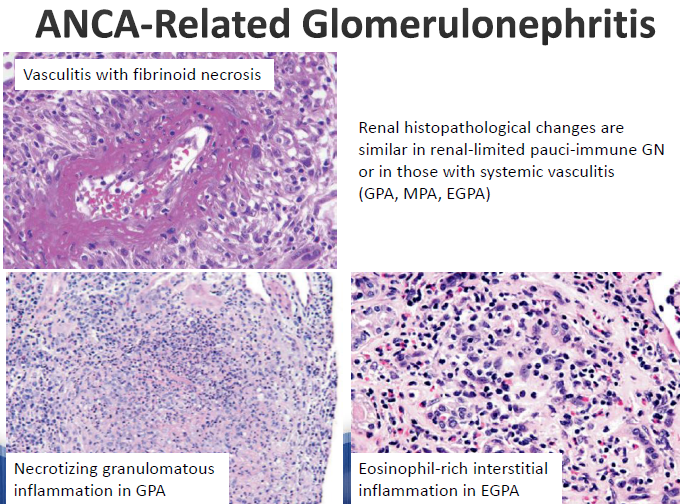
LM:偶可見arteritis and capillaritis(林維洲:這兩者台灣都很少見), from focal/segmental glomerulosclerosis to diffused necrotizing(常有fibrinoid necrosis) and crescent(不過好好壞壞, 有normal~cellular crescent~fibrocellular crescent~fibrocrescent~global sclerosis; vs. anti-GBM的一致的crescent) GN, 多有mononuclear TIN(Atypical form-->1.偶爾crescent GN之後才IN==>這種小心drugs related; 2.偶爾vasculitis of vasa recta+IN卻沒有GN==>大多之後會發展出GN)
相較於immunocomplex crescent GN比較少endocapillary proliferation nor PMN infiltrations(故名pauci-immune) and 比較多fibrinoid necrosis, rupture of Bowman's capsule, periglomerular TIN, 其crescent中的macrophage/epithelial cell比例也較高, 可能是因為rupture of Bowman's capsule而macrophage由interstitium跑進來的關係
Skin(non-specific LCA with little or no Ig/Complements)
Lung(pulmonary capillaritis; 最好open or thoracoscopic lung biopsy, 因為transbronchial biopsy的specimen常不足以診斷)
Kidney(pauci-immune GN)
Do not delay Tx due to biopsy!!
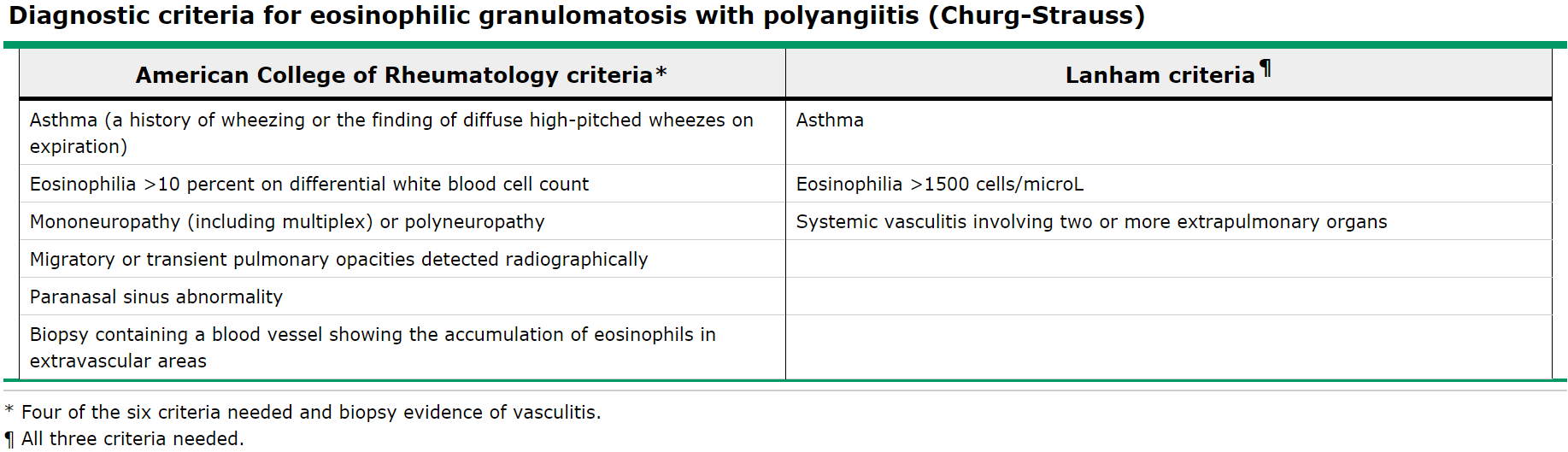
EGPA
診斷較困難, 因為1.prodrome~vasculitis可隔很久, 2.ANCA(+)才50%, 3.biopsy常沒看到necrotizing vasculitis nor granuloma(反而常看到non-destructive infiltration of BV walls by eosinophils)
GPA/MPA(if untreated==>mortality:90% in 2 yrs due to respiratory or renal failure)(多remission in 2-6M by induction Tx)
Tx if active disease(any S/S of active vasculitis)
有時active disease難和permanent damage(due to disease or Tx)區分
小心分辨permanent damage 如
Chronic nasal crusting, subglottic stenosis, orbital pseudotumor(所以pseudotumor不一定會消失!!!), residual lung nodule(scar), stable peripheral neuropathy, persistent proteinuria and renal insufficiency without hematuria; 這些並非active disease
Complete remission of GN
應no glomerular hematuria(應<5RBC/HPF)[若有hematuria, 應小心排除其他原因的hematuria] nor RBC casts
Induction(→ 緩解/復發率見§10 Prognosis)
If non-organ threatening and non-life threatening(無CNS vasculitis/progressive neuropathy, orbital pseudotumor, 心, pulmonary hemorrhage, GN, GI involvement); Ex:rhinosinusitis, arthritis, pulmonary nodules
MTX(2C)[也可直接用Rituximab(reasonable)] + Steroid
MTX:0.3mg/kg/week, increase 2.5mg QW to 25mg/week; GFR差者不用MTX(→ 見維持段GFR限制)
MTX和daily Endoxan相比, remission相似, less toxicity, but more relapse(所以只用在non-threatening Pts的induction) and more time to achieve remission
無效者一樣改成Rituximab or Endoxan
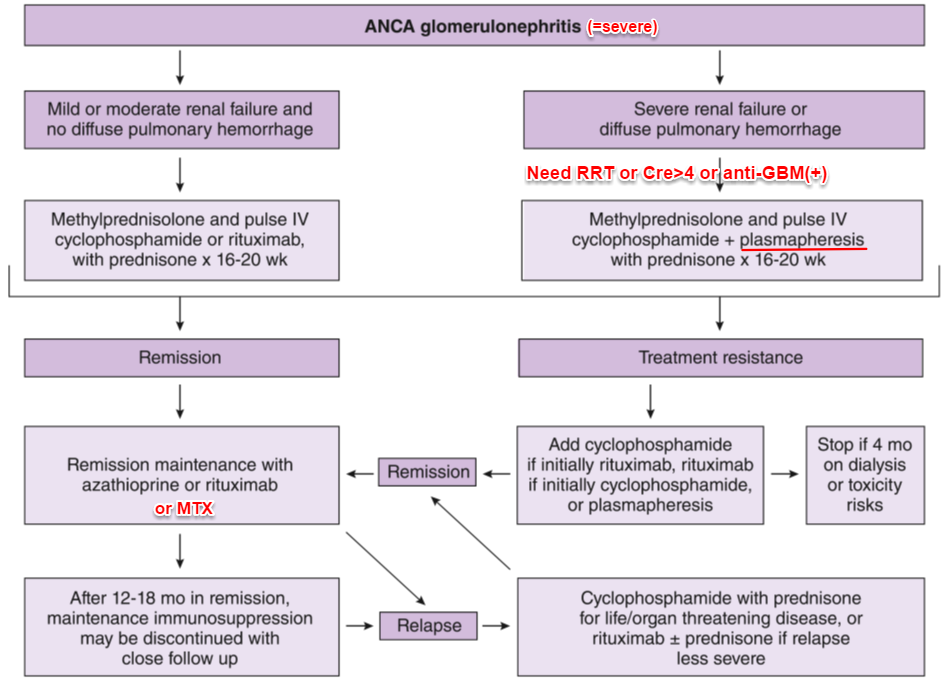
If organ threatening or life threatening(如:CNS vasculitis/progressive neuropathy, orbital pseudotumor, 心, pulmonary hemorrhage, GN, GI involvement)
(Rituximab or Endoxan)(1A)[有些人會先用Endoxan 2~3月再改成Rituximab, 不過這種做法沒evidence][也有些人兩種藥一起用不過也controversial] + Steroid
Rituximab:(375mg/m^2 QW*4, RAVE/RITUXVAS方案) or (1000mg D1+D15, 共2g固定劑量方案)(→ 維持劑量見下維持段)
Endoxan: (IV 15mg/kg(也有些人從0.5g/m^2開始, 若可tolerance再漸漸加量) Q2W*3, then Q3W for 3~6M) or [oral 1.5-2mg/kg/day until stable remission(也多3-6M; 注意WBC應維持>3000)]
Steroid: pulse 500-1000mg QD*3(有些人覺得只有necrotizing GN or crescent GN or severe lung disease才要), then 1mg/kg/day(max:60-80mg/day)for 2-4W, then taper slowly to 20mg/day by 2M, total duration:4-6M(原則上希望能taper off; 不然至少要lowest effective dose)
Change to maintenance Tx if remission(多within 3-6M)
如果是drugs induced ANCA vasculitis不用maintenance
If induction Tx is Endoxan
Keep Endoxan 1-2M after remission, then DC Endoxan, then change to maintenance Tx(若為daily Endoxan, 則DC後若WBC>4000 and ANC>1500可加maintenance Tx; 若為IV monthly Endoxan, 則要2-4W after the latest Endoxan and WBC>4000(因為WBC nadir約monthly IV Endoxan後2W, 所以也可以adjust Endoxan dosage based on此WBC nadir) and ANC>1500才可加maintenance Tx)
If induction Tx is Rituximab
多month 4~6 start maintenance Tx
If 非relapse的病人
AZA(2mg/kg/day)(多2mg/kg/day for 1 yr then taper over 0.5-1 yr, 也可更久更慢)
Less relapse than MMF(2g/day for 1yr, then 1.5g/day since M12, then 1g/day since M18)(和LN的data相反...)
AZA:pregnancy可用
MTX(0.3mg/kg/week(initial最多15mg/day), increase 2.5mg QW to 25mg/week)(也多上述dose維持1 yr, then taper over months or...) with folic acid 1mg/day
GFR<50-60不能用
不可和Baktar一起用
Rituximab(維持劑量為500mg IV at D0, D14, then M6, M12, M18, 即500mg Q6M; 注意不是375mg/m^2, 那是induction劑量)〔PMID 25372085〕
For C-ANCA disease(→ 見上維持段:GPA/c-ANCA復發多,rituximab維持較佳)
有些專家傾向用Rituximab if induction with remission by Rituximab; 用AZA if induction with remission by Endoxan; 少用MTX
For P-ANCA disease
原則上用AZA or MTX, 因為Rituximab的data較少, 不過用Rituximab也是reasonable; 有些專家傾向在low risk of relapse且身體狀況良好者不用maintenance Tx(因為P-ANCA比較少relapse)
Duration
大多1-2 yr
但high risk of relapse者(C-ANCA or persistent high titers or pulmonary involvement or upper airway involvement or nasal carriage of S.A.)=>2-3 yr, even indefinitely(尤其傷害嚴重身體無法容忍relapse者)
Overall relapse:40%
Relapse者可考慮indefinitely
Relapse處置(mild vs 需re-induction,維持中與維持後通用)
如果是mild and non-threatening relapse, 可加量/重用原maintenance Tx(longer/indefinite duration)