◐General Nephrology

Hypercalcemia

Electrolyte約 26 分鐘7 個章節

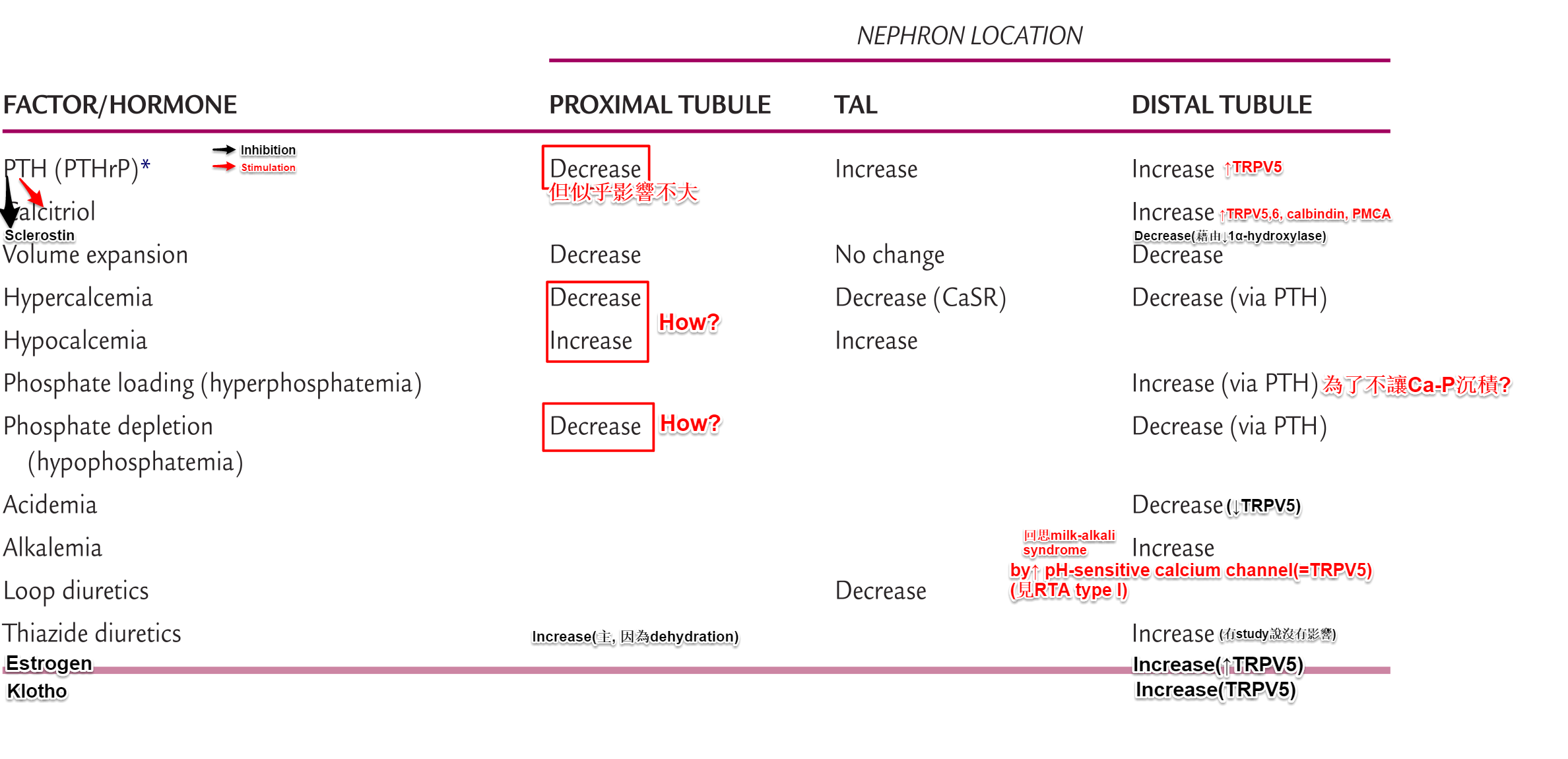
1.Physiology of Ca regulation#

    • 註:TAL:thick ascending limb(NKCC2 region)
    • 註:PTH/PTHrP ↓proximal tubules reabsorption(因為↓NHE3, 而Na和Ca是成正比吸收?見離子通道綜合圖離子通道綜合圖-Ca2+) but ↑(TAL and distal tubule) reabsorption所以overall是↑Ca再吸收
    • 註:Alkalosis會↑Ca reuptake in distal tubules, 或許是因為要代償Alb<->Ca binding↑導致的free form Ca↓??
    • 註:Principal cells似乎有apical CaSR, 接上Ca會↓AQP2 and ↓ENaC
  • Normal Ca2+ physiology
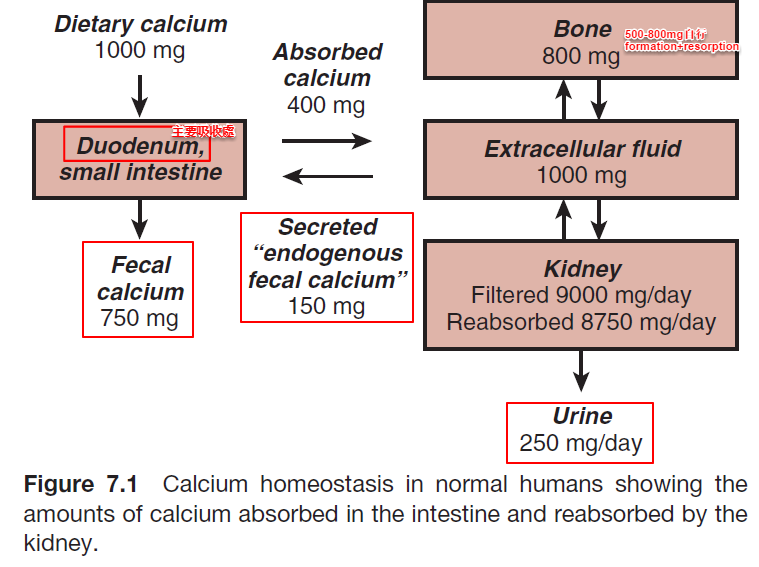
      • 由上圖可知正常人一天UCa約250mg
        • Normal FeCa: ~0.5-2%(飲食依賴, 高鈣飲食可到~4%); normal UCa 100-250mg/d(若吃low calcium diet可50-150mg/d, 若吃calcium free diet可5-40mg/d)(註:FHH 與 PHPT 鑑別標準切點見 1-1,CCCR <0.01 強烈支持 FHH,>0.02 支持 PHPT)
      • 也見HypophosphatemiaHypophosphatemia-1.Physiology
        • 和P的physiology比較一下
    • 正常人身體內有1000-1300g Ca, 99.3%在bone/teeth中, 0.6%在soft tissue中, 0.1%在ECF中

1-1.FHH vs. Primary hyperparathyroidism 鑑別計算(必考計算題)#

  • Calcium-to-creatinine clearance ratio(CCCR, 即 FeCa)
    • 公式: CCCR = (Urine Ca × Serum Cre) ÷ (Serum Ca × Urine Cre)(四項單位須一致,同為 mg/dL 或同為 mmol/L)
    • Eastell 2014 (JCEM 2014; PMID 25162666) 診斷準則與切點:
      • CCCR < 0.01 (1%) → 強烈支持 FHH(CaSR 突變,診斷準確率 >85%)
      • CCCR > 0.02 (2%) → 強烈支持 Primary Hyperparathyroidism (PHPT)
      • 0.01–0.02 (1%–2%) → 灰色地帶(Indeterminate): 必須先檢驗 25-OH Vitamin D,若缺乏(<20 ng/mL)會壓低尿鈣排泄導致 PHPT 呈現假性低 CCCR;務必先補足 25-OH VitD 至 >20 ng/mL 後重測尿鈣與 CCCR;若仍處於灰色地帶且高度懷疑,應安排家族篩檢及 CaSR 基因檢測(排除 GNA11, AP2S1 突變)

2.Serum total Ca#

  • Normal total SCa:2.12-2.62mM(小孩的normal value比較高)
  • 45%為free form(ionized)(normal: 1.16~1.32 mM)(filterable)
  • ~10% bound to multiple organic and inorganic anions such as sulfate, phosphate, lactate, and citrate(filterable; 常見教學為10-15%, 各來源略異)
  • ~40-45% bound to proteins(主要是Alb(90%), globulins(10%)也有一點)(non-filterable)
    • The standard equations used to correct for a low serum Alb frequently overestimated the ionized calcium
    • 註:Ca和protein bound的量(mmol/L)=0.19*[Alb(g/dL)] - [(7.42-pH)*4.2*Alb(g/dL)/47.3] + 0.04*globulin(g/dL) - [(7.42-pH)*4.2*globulin(g/dL)/25]
  • 重點是free form的Ca level
    • 所以要小心 55% non-free form的部分影響Ca判讀, 如:
      • Alb level(每↑1g/dL, 會↑0.2mM SCa)
      • Globulins(每↑1g/dL, 會↑0.04mM SCa)
      • iPTH↑-->本身會刺激Ca和Alb分離-->↑ free Ca ratio
      • Hyperphosphatemia-->和Ca結合-->↓ free Ca ratio
      • Citrate↑-->和Ca結合-->↓ free Ca ratio
        • 所以massive transfusion or RCA...要check iCa
      • Alkalosis-->Ca and Alb結合↑, 故Ca free form↓(在acute respiratory alkalosis下, pH↑0.1, free form Ca↓0.04mM); acidosis則相反
        • 所以小心有時候pre-ESRD with hypocalcemia and metabolic acidosis, correct metabolic acidosis會使free Ca↓, 會造成hypocalcemia S/S跑出來; 若CKD with metabolic acidosis and low Alb會難以評估free from Ca level, 因為metabolic acidosis ↑free Ca ratio, Alb correction equation會高估Ca(實際free Ca要更低), 一高一低就不知free Ca level, 建議用gas機直接看

3.S/S#

  • cCa<3(mild)多asymptomatic or some non-specific S/S如constipation, fatigue, depression
  • cCa 3-3.5(moderate)如果是chronic也不一定有S/S, 但若acutely elevate to cCa 3-3.5則可有severe S/S
  • cCa >3.5(severe)多有S/S
    • Neuro:anxiety, delirium, depression, headache, cognitive dysfunction(可memory loss, psychosis...), even coma; 可pruritus(所以懷疑uremic pruritus者CKD-MBD也要治療好)
    • CV
      • EKG:QTc shortens but rare arrhythmia(可AVB, bradycardia)
        • 不過若cCa>4可T wave widening而↑QT interval !!
        • 註:Mg>2.5也會↑QT interval !!
      • Hypertension
    • GI:N+V, PUD(less common; 原因為Ca↑刺激gastrin分泌), abdominal pain, pancreatitis(less common; 原因為deposition of Ca in pancreatic ducts and Ca激活trypsinogen within the pancreas), constipation(decreased smooth muscle tone(原因見Resting membrane potentialResting membrane potential) and/or abnormal autonomic function)
    • Nephro
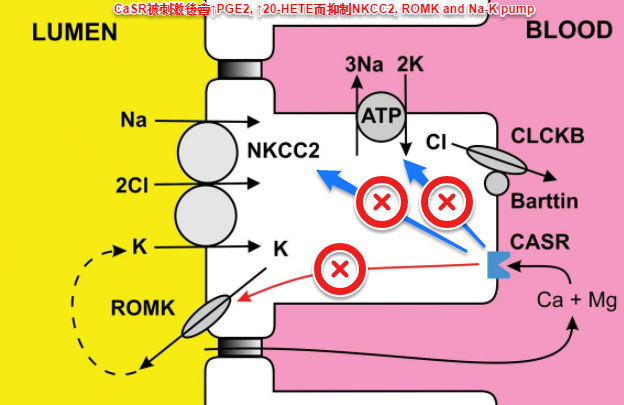
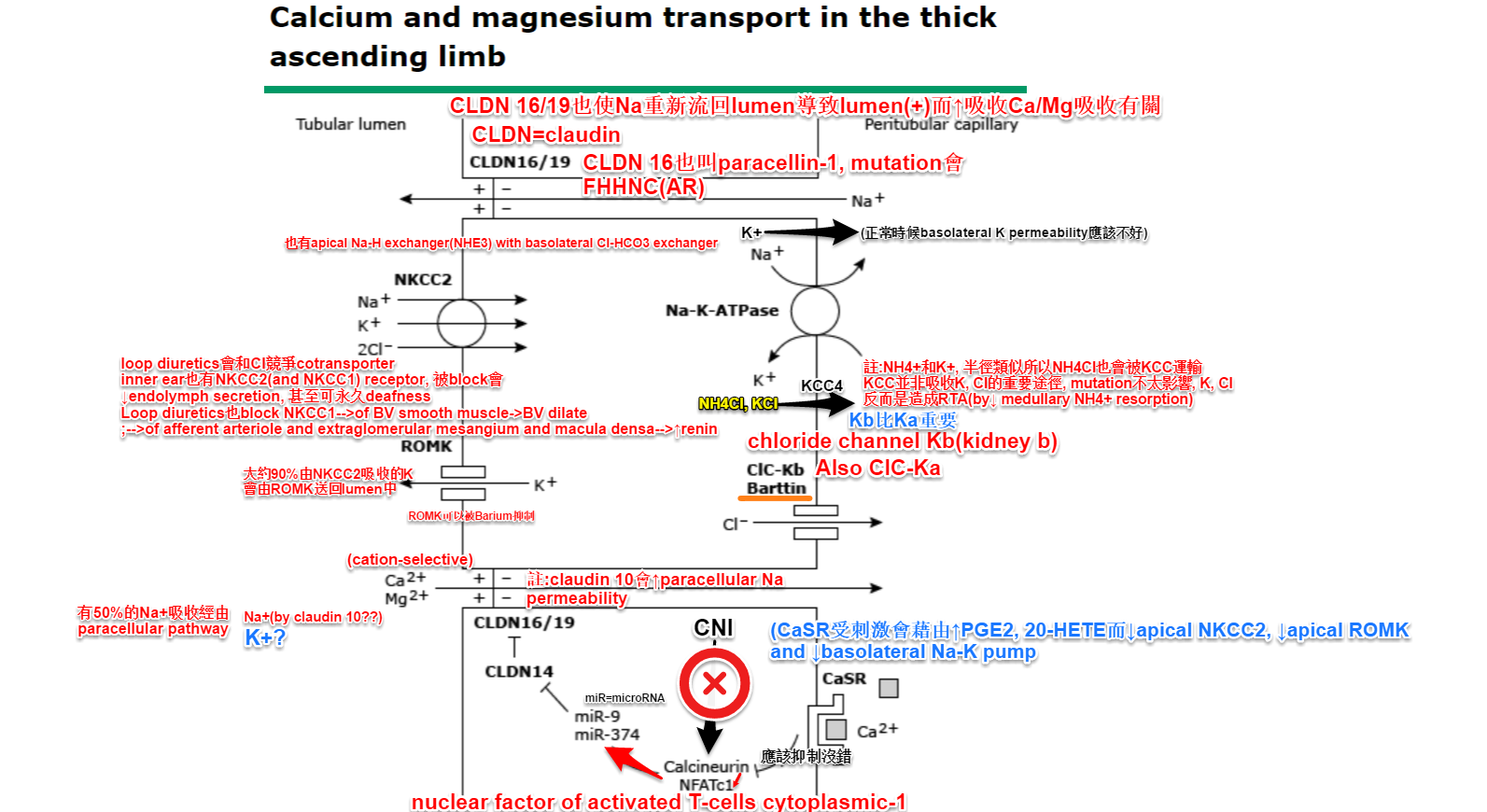
      • (1)Impaired generation of interstial osmotic gradients(1.CaSR in the basolateral membrane of TAL被激活, 導致↓ROMK channel, 導致K漏不回tubular lumen, 導致NKCC2無法運作, 導致lumen-positive transepithelial voltage↓, 導致paracellular Na, Ca, Mg無法吸收, 總結果減少loop of henles吸收Na, K, Cl and Ca, Mg-->久了減少osmotic gradient(如下圖) 2.此外CaSR的activation似乎也促進PGE2產生-->↓NKCC2, 也減少osmotic gradient(此作用似乎和angiotensin II有關(?), 因為ARB在老鼠model可reverse此反應)) + (2)刺激CaSR也會↓thin ascending limb吸收NaCl(↓ClC-Ka and ↓paracellular Na+ resorption) + (3)Downregulate of AQP2(Ca被CaSR in the luminal membrane of principal cells sense-->↓AQP2 and ↓ENaC; 為了沖掉Ca的生理保護機制?; 似乎也有其他mechanism↑AQP2 degradation) + (4)Ca deposit in medulla(->cTIN)
        • Cause NDI(基本上要>2.75mM才明顯), polydipsia, nephrocalcinosis, nephrolithiasis
        • (rare) type I RTA
          • 但好像也可以metabolic alkalosis(due to hypovolemia, RAAS↑, and 直接刺激分泌H+???(milk-alkali syndrome))
      • AKI/CKD
        • Due to renal artery vasoconstriction, dehydration, cTIN/TAIF
    • Muscle weakness, fatigue, DTR decreased, myalgia, arthralgia/pseudogout, bone pain(may be due to underlying)
    • Metastatic calcifications

4.Etiology#

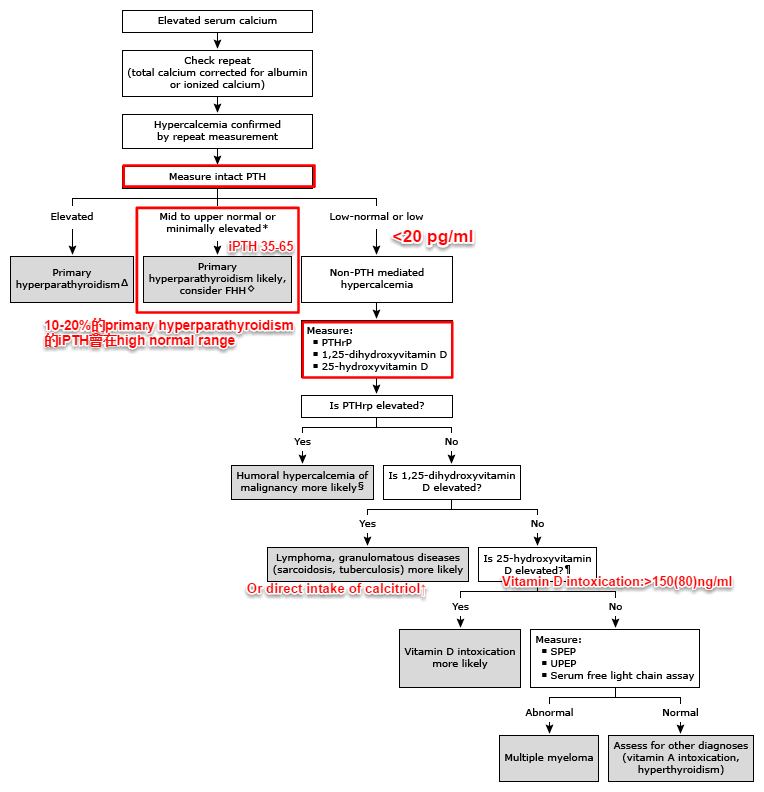
  • Primary hyperparathyroidism and malignancy佔了90%的cases
    • Primary hyperparathyroidism 少cCa>3.25mM, 多asymptomatic, chronic
  • (Rare)
    • Pseudohypercalcemia due to hyperalbuminemia(所以要校正by Alb) or Ca-binding paraproteins in MM(globulins only minimally bind calcium所以除非level很高才會pseudohypercalcemia or 某些特別會binding Ca的paraproteins(似乎多為IgG?, 不過IgG不是帶正電嗎???))
      • 所以MM若抽血severe hypercalcemia但沒有S/S, 要小心pseudohypercalcemia, 要跑gas機看free form的Ca level
  • Normal iPTH change
  • High iPTH(cause bone resorption, tubule calcium reabsorption, ↑1,25-OH vitamin D)
    • Lithium use
      • 約5% Pts會hypercalcemia, 可很輕微~很嚴重
      • 因為↓Ca對parathyroid gland的suppression
        • 所以可以用cinacalcet
      • 也是urine Ca>200-300mg/d(or FeCa>0.02)
      • 若lithium使用沒有很久(<5yrs), 大多數週內會recovery
        • 若不能停藥or 停藥無效, 考慮cinacalcet, even OP(parathyroid可能已經變成adenoma)
    • Familial hypocalciuric hypercalcemia(FHH)(AD)
      • UCa<100mg/d(or CCCR<0.01, 即 FeCa<1%); <40 y/o; FH(+)
      • Loss-of-function mutation of CaSR of parathyroid and kidneys(renal機制見hypomagnesiumhypomagnesium-Renal handling of Mg)
        • Type 1 FHH是CaSR loss of functional mutation; type 2 FHH是GNA11 (guanidine nucleotide-binding protein alpha-11) gene mutation; type 3 FHH是AP2S1 (adaptor-related protein complex 2, sigma 1 subunit) gene mutation
          • Type 2 and 3的gene一樣是mutation後CaSR對Ca2+不敏感
        • 所以需要higher than normal Ca level(多2.6-3mM) 才能suppress iPTH
        • iPTH多在high normal range(40-60)
      • 也會mild elevated Mg level, 因為Loops of henle在回收Ca時也會回收Mg
      • 也會hypophosphatemia(因為PTH↑)
      • BMD(達平衡?) and vitamin D level皆為normal
      • 基本上不太需要治療
        • FHH和PHPT需要D/D, 因為FHH大多不用做parathyroidectomy(因為FHH大多是benign disease)而且也不會全好(kidney一樣hypocalciuria)
        • 但若在severe S/S者可以考慮subtotal parathyroidectomy or cinacalcet
    • Neonatal severe hyperparathyroidism(NSHPT)(AR)
      • =AR form的FHH, 多發生在近親交配的FHH Pts子女
      • Usually lethal !!
      • 會severe hyperparathyroid hyperplasia, PTH↑↑, severe hypercalcemia(cCa多>3.75), hypocalciuria, severe bone disease...
      • 需要total parathyroidectomy
    • Primary(single adenoma佔PHPT的80-85%, 剩下的15-20%為hyperplasia, <1%是parathyroid carcinoma(carcinoma多為large(Ex:3 cm), irregular, hard tumor); PHPT各年齡層皆有, 不過老人比較多, peak:60 y/o)/tertiary hyperparathyroidism(小心有時候post-renal transplantation, 因為P↓(40% within the 1st yr, 10% by 4 yrs) +1,25-OH vitamin D↑+原先parathyroid hyperplasia+resorption of tissue calcium phosphate depositions可hypercalcemia(約30% within 1 yr after OP; 多within 3M after OP), 大多parathyroid hyperplasia會慢慢回復(within 1yr but may persist for yrs), 血鈣也跟著下降, 不過有時候hyperplasia不會完全回復)
      • vs. FHH
        • Primary hyperparathyroidism的urine Ca多>200-300mg/d(or CCCR>0.02, 即 FeCa>2%)
          • 但若Primary hyperparathyroidism with 25-OH Vitamin D deficiency則UCa可變成<200mg/d(or CCCR <0.02); 此時要先補25-OH Vitamin D to >20ng/mL再recheck UCa與CCCR,若CCCR仍為0.01-0.02(灰色地帶), favor primary hyperparathyroidism但無法排除FHH, 應family screen + monthly recheck iPTH, Ca,必要時做CaSR基因檢測
            • Vitamin D其實會↑renal Ca reabsorption(不過因為骨頭放出Ca,P更多, 所以calcinuria↑), 因此vitamin D↓時calcinuria↓
      • Primary hyperparathyroidism小心congenital syndromes
        • MEN I(AD)(其中90%有PHPT), MEN IIA(RET mutation)
        • Familial isolated hyperparathyroidism
        • Hyperparathyroidism-jaw tumor syndrome(AD)
          • Parathyroid adenoma(or carcinoma(15%)) + Jaw(mandible, maxilla) fibroma(25-50%) + renal cysts/harmatoma/Wilms' tumors(20%) + Uterine tumors(75%)
          • 原因是Hyperparathyroidism 2 gene(產物是parafibromin) loss of functional mutation
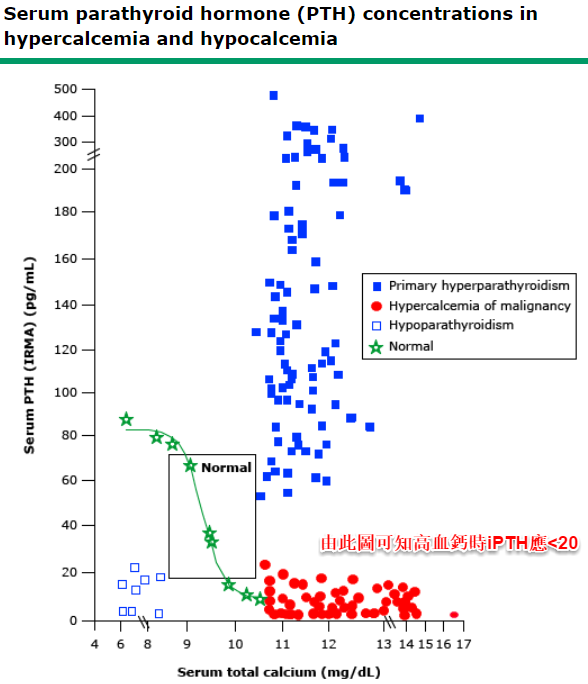
      • 小心primary hyperparathyroidism常僅是high normal iPTH with high normal Ca level and intermittent hypercalcemia(如上所述高血鈣時iPTH應<20, 若高血鈣但iPTH>20則仍有可能PHPT)
        • 所以PHPT常沒症狀(60-80%, 由routine lab發現hypercalcemia而診斷); mild S/S and renal stones(20-25%); severe S/S and osteitis fibrosa cystica(5-10%)
          • Parathyroid carcinoma多是severe S/S
    • Ectopic PTH secretion(malignancy; rare)
  • Low iPTH
    • Granulomatous infection/inflammation(activate extrarenal 1-α hydroxylase->↑1,25-OH vitamin D->↑GI Ca absorption, ↑bone resorption(所以↓BMD), ↑renal Ca2+ resorption)
      • TB, leprosy, cat-scratch disease, fungus(farmer's lung, coccidioidomycosis, paracoccidioidomycosis, histoplasmosis, candidiasis(!), PJP), WG, Crohn's diseases, Sarcoidosis(10% hypercalcemia), Langerhans-cell histiocytosis, lymphoma, berylliosis, silicone-induced granulomas, methacrylate injection, talc granuloma...
      • 原因是Interferon-γ使macrophage不被1,25-OH vitamin D抑制-->失去negative feedback
      • 大多clinically evident, 但也可以occult, 無法解釋的↑ 1,25-OH vitamin D考慮全身CT+BM study!!
      • Avoid sun exposure and vitamin D intake in this situation!
    • Malignancy(造成hypercalcemia時多clinically apparent)
      • 最容易hypercalcemia的Cancer為breast(但也可以osteoblastic meta而hypocalcemia), lung cancer and MM
      • A higher incidence of cancer in Pts with primary hyperparathyroidism and a higher incidence of primary hyperparathyroidism in Pts with cancer
        • 所以cancer(+)者的hypercalcemia仍都要測iPTH
        • 註:有PTH是cancer promotor的說法
      • Metastasis(direct ↑ local osteolysis by the tumor cells(可能仍是藉由local secretion of cytokines(含local secretion of PTHrP, IL-1,6,8...))(也叫local osteolytic hypercalcemia(LOH))(20% of malignancy related hypercalcemia)
        • 常見breast CA(也可↑PTHrP; 但也可因為osteoblastic meta而hypocalcemia), prostate CA(也可↑PTHrP; 但也可因為osteoblastic meta而hypocalcemia), MM(myeloma cells會↑stroma cell表現RANKL, 也↓OPG; MM約15-20%hypercalcemia, 雖然是因為osteolytic lesions才hypercalcemia, 不過影像上osteolytic lesions severity和hypercalcemia correlation不佳), lymphoma/leukemia
      • Cytokines(TNF and IL1,6,8...可以刺激osteoblast precursors to mature osteoblasts表現RANKL而刺激osteoclasts)
      • PTHrP(most common cause(80%!!!!!) in nonmetastatic solid tumors)(也叫做humoral hypercalcemia of malignancy(HHM))(註:PTHrP和PTH N terminal前8個A.A.一樣, 其他結構不一樣, 不會被一般iPTH assay偵測到(不過bio-intact PTH assay呢??(見CKD-MBD(2017 KDIGO)-註:PTH為84 amino acid peptide))
        • 常見SCC, breast CA(也可LOH, 但也可因為osteoblastic meta而hypocalcemia), ovarian CA, prostate CA(也可LOH, 但也可因為osteoblastic meta而hypocalcemia), RCC, bladder carcinoma, leukemia/lymphoma
        • (大多Ca↑ acutely; chronic比較不像PTHrP造成的(雖然直覺上是chronic...))
        • iPTH and calcitriol level are low in these Pts(PTHrP不太會刺激1-α hydroxylase, 所以1,25 OH vitamin D level是低的!)
          • PTHrP可刺激renal and bone的receptors, 其他處不太有反應; 在renal effect上和PTH差不多, 在bone effect上會bone formation↓↓(原因未知, 可能是PTHrP和osteoblast的PTH receptor affinity較差?) and bone resorption↑↑
        • Uptodate說可以當成tumor markers, 且可預期bisphosphonate的反應, if PTHrP>12 pmol/L, 預期bisphosphonate↓Ca幅度小, 且<14天常需再打且survival較差
        • Activation of extrarenal 1-α hydroxylase(lymphoma, MM, Ovarian dysgerminomas; by activated macrophages and/or malignant lymphocytes)
      • Summary
        • 所以breast CA, prostate CA, leukemia, lymphoma皆可因為osteolytic lesions, cytokines, PTHrP而hypercalcemia(breast CA, prostate CA也可因為osteoblastic meta而hypocalcemia); lymphoma更多activation of extrarenal 1-α hydroxylase
    • Metabolic
      • Advanced liver disease(acute or chronic)
        • 看cases的lab, 幾乎都是一些T-bil很高 or PT prolongation者
        • 機制未明, 可能是一些發炎物質導致bone resorption↑
        • Reference
          • Hypercalcemia of advanced chronic liver disease: a forgotten clinical entity!(2016 Clin Cases Miner Bone Metab.)
          • Hypercalcemia. A complication of advanced chronic liver disease.(1987 Arch Intern Med.)
      • Acromegaly
        • 大多因為coexisting hyperparathyroidism(MEN I?), 但也可以1, 25 OH vitamin D↑(可能是因為direct action of growth hormone on the renal 1-α hydroxylase activity)
        • 15-20%有hypercalcemia, 不過多mild hypercalcemia而已
      • Hyperthyroidism
        • 因為thyroid hormone ↑ bone resorption(可能和beta-adrenergic regulation有關)
        • 20%有hypercalcemia, 不過多mild hypercalcemia而已
        • 註:hyperthyroidism和parathyroid adenoma有association!!, 要小心
      • Adrenal insufficiency
        • Due to (thyroid↑->increased bone resorption), binding of Ca to serum proteins, ECF↓, proximal tubules再吸收Ca↑(why? ECF↓?)
      • Pheochromocytoma(rare complication)
        • 可因為MENIIA(concurrent parathyroid lesions) or 因為PTHrP分泌(PTHrP could be suppressed by alpha blocker, 機制未明) or tumor本身(因為有OP完好的案例)
      • VIPoma
        • 可能源於MEN I syndrome or dehydration
    • Drugs
      • ketosteril, Kalimate(一包5g有400mg Ca), Caphos/Canat, betel nuts, herbs, TPN
        • Ca intake↑本身若無decreased urine excretion則不會造成hypercalcemia
      • Milk-alkali syndrome(其實應該叫calcium-alkali syndrome)
        • too much(Ca intake; 大多需要>4g Ca/d intake, 不過>2g/d就可能發生) + metabolic alkalosis(會刺激distal tubules再吸收Ca, 見上述Physiology of Ca regulation) + dehydration(因為hypercalcemia-->NDI; dehydration後又會刺激Ca2+ resorption) + renal insufficiency
      • Teriparatide
      • Vitamin D
        • DC calcitriol後多1-2天hypercalcemia即可resolve, 因為calcitriol t1/2短(t1/2=4-12hrs), supportive care/hydration即可
        • 相對的, 若是vitamin D(D2 t1/2:12hrs, D3 t1/2:24hrs) or 25-OH(t1/2:2-3W) vitamin D(>80ng/ml)造成的會持續較久, 可能需要用steroid/bisphosphonate...
          • 1,25 OH vitamin D level此時似乎也會水漲船高而↑
      • Vitamin A >50000IU/d or retinoic acid(如cis-retinoic acid for neuroblastoma or ATRA for AML-M3...; dose-dependent hypercalcemia, overall 30%)
        • ↑ bone reabsorption
      • Thiazide(0.5-2%)
        • Mechanism
          • 1.因為volume depletion所以↑passive(=paracellular?) p. tubules Ca2+ resorption(註:proximal tubules的Na+和Ca2+是成比例吸收的)
          • 2.↑TRPV5 and NCX1(以前的study說有, 但近來的study好像說thiazide不影響distal tubules吸收Ca2+)
            • 也有一說是thiazide抑制NCC導致intracellular變成負電(因為有basolateral Na-K pump, 但又沒Cl-可被吸收到capillary)->刺激Ca吸收->hypocalciuria->hypercalcemia
          • 3.Metabolic alkalosis使distal tubules吸收Ca2+↑
          • 可能1才是主要mechanism, 因為TRPV5被knock out的老鼠仍會hypercalcemia
      • Theophylline/aminophylline
        • 可能和beta-adrenergic↑-->enhanced PTH function有關
      • Estrogen or Tamoxifen in bony metastatic breast CA(因為estrogen刺激ER(+) breast cancer cells ↑bone resorption)-->可以acute hypercalcemia, 多1W左右(4-11 days)after drugs use
        • 其實estrogen也會↑TRPV5
    • Post-AKI(especially in rhabdomyolysis)
      • 可能是因為mobilization of Ca in injuried muscles(若rhabdomyolysis), improving hyperphosphatemia, mild secondary hyperparathyroidism(delayed resolution of secondary hyperparathyroidism), unknown mechanism of increased calcitriol level
      • 註:所以AKI due to rhabdomyolysis期間會因為hyperphosphatemia and Ca2+跑入injuried muscles而hypocalcemia
    • Mechanical
      • Immobilization(一樣是↑bone resorption)(多需要>10天immobilization)
        • 原因是Osteocytes分泌Sclerostin↑, when bone mechanically unloaded
          • Sclerostin會↓bone formation, ↑bone resorption, 不過也↑UCa(↓distal tubules吸收Ca), 應該算是骨頭覺得鈣太多要排掉的一種hormone
        • 可用Bisphosphonate, denosumab; 不過mobilization才是最好的解決方式
      • Adynamic bone disease(impaired bone formation) or high turn over bone disease

5.Approach#

  • 先看iPTH(↑->Li, FHH, hyperparathyroidism(可non-AG metabolic acidosis(有type II RTA, 因為抑制NHE3)), ectopic iPTH), 再看1,25-OH vitamin D(↑->TB, fungus, sarcoidosis, WG, CD, lymphoma, direct intake of calcitriol), 25-OH vitamin D(↑->drugs) and PTHrP(↑->malignancy); if 都未↑-->malignancy, hormone, drugs/intake, immobilization
    • PHPT的Serum Cl-(mM)/P(mg/dL) ratio多>33 (vs. other hypercalcemia etiologies)
  • For P
    • P↓ in iPTH↑(FHH P level不一定) or PTHrP
    • P↑ in other diseases
  • For UCa
    • UCa↓(<100mg/d) in FHH, milk-alkali syndrome, thiazide/Gitelman's syndrome
    • Others UCa應↑(>200mg/d)
      • iPTH↑雖然使renal吸收Ca比例↑, 但是bone放出的Ca/P太多, 所以UCa amount是↑的(所以renal stones機率也↑)

6.Tx(aggressive Tx if [(Ca>3.5) or (Ca 3-3.5 with S/S(+))]); 所以若(Ca<3) or (chronic stable Ca 3-3.5 without obvious S/S), 以解決原因和加重因子 and hydration為主#

  • 解決underlying diseases
    • For primary hyperparathyroidism
      • OP if
        • 無症狀原發性副甲狀腺亢進手術指引(The 4th & 5th International Workshop; JCEM 2014; PMID 25162665 / JBMR 2022; PMID 36245126)四大手術適應症(符合任一項即建議手術):
          1. 血清鈣(Serum Calcium):高於正常上限 > 1.0 mg/dL (0.25 mmol/L)。
          2. 骨骼系統(Skeletal):任一部位骨質疏鬆(腰椎、全髖、股骨頸或 1/3 遠端橈骨 distal 1/3 radius 之 T-score ≤−2.5\le -2.5),或影像證實有脆性骨折/椎體骨折(vertebral fracture by X-ray/VFA/CT)。
          3. 腎臟系統(Renal):eGFR < 60 mL/min/1.73m²;或 24 小時尿鈣過高(2014 年標準 > 400 mg/day;2022 年第 5 屆更新為女 > 250 mg/day、男 > 300 mg/day 並合併生化結石風險高);或影像(超音波、X 光、CT)發現無症狀腎結石(nephrolithiasis)或腎鈣質沉著(nephrocalcinosis)。
          4. 年齡(Age):< 50 歲。
          • 註:若為有症狀原發性副甲亢(Symptomatic PHPT)(如腎結石、纖維囊性骨炎 osteitis fibrosa cystica、高血鈣危象等),則一律強烈建議副甲狀腺切除手術(PTX)。
      • If no S/S and 不符合OP indication則F/U Ca, Cre, Q1y and F/U BMD Q1-2y and supportive care即可
      • If S/S(+) or 符合OP indication則OP
        • 術前Tc99m-sestamibi定位比echo準
        • 最好check intra-OP iPTH level是否↓↓確認有沒有切到lesions
      • If 符合OP indication但無法OP, 則看indication是什麼, 若bone沒事, 是S/S(+) or hypercalcemia則用Cinacalcet; 若indication是Fx or osteoporosis則用bisphosphonate
        • Peacock RCT(JCEM 2005; PMID 15522938):cinacalcet使73% PHPT病人血鈣降至正常(對照組僅5%)並顯著降PTH,維持長期血鈣穩定〔PMID 15522938〕
      • 另外, If PHPT with 25-OH vitamin D <=20ng/ml則仍建議小心補充25-OH vitamin D(到>20ng/mL)(G2C) with monitoring SCa and UCa
        • with Ca2+ intake as general population
    • (Ca intake < 0.4g/d + reducing oxalate intake(以免因為low Ca diet導致oxalate吸收↑導致calcium oxalate stones)) + (avoid sun exposure if Vitamin D related hypercalcemia)
    • Hydration 200-500ml/hr(似乎太多?可能daily N/S 3000-4000ml/d即可?) adjusted to keep U/O 100-200ml/hr
      • 小心CHF, AKI, elderly易fluid overload
        • if fluid overload-->stop hydration and use loop diuretics(diuretic並非routine用, 以前routine用是因為very aggressive hydration(10L/d))
      • Brenner:hydration+loop diuretics約可↓SCa 0.5-1 mM
    • Calcitonin
      • Only when Ca > 3.5 and S/S(+)
      • 4 IU/kg Q12H for 2 days, if 2-3 days no effect可double dose (up to 8 IU/kg Q6H)
      • Onset:4-6 hrs; duration:2 days(tachyphylaxis due to calcitonin receptor downregulation), 效果不強最多↓0.3-0.5mM Ca
      • ↓osteoclast function and ↓kidney再吸收Ca and P
      • 大多沒什麼S/E除mild nausea and rare allergy
    • 抑制Osteoclasts
      • Endocrine Society 2023 惡性高血鈣指引 (JCEM 2023; PMID 36545746):
        • 強烈建議使用 Denosumab 或 IV 雙磷酸鹽(Zoledronic acid 或 Pamidronate)作為成人惡性高血鈣(HCM)第一線治療。
        • 條件式建議(Conditional recommendation):優先選用 Denosumab 勝於 IV 雙磷酸鹽(降鈣療效持久且免除雙磷酸鹽之急性腎毒性風險)。
        • 重度惡性高血鈣(cCa >3.5 mM 或 >14 mg/dL):起始建議合併 Calcitonin +(Denosumab 或 IV BP),兼顧快速起效(4-6 小時)與持久抗骨吸收。
        • 雙磷酸鹽抗藥/頑固性 HCM:強烈建議轉用 Denosumab;Hu 2014單臂試驗 (JCEM 2014; PMID 24915117):雙磷酸鹽無效之 HCM 患者使用 Denosumab 治療後,第 10 天約 64% 達到血鈣正常化,療效可維持數月。
        • 高 calcitriol 腫瘤(如 lymphoma 等):已用類固醇仍嚴重者加用 IV BP 或 Denosumab;副甲狀腺癌優先選用擬鈣劑(Cinacalcet)或抗骨吸收劑。
      • Denosumab 60-120mg SC(NTUH 60mg:cash:7653; 120mg cash:12024) (dosage於CKD/AKI Pts未知, uptodate建議start with 0.3mg/kg, repeat dose if Ca未normal after 1W(約=onset時間))
        • In severe AKI or refractory to bisphosphonate
        • Onset 4-10d(比bisphosphonate晚), duration:1-4M(比bisphosphonate久)
        • FDA 2024 黑框警語(Boxed Warning):
          • 晚期慢性腎臟病(CKD G4-G5)及透析(dialysis)患者使用 Denosumab 引發致死性重度低血鈣風險極高。
          • 重度低血鈣最常發生於每次注射後 2 至 10 週(2 to 10 weeks post-dose)。
          • 用藥前必須確認血鈣正常並補足維生素 D 缺乏(25-OH VitD);用藥期間必須常規合併補充口服鈣劑及活性維生素 D(Calcitriol 或 Alfacalcidol);每次注射後(特別是第 2-10 週)必須密集監測血鈣。
      • Bisphosphonate{Aredia(pamidronate) 一般60-90mg(有人說60mg if Ca 3-3.5, 90mg if Ca>3.5) over 2-4hrs[(30-45mg over >4hrs) if [AKI(+) or eGFR<30]] or [Zometa(zoledronate)(better effect, more durable but more S/E(more renal toxicity and more ONJ))一般4mg over 15-30mins (4mg IF over "30-60mins" if AKI(+)(註:eGFR<30不建議使用Zometa)]}
        • Zometa 4mg(4mg, 8mg效果沒差且8mg more ACM and more renal toxicity) vs. Aredia 90mg
          • Major pooled analysis(J Clin Oncol 2001; PMID 11208851):Zometa D10 complete response率較高(88.4% vs 69.7%),duration亦較長〔PMID 11208851〕
        • Onset:1-3d, maximal:2-4d, duration:14-28d(不過1W(至少等1W)後反應不好考慮再打, 不然malignancy多Q3-4W)
        • S/E
          • ATN(Zometa), MCD/FSGS(Zometa, Aredia, Fosamax)
            • Brenner(p798):Ibandronate(Boniva) seemed minimal to no nephrotoxicity
              • Brenner(p1799):A newer agent, ibandronate, highly protein-bound, a feature that reduces the risk of rapid influx of the drug into the tubular cells, thereby reducing the risk of renal toxicity
          • P可高可低(因為↓bone釋出P and ↓Ca->↑iPTH->↑腎臟排除P; but bisphosphate本身促進腎臟再吸收P)
          • ONJ, atypical femur fractures(多longterm, high dose bisphosphonate才會造成)
            • 註:有用Avastin(bevacizumab)者, 若使用bisphosphonate, ONJ機率↑(感覺很合理, 有不讓骨頭remodeling, 又不讓產生血管...)
          • Fever/Flu-like syndromes:30-40% in malignancy Pts; 10-20% in osteoporosis Pts but self-limited
          • Uveitis
          • Allergy
        • 註:CKD stage>=4者不建議bisphosphonate(pamidronate 減量+拉長輸注時間或 ibandronate 腎毒性較小但仍須謹慎),denosumab 無腎清除限制但須嚴格遵守上述 FDA 2024 黑框警語(CKD G4-G5/透析注射後 2-10 週嚴重低血鈣風險極高,用前補足 Ca/VitD 並於注射後 2-10 週密集監測血鈣)。
    • Cinacalcet in selective Pts with PHPT, FHH, lithium use
    • Steroid
      • Only if Vitamin D↑ or MM
      • Predonine 10-40(60)mg/d for 7d, then re-evaluate
      • Onset 2-5d, duration:days to weeks
      • ↓1-α hydroxylase of macrophage->↓GI吸收Ca, ↓osteoclast activity(因為↓thyroid?)
      • Also↓ bone resorption by ↓ tumor locally active cytokines production
    • For granulomatous inflammation
      • if steroid refractory
        • consider ketoconazole(↓ 1-α hydroxylase), anti TNF-α, plaquenil(↓inflammatory activity)
    • 低鈣HD
      • if (Ca>4.5 + neurologic S/S) or (Ca>3.5 + AKI)
      • 可↓0.75-1mM over 3-4hrs HD session
        • 血鈣極高者通常需連續2次透析(間隔數小時或連續2天)才能達到安全目標(<3.0mM), 並注意透析後血鈣反彈與低血磷/低血鎂
General Nephrology · 腎專考試筆記 · 僅供學習參考