跳到內文
首頁 / 電解質與酸鹼 Electrolyte / Hypophosphatemia 1.Physiology#
P 85%在bone, 14%在soft tissue, 1%在other tissue and ECF
所以才說HD很難洗...
血中P的2/3是organic phosphate(主要是phospholipids), 1/3是inorganic phosphate(Pi)(H2PO4-, HPO4 2-; pH 7.4之下比例約1:4==>1mmol Pi=1.8mEq); 量測的是血中Pi的濃度
Pi normal range和age有關, 小孩較高
85-90% Pi是filterable(因為是50% free(ionized) form, 40% complex form, 10% bound to proteins)
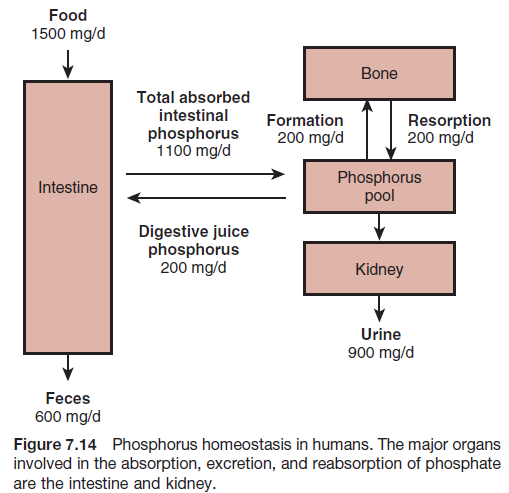
正常一天dietary phosphate約800-1500mg/d(60-80% dietary phosphate被小腸(主要是duodenum and jejunum)吸收); pancreas/intestine/colon會額外secrete 150-200mg/d; 其餘被urine排出(所以約0.4-1g/d in urine)
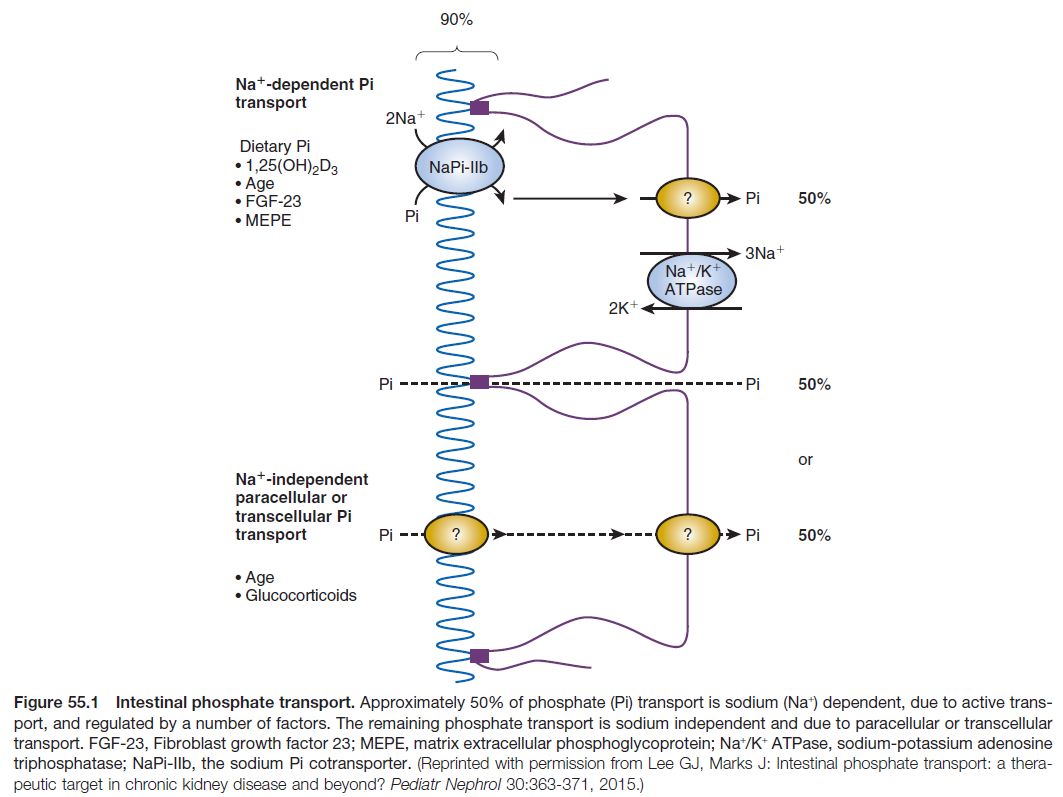
註:GI吸收P主要靠NaPi-IIb(少部分靠type III transporters (Pit1 and Pit2)), 主要是藉由basolateral Na-K pump產生的Na+梯度吸收Pi; 另外一半是靠paracellular resorption
腎臟則是NaPi-IIa(>IIc)
也見HypercalcemiaHypercalcemia -1.Physiology
若intake↑↑(>4000mg/d)可在normal renal function者造成mild hyperphosphatemia
如下所述, 若GFR~60ml/min, 上限可排3888mg/d
若intake↓↓, kidney可完全再吸收P(正常約再吸收80-95%, 即 FeP 5-20%), 但colon仍會secretion, 所以若intake <100mg/d, 仍可造成hypophosphatemia(<100mg/d很少吧...,所以poor intake only is rare to cause hypophosphatemia)
Total starvation也不太會hypophosphatemia, 因為insulin↓ + cell catabolism↑放出P
P在kidney 60-70%是proximal tubules再吸收, 10-15%是DCT(early part?)再吸收
by Na-Pi cotransporter(藉由Na的濃度差), 主要是NaPi-IIa, 少數是Na-Pi-IIc
當hypophosphatemia
increased renal Na-Pi cotransporter
↓ PTH(partly due to ↑ionized Ca2+ concentration)-->increased renal Na-Pi cotransporter
↑ 1-α hydroxylase(by ↑IGF-1?)-->↑calcitriol
↓Phosphatonins(FGF-23 and secreted frizzled related protein-4 (sFRP-4))
當hyperphosphatemia
上述機制相反
GFR*serum P concentration=一天urine排出上限
假設GFR=125ml/min, P=4.5mg/dL
一天排P上限=(1251440/100) (4.5)/1000=8.1g
若是GFR已降到30ml/min, 則只能排2g/d(FeP=100%), 所以大約CKD stage IV開始有可能會hyperphosphatemia
也可以知道若GFR降到60ml/min, 則一天排P上限=3.888g, 但一般FeP=5-20%, 所以3.888*0.2=0.7776g, 因此CKD stage II時會開始需要FGF 23↑來維持serum P在normal level
調控機制
Intake P的量似乎會通過duodenal P sensor而直接調控urine P excretion(似乎是by ↑dopamine), 吃多-->排多, 反之亦然, 不過其機轉不明且並非透過iPTH, Phosphatonins...; 但前述是老鼠試驗, 在人身上有些study發現似乎沒有這一機制
回思Na and K都有這種直接調控urine electrolytes excretion的機制~
Brain似乎有Na-Pi IIa cotransporter(SLC34A1)感知serum P concentration, 進而調控renal expression of Na-Pi IIa cotransporter
PTH
PTH會直接↓proximal tubules的Na-Pi IIa, 導致kidney排P↑
1,25 OH Vitamin D
Insulin
似乎會↑Na-Pi IIa
不過insulin會使P跑入cells, 導致transcellular hypophosphatemia
Growth hormone/IGF-1
似乎會↑Na-Pi IIa(direct and by ↑1,25 OH Vitamin D?)
Dopamine(by DA1 receptor)
↓Na-Pi IIa
註:dopamine也↓NHE3
Epinephrine/norepinephrine
↑Na-Pi IIa(α and β effects都會)
也會因為β-agonist使P跑入cells, 導致transcellular hypophosphatemia(=吸收更多P入細胞內使用?)
Phosphatonins (FGF 23 and sFRP-4(secreted frizzled related protein-4))
都會↓Na-Pi IIa and ↓1,25 OH vitamin D
MEPE(matrix extracellular phosphoglycoprotein)
會↑urine P excretion, 不過不影響vitamin D
FGF 7
Tumor可分泌上述Phosphatonins, MEPE, FGF 7導致TIO
1-1.Refeeding syndrome(再餵食症候群)#
高危險群 : 長期營養不良、神經性厭食、慢性酗酒、腫瘤惡病質、重大手術/ICU NPO >7-10 天機轉 : 重新進食或給高糖輸液 → 大量胰島素分泌 → 磷、鉀、鎂大量移入細胞內合成 ATP → 突發重度低血磷(<1.0 mg/dL) +低血鉀+低血鎂 → ATP 耗竭、急性呼吸衰竭、心因性休克、橫紋肌溶解、溶血預防與處置(NICE三大鐵律)
進食/給糖前先給 thiamine(vitamin B1) 200-300 mg IV (防 Wernicke 腦病變與代謝崩潰)
起始熱量嚴格限制 10-15 kcal/kg/day (BMI <14 等極高危群可從 5-10 kcal/kg/d 開始),4-7 天內緩慢加至全量
前 72 小時密集監測 P/K/Mg Q12-24H; 血磷 <1.5-2.0 mg/dL 即早期主動補充
2.Prevalence#
1% of hospitalized Pts; 30% in alcoholic Pts; 30% in ICU Pts(常見為intracellular shifting...); 70-80% in severe sepsis Pts
Early phase of severe infection/sepsis(<1天)會因為cytokine storm而使Pi進入cell內, 尤其GNB infection
註:critical illness者會因為各種原因而hypocalcemia, hypomagnesium, hypophosphatemia
3.S/S#
症狀depends on level and decreasing rate, 大多要<2mg/dL才有症狀, 而<1mg/dL才會有嚴重症狀
Cellular shifting 大多不會有hypophosphatemia症狀, 因為要intracellular phosphate depletion才會有症狀
Mechanism causes S/S
1.ATP depletion
2.RBC 2,3-diphosphoglycerate(DPG )↓-->O2釋放to tissue↓
所以需要能量的tissue受影響較大
Muscle weakness/pain(可rhabdomyolysis(見下述))
Skeletal muscles, respiratory muscles
可prolong ventilator dependency in ICU Pts
Reference:Association of hypophosphatemia with failure-to-wean from mechanical ventilation(2010 Ann Clin Lab Sci.)
Cardiac muscles
可HF; also more arrhythmia in ACS
Smooth muscles
Rhabdomyolysis
小心may mask hypophosphatemia
Chondrocalcinosis(=pseudogout) (risk factors:低鎂磷(猜測:1.低磷也會導致低鎂, 2.低磷導致Ca2+和其他物質沉積?), 高PTH, 高鈣, hemochromatosis)CNS
Paresthesias, irritable, delirium, seizure, coma
Hema
Hemolytic anemia
因為ATP↓會導致RBC rigidity, 但多見於P<0.5mg/dL, 且clinically evident hemolysis due solely to hypophosphatemia is rare
WBC
Reduce both phagocytosis and granulocyte chemotaxis(rare)
PLT
Defective clot retraction and thrombocytopenia
Metabolic
促進1-α hydroxylase(詳見-Vitamin DVitamin D )-->calcitriol↑-->bone resorption↑-->1.hypercalciuria-->stone↑; 2.osteomalacia, rickets
此外hypophosphatemia會抑制distal tubules吸收Ca and Mg-->UCa↑, UMg↑, SMg↓(?)
回思hypokalemia也會抑制distal tubules吸收Ca and Mg
Why?因為hypophosphatemia時, 若不↓Ca, Mg吸收會導致沉澱?(如pseudogout?)
Insulin resistance ↑(註:hypomagnesium也會, 而hypophosphatemia也會促進hypomagnesium; 註:hypokalemia會↓insulin secretion)也會water diuresis, ↑glucosuria, ↑bicarbonaturia
也會metabolic acidosis (↓ammonia production, ↓H+ excretion, 所以是RTA(?))(因為↓ATP?)
也↓gluconeogenesis(因為↓ATP?)
Metabolic acidosis似乎又會↓kidney吸收P, 造成惡性循環...
4.Etiologies#
Decreased GI uptake
Alcoholism, malnutrition
Alcoholism是因為如下(幾乎所有原因都佔了...... =.=)
For GI
1.poor intake-->P來源不足+可能vitamin D缺乏 2.可能會用antacid(Ca, Mg, Al...)治療gastritis 3.diarrhea(因為(1)inflammation(2)inhibits nutritions/fluid resorption(3)stimulates water/electrolyte secretion(4)bacterial overgrowth(5)decreased pancreatic juice->malabsorption(6)alcohol effect on enteric nerve systems)
For UP↑
1.Secondary hyperparathyroidism due to vitamin D deficiency
2.會proximal tubules dysfunction, 可類似Fanconi syndrome, 但戒酒4W內會改善
若alcoholism Pts住院常會加重hypophosphatemia因為
1.給含糖IVF-->refeeding syndrome
2.Alcohol withdraw-->hyperventilation-->acute respiratory alkalosis
所以alcoholism Pts要檢查P, 尤其是myopathy者, 因為alcoholism本身也會myopathy也會rhabdomyolysis
GI malabsorption(Steatorrhea and chronic diarrhea)(may also cause vitamin D deficiency)
Vitamin D deficiency(also cause PTH↑-->urine loss P↑)(詳參-vitamin D)
Phosphate binders including MgO
Niacin use(因為抑制GI and renal的Na-Pi IIb)-->不過一般的補充劑量不太會造成hypophosphatemia
Consumption
Hungry bone syndrome(Ca, P, Mg被bone吸收), Osteoblastic metastasis(breast CA, prostate CA; Ca, P被bone吸收), anabolic status(K, P被cell吸收)(acute leukemia, post-BMT...)
Bisphosphonate(P可高可低; 因為1.抑制bone resorption and 可Ca↓->iPTH↑->urine排P↑, 2.但也刺激renal tubules再吸收P)
口訣:HOB~
Intracellular shifting(感覺和hypokalemia類似)
Refeeding syndrome(intracellular shifting by insulin, 大多要↓>30% and <0.6mmol/L(=1.85mg/dL); 另外可測IGF-1>63.7ug/L->比較像refeeding syndrome(sensitivity約91%, specificity約65%)), insulin use/high GLU/TPN
Acute respiratory alkalosis(intracellular shifting)(因為intracellular pH↑-->phosphofructokinase activity↑-->glycolysis↑)
High sympathetic tones/TPP(主要是glycolysis時會需要用到ECF的inorganic phosphate-->被cell uptakes?)
Early phase of severe infection/sepsis(<1天)會因為cytokine storm而使Pi進入cell內, 尤其GNB infection
Increased urine excretion
Hyperthermia/heat stroke(機轉?)
Hyperparathyroidism
Primary
Tertiary after renal transplantation, 大多一年左右會緩解
Renal transplantation後有90% Pts會hypophosphatemia(原因含tertiary hyperparathyroidism、暫時性FGF23↑、暫時性low 25-OH/1,25 OH vitamin D)
不過大多數週內改善, 但也可以months to years(表tertiary hyperparathyroidism?)
Vitamin D deficiency Steroid(↓GI P absorption and ↑urine P excretion)
why?因為↓1,25 OH vitamin D?
Tubular dysfunction(Fanconi syndromes including drugs(Azol(due to osmotic diuresis), Tenofovir, ifosfamide, aminoglycoside, Foscarnet, cisplatin(TN...)...)
Fanconi syndrome因為是proximal tubules dysfunction, 所以常伴隨Calcitriol↓(因為Calcitriol也是在 proximal tubules合成)
DKA/HHS
Intracellular phosphate depletion but serum phosphate level maybe normal or high
Due to 1.[(metabolic acidosis and insulin deficiency-->phosphate shifted to ECF)+(hyperglycemia/ketonuria osmotic diuresis)-->P loss to urine(註:metabolic acidosis本身也↓kidney P resorption]; 2.poor intake
所以隨著DKA治療(用insulin), serum phosphate level可以變得很低
不過此種情況不建議prophylactic補P if no hypophosphatemia(因為可造成significant hypocalcemia)
Any other osmotic diuresis or volume expansion with diuresis
Also acetaminophen use(why?osmotic diuresis?)
Iron supplement(因為刺激FGF-23);FIRM (JCI Insight 2018; PMID 30518682):羧基麥芽糖鐵(FCM)干擾 FGF23 分解而顯著誘發高頻率低血磷|低血磷發生率 50.8% vs 0.9%(p<0.001)〔PMID 30518682〕
註:FGF23↑ if [Ca↑; P↑; iPTH↑; 1,25OH Vit. D↑; ferritin↑; Sclerostin↑]
Some drugs
Imatinib/nilotinib(可能是因為↓bone resorption with secondary PTH↑), mTOR inhibitors(especially temsirolimus), VEGF inhibitors
Unknown mechanism but increased UP excretion
Following partial hepatectomy
Unknown mechanism but increased UP excretion
Many congenital diseases
PHEX, DMP1, ENPP1, FAM20C gene會抑制FGF-23
PHEX :Phosphate-regulating endopeptidases on the X chromosome(==>X linked dominant)(most common form of hereditary hypophosphatemia disorder)
PHEX會和DMP1結合而使osteocyte製造FGF23↓
Inactivating mutation使FGF23↑=XLH(X-linked hypophosphatemic rickets)
FGF23↑-->calcitriol↓; 不過Ca, PTH level多WNL
也會↑sFRP-4(why?, 作用同FGF 23)-->calcitriol↓
也會↑MEPE(why?; matrix extracellular phosphoglycoprotein; 會↑urine P excretion, 不過不影響vitamin D)
Tx
Phosphate and calcitriol supplement
Burosumab(anti-FGF23 Ab)已核准 (XLH: 2018 FDA、TIO: 2020 FDA), 顯著改善血磷與骨病變;Burosumab Phase 3 (Imel, Lancet 2019; PMID 31104833):抗 FGF23 抗體治療 XLH 佝僂症顯著優於傳統口服磷加活性 D|佝僂嚴重度改善評分分差 +1.9 vs +0.8(p<0.0001)〔PMID 31104833〕
DMP1=Dentin matrix protein 1
ENPP1=Ectonucleotide pyrophosphatase/phosphodiesterase 1
FAM20C=某protein kinase gene
上述三者loss of function mutation-->FGF23↑=ARHR(AR hypophosphatemic rickets)
FGF23↑-->calcitriol↓
表現和Tx應該也和XLH一樣?
ADHR(AD hypophosphatemic rickets)
FGF23 missense mutation導致FGF23不被分解
表現和Tx都和XLH一樣
TIO(tumor induced osteomalacia=oncogenic osteomalacia)
Secrete and express FGF-23
也分泌其他factors like sFRP-4(作用同FGF 23), MEPE(matrix extracellular phosphoglycoprotein; 會↑urine P excretion, 不過不影響vitamin D), FGF 7(會↑urine P excretion)
多為mesenchymal tumors
Chondrosarcoma, osteoblastoma, and hemangiopericytoma
Often small and difficult to localize!
表現和XLH類似
原則上治療應該要切掉tumor, 但如果找不到tumor, 則Tx和XLH一樣
KLOTHO gene overexpression(Hypophosphatemic rickets and hyperparathyroidism(HRH))
HHRH(Hereditary hypophosphatemic Rickets with hypercalciuria)
源於NaPi-IIc cotransporter loss of function mutation(AR)(SLC34A3 mutation)-->P↓-->FGF23↓+PTH↓+calcitriol↑-->hypercalciuria
Tx:phosphate supplement
Autosomal recessive renal phosphate wasting
源於NaPi-IIa cotransporter loss of function mutation(AR)(SLC34A1 mutation)-->P↓-->FGF23↓+PTH↓+calcitriol↑-->hypercalciuria
不像HHRH的地方是---也會Fanconi syndrome!!
Tx:phosphate supplement
NHERF1(Na+/H+ Exchanger Regulatory Factor1) loss of functional mutations
似乎會↓NaPi cotransporter
註:所以NHE和NaPi有關??回思Dopamine...???
註:NHERF也和ROMK有關(見-離子綜合通道圖離子綜合通道圖 )
Removal by RRT
Unknown
除了post-partial hepatectomy外, 有一些post-其他OP hypophosphatemia的reports, 可能是因為tissue growth, high sympathetic tones...原因不是很清楚
5.Approaching#
註:Lab測得的serum P concentration是inorganic P concentration, 不含serum phosphate ester nor phospholipid的部分
大多可由history得知
用24hrs urine sample 分kidney是否保存P
If FeP<5% and UP<100mg/d-->non-urine loss-->Decreased GI uptake or intracellular shifting-->review history, drugs, CA15-3, PSA, check VBG, vitamin D(其實vitamin D deficiency因為會secondary PTH↑, 所以urine loss也↑才對)
註:normal FeP:5-20%; normal UP:400-1000mg/d
If FeP>5% or UP>100mg/d-->urine loss-->also check Alb, Ca, iPTH, vitamin D, FGF-23, (FeNa, FeK, TTKG, FeCa, FeMg, TRP, FeUA, UPCR, UAG, VBG, Cl, U/A, one touch, MM titers, heavy metals, drugs review)(=Fanconi surveillance), Uosm(whole day), drugs review, FH, genetic study
也可看TmP/GFR(normal range:2.5-4.5mg/dL)(見Type I and II RTAType I and II RTA -TmP/GFR)
6.Tx#
Tx of underlying disease, avoid dextrose-containing fluid
Supplement when S/S(+) or P<2
P 2-2.5 without S/S, 沒有證據要補
補充速度應考慮ongoing loss
因為serum P不一定能反應身體P的總量, 所以難以預期總共要補多少, 尤其像malnutrition者可能身體實際上缺很多要補很多
IF supplement(主要是用在P<1)(Brenner(p756)P補充要<50mmol/8hrs to prevent hypocalcemia and metastatic calcification)(P1-1.5可直接用PO補)
if P<1, 補到P>1.5則改PO
P<1.25
0.25-0.5mmol/kg IF 8-12hrs(max:80mmol)
P 1.25-1.5
0.08-0.24mmol/kg IF 6hrs(max:30mmol; 即NTUH的一瓶potassium phosphate中的P含量)
P supplement rate<7.5mmol/hr似乎還算安全
P不能補太快, 因為會hypocalcemia or Ca-P deposition in kidney-->AKI
PO
P 1-1.5
1.3mmol/kg/d(up to 100mmol/d) PO
P 1.5-2
1mmol/kg/d(40-80mmol/d) PO
P>2
Diet補充(牛奶, 養樂多...)即可, 因為基本上P>2不會有症狀所以不急著補
註:Joulie solution為0.97mmol/ml==>約幾kg喝幾ml/d
註:Fleet enema為4.145mmol/ml==>約為Joulie的4X濃度
If CKD-->daily amount改1/2
有人用dipyridamole 75mg QID(因為可↑renal P resorption)治療urine phosphate loss
Exclude:eGFR<70 or CAD/CVD or hypercalcemia(怕Ca-P depositions)
似乎有效, 但evidence不夠充足
Uptodate:
Recheck P 2-12hrs(腸胃道吸收需要時間...) after the latest supplement dosage(PO) and check Q6H if IF supplement