Induction and maintenance immunosuppression in renal transplantation(also CNI toxicity)
Data from uptodate(2017/8; 已局部更新至 2024-2026 指引)
1.High risk of acute rejection(符合任一項以上, 2009 KDIGO)#
- African-American(in the United States)
- Younger recipient(因為immune較強?) and older donor(why?more delayed graft function?) age
- ≧1 HLA mismatch
- Blood group incompatibility
- Donor-specific antibody (DSA)(+)
- Panel reactive antibody (PRA)(+)
- Re-transplantation
- Delayed onset of graft function, cold ischemia time > 24 hrs(因為會加重Ischemia-reperfusion injury-->inflammation)
- 也見Renal allograft dysfunction(含graft prognosis)-1.Risk factors of graft dysfunction/loss and 2.Delayed allograft funtion
2.ABO incompatible or HLA sensitization者(anti-HLA Ab(+))#
- 仍可以移植
- 不過要desensitization by protocols using plasmapheresis/immunoadsorption and/or intravenous immunoglobulin (IVIG), with or without adjunctive therapies (splenectomy/rituximab(one dose, 1-2 days before transplantation))
- 處理anti-A, anti-B IgG/IgM(最好titer<16)
3.Immunosuppressive drugs mechanism#
- TCMR
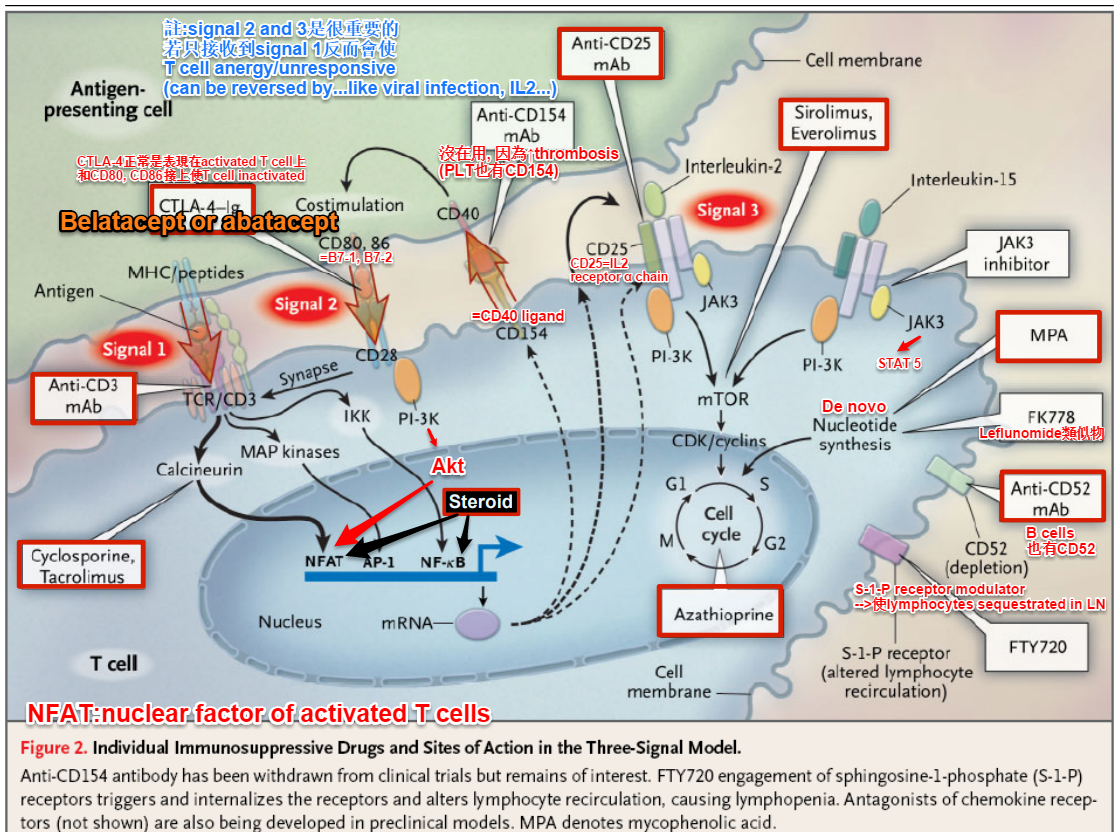
- 其實T cell 和 APC之間的interaction是更複雜的如下圖
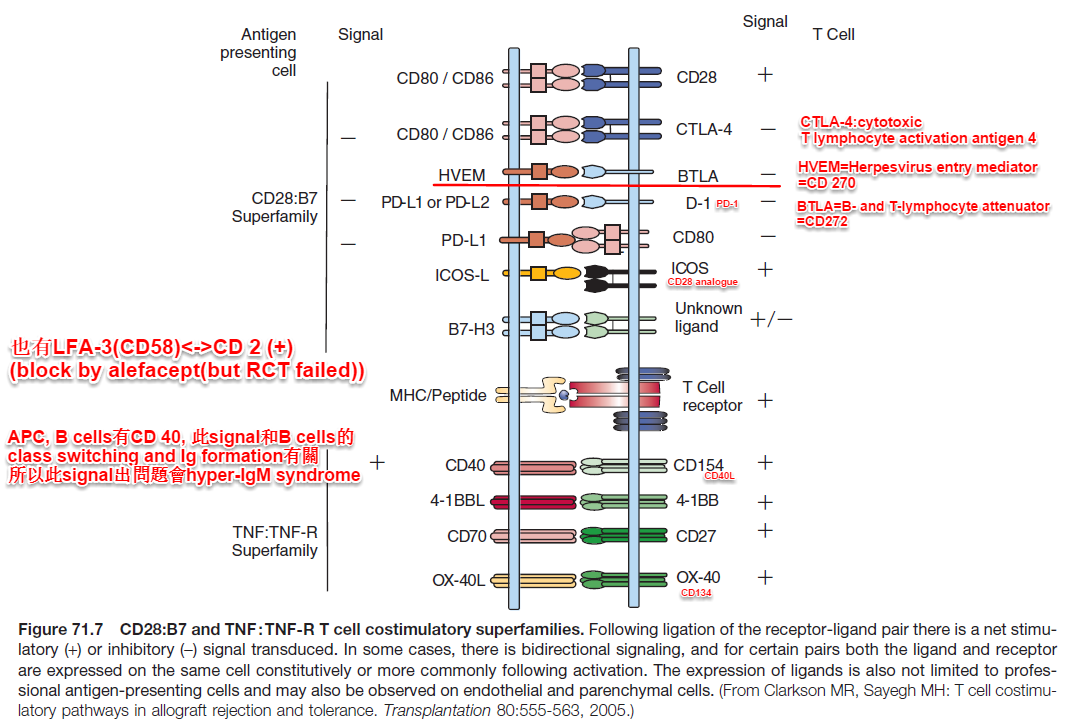
- Costimulatory signals(signal 2) are needed to optimize T cell transcription of the IL-2 gene, prevent T cell anergy, and inhibit T cell apoptosis
- ATG(polyclonal, 所以效果與副作用較難以預期)
- 藉由將人類的thymocyte打入兔子(叫thymoglobulin)或馬體內得到的Ab
- 兔子的ATG比馬的ATG好
- Less (death + graft loss + rejection)
- 兔子的ATG比馬的ATG好
- anti-CD3, TCR, CD2, CD5, CD6, CD8, CD11A, CD49, β2M, CD28, IL-2R, adhesion molecules...
- =signal 1-3...通殺
- 也有anti-B cells!
- 作用機轉除了classical complement-mediated lysis of lymphocytes, clearance of lymphocytes through reticuloendothelial uptake, masking of T cell antigens, 似乎也可以↑Treg
- S/E:lymphopenia, thrombocytopenia, granulocytopenia, serum sickness, GN, higher risk of longterm malignancy
- 所以WBC<2000 or PLT<7.5W or hypotension者, 不能用rATG(可用 basiliximab)
- 藉由將人類的thymocyte打入兔子(叫thymoglobulin)或馬體內得到的Ab
- Steroid
- steroid會進入細胞質與其receptor結合後進入nucleus, 接著結合DNA的regulatory region(glucocorticoid response elements), 進而調控IL-1, IL-2, IL-6, IFN-γ, TNF-α..., 其實機轉很複雜
- 目前還是傾向盡量少用steroid, 少用之下似乎未↑rejection/graft loss/mortality under FK506 based regimen
- CNI(主要由 CYP3A4 與 CYP3A5 代謝, 並受 P-glycoprotein/ABCB1 外排; CPIC指引(Clin Pharmacol Ther 2015; PMID 25801146):CYP3A5 表現型(*1 帶因者)相較 nonexpressers 谷濃度/劑量比較低,建議將 Tacrolimus 起始劑量提高至標準劑量的 1.5 至 2 倍以加速達標〔PMID 25801146〕) > "We recommend increasing the starting dose of tacrolimus to 1.5 to 2 times the standard starting dose in CYP3A5 expressers (individuals carrying at least one CYP3A5*1 allele) to achieve target blood concentrations more rapidly." (CPIC Guideline, Birdwell KA, et al. PMID 25801146)
- CsA
- 和Cyclophilin結合而抑制Calcineurin(為cytoplasmic serine threonine phosphatase; 和calcium有關, 故名)
- Calcineurin正常會使NFAT dephosphorylate而活化-->↑IL-2, TNF-α...genes transcription
- 會抑制MMF的enterohepatic recirculation, 使MMF exposure↓40%(CsA only; FK506不會)
- ↓IL-2, IL-3, IL-4, IFN-γ, TNF-α from lymphocytes, 但無法影響macrophage產生的IL-1, TNF-α, TGF-β; 也無法影響NK cells
- 註:IV:oral=1:3(Brenner table 72.19)
- 和Cyclophilin結合而抑制Calcineurin(為cytoplasmic serine threonine phosphatase; 和calcium有關, 故名)
- FK506
- 和FK506-binding proteins(FKBPs)結合而抑制Calcineurin
- Seemed stronger immunosuppressive effect than CsA
- S/E和CsA略有不同(見-8.S/E of CNI)
- 註:IV:oral=1:5(Brenner table 72.19)
- 所以是signal 1 inhibitor
- mTORi
- 和FK506結合相同的binding proteins, 不過兩者並未競爭, 因為binding proteins量相對起來很多
- Inhibit S6 kinase in the IL-2R(signal 3) signal transduction pathway(註:CD28 costimulation 是 signal 2, 代表藥是 belatacept, 勿混)
- 所以是signal 3 inhibitor
- inhibit both T and B lymphocytes
- Late conversion of CNI to sirolimus似乎可以↓chronic allograft dysfunction
- 也↓VEGF-->可能和anti-cancer有關
- S/E:BM suppression, delayed wound healing, HTN, dyslipidemia, DM, diarrhea, mouth ulcers, interstitial pneumonitis, proteinuria(mTORi 本身致蛋白尿; 且與 CNI 併用時腎毒性相加——機轉: mTORi 抑制 VEGF/內皮修復而放大 CNI 之小管與血管毒性), edema
- JAK 3 inhibitor
- JAK 3只有在T, B, NK cells有(比mTORi更specific一些)
- 可↓IL-2, 4, 7, 9, 15, 21
- tofacitinib(JAK1/3 抑制劑)曾於腎移植 2/2b 期試驗中評估,因 CMV 病毒感染與 BK 病毒腎病增加(高暴露組另見 PTLD)而停止移植研發,目前未見移植適應症核准,現行主要用於 RA 等風濕疾病
- Costimulatory signal blockers
- CTLA-4 analogue
- Belatacept(CTLA4-Ig; 2011 FDA 核准, 僅用於 EBV血清陽性(EBV-seropositive) 受者; EBV血清陰性者黑框警語嚴格禁用,因顯著增加致死性中樞神經移植後淋巴增生疾病 CNS PTLD 風險;BENEFIT 試驗證實長期腎功能與 graft survival 較佳,但早期排斥較多〔PMID 16120857, 29461660〕)
"Belatacept was approved for kidney transplantation maintenance only in EBV-seropositive recipients due to a significantly increased risk of post-transplant lymphoproliferative disorder (PTLD), predominantly involving the central nervous system, in EBV-seronegative patients." (Vincenti F, et al. N Engl J Med 2005; PMID 16120857)
- Belatacept(CTLA4-Ig; 2011 FDA 核准, 僅用於 EBV血清陽性(EBV-seropositive) 受者; EBV血清陰性者黑框警語嚴格禁用,因顯著增加致死性中樞神經移植後淋巴增生疾病 CNS PTLD 風險;BENEFIT 試驗證實長期腎功能與 graft survival 較佳,但早期排斥較多〔PMID 16120857, 29461660〕)
- CTLA-4 analogue
- Anti-CD40 Ab
- ASKP1240, 有一些trials
- AZA
- 為antimetabolites, 體內會代謝成6-MP(經 TIMP/thioguanine nucleotides 抑制 de novo purine 合成並嵌入DNA; 註:IMPDH inhibitor 是 MMF/MPA, 非 6-MP),阻礙DNA, RNA生成, 進而阻礙lymphocyte, promyelocytes proliferation
- Low thiopurine methyltransferase (TPMT)者(約10% of population)容易累積active metabolite而BM suppression; 亞洲人(漢人)另需注意 NUDT15 (R139C)——台灣考試高頻, TPMT正常者仍可能因 NUDT15 變異而嚴重骨髓抑制
- 話雖如此大多不會測此gene, 而是slowly titrating up dosage
- 小心不能與Allopurinol併用
- S/E:hepatitis, GI toxicity(N+V), pancreatitis(rare), leukopenia, thrombocytopenia(less), ↑neoplasm(特別是skin cancers)
- Mycophenolate mofetil and mycophenolate sodium
- 基本上取代了AZA
- 會代謝成MPA, 為selective/reversible inhibitor of the pathway of de novo purine synthesis(合成guanosine from inosine)(為IMP dehydrogenase inhibitor(尤其type II IMP dehydrogenase expressed in activated lymphocytes))-->進而阻礙lymphocyte(T and B) proliferation; 不太影響其他cell lineage, 因為其他cells可經由salvage pathway合成purine
- S/E: GI S/E(N+V, epigastric pain, diarrhea; 大多一開始用比較多GI S/E, 會漸漸改善, 所以一開始由小劑量多頻率開始), BM suppression, more CMV disease(vs. AZA)(因為抑制lymphocytes效果較強?), 會畸胎(20-30%; craniofacial and limb anomaly, 所以開始使用前pregnancy test要(-), 要嘗試懷孕前6W要停藥)
- ABMR
Current and potential alloantibody-targeted therapies in transplantation.#
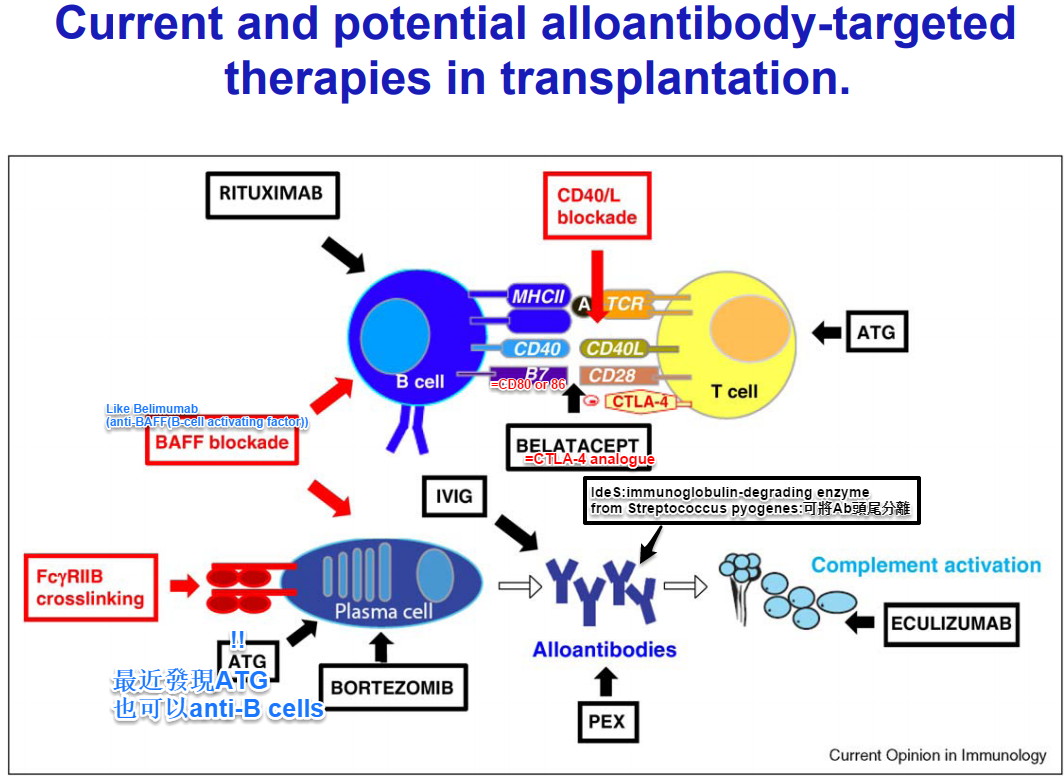
- 註:rituximab除了anti-CD20外還有direct podocyte modulating effects((Brenner p1500)cross reactivity with sphingomyelin phosphodiesterase acid-like 3b (SMPDL-3b) protein to regulate of acid sphingomyelinase(和cytoskeleton有關) essential for the lipid-raft compartmentalization of the podocyte plasma membrane, as well as for the organization and signaling of podocytes in general), 所以在GN Tx(如FSGS)上可能有其他角色
4.Induction immunosuppression(with conventional immunosuppressions as below)#
- No consensus
- (Caucasian two-haplotype-identical, living, related allografts) or (have had another functioning solid organ transplant under immunosuppression)者不一定要induction
- Uptodate建議
- rATG(1-2mg/kg D1, 2mg/kg/d D2-D3) > IL2 antagonist/Ab (in high risk groups; low risk二者outcome似乎一樣; Brennan RCT(NEJM 2006; PMID 17093248):高危受者 5 天 rATG 較 basiliximab 顯著降低急性排斥率(15.6% vs 25.5%)與需抗體治療之重度排斥,但 DGF 無顯著差異〔PMID 17093248〕)
- Ab:rATG(1°) or alemtuzumab(anti-CD52; 幾乎沒在用) or basiliximab(anti-α chain (=CD25) of the IL-2 receptor)
- ATG
- Less acute rejection but more infection than alemtuzumab(效果與S/E介於ATG和anti IL-2之間)
- Alemtuzumab ↑AIR diseases?
- Less acute rejection but more infection than anti-IL-2
- Less acute rejection, less non-infection complications, less infection complications than OKT3
- OKT3幾乎沒在用了, 且其容易有cytokine release syndrome
- 註:也可以↓ischemia-reperfusion injury, 進而↓delayed graft function, 不過好壞處?
- Less acute rejection but more infection than alemtuzumab(效果與S/E介於ATG和anti IL-2之間)
- ATG
- Ab:rATG(1°) or alemtuzumab(anti-CD52; 幾乎沒在用) or basiliximab(anti-α chain (=CD25) of the IL-2 receptor)
- rATG(1-2mg/kg D1, 2mg/kg/d D2-D3) > IL2 antagonist/Ab (in high risk groups; low risk二者outcome似乎一樣; Brennan RCT(NEJM 2006; PMID 17093248):高危受者 5 天 rATG 較 basiliximab 顯著降低急性排斥率(15.6% vs 25.5%)與需抗體治療之重度排斥,但 DGF 無顯著差異〔PMID 17093248〕)
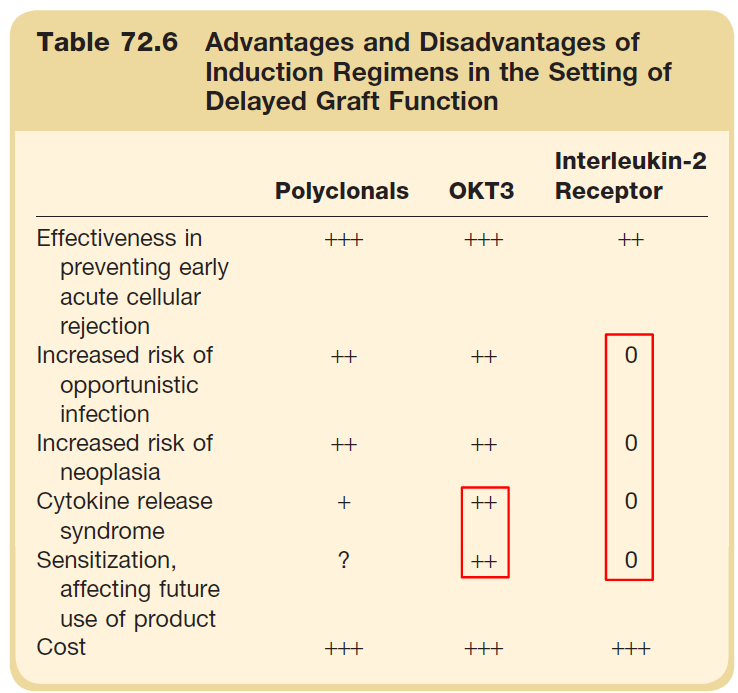
- 所以原則上OKT3和ATG類似, 但是更多cytokine release and sensitization and infection and rejection
- 所以IL-2i不↑infection nor cancer, 也不會sensitization; Dr.陳建嘉: 因為IL2i也會↓Treg所以常數月~1yr rebound rejection
- 不過NTUH大多這兩種藥都不用, 因為覺得rATG S/E太多; 而IL-2i未明顯↑graft survival, 且下降Treg似乎和後面的rejection rebound有關且又要自費; 所以只用pulse steroid + maintenance Tx
Induction therapy choice based on risk assessment#
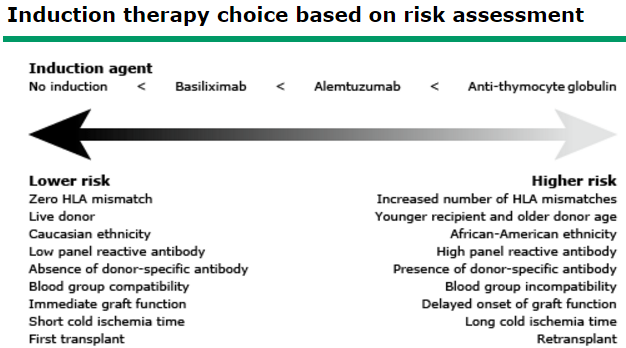
- 血球/血壓禁忌→ 見§3 ATG段(WBC/PLT/低血壓者改用 basiliximab)
5.Maintenance immunosuppression#
- if high risk of acute rejection
- Triple therapy:CNI/mTORi[uptodate建議FK506>CsA>Sirolimus, 因為tolerance較好且較少acute rejection(reference:NEJM 2007 Dec 20;357(25):2562-75(Reduced exposure to calcineurin inhibitors in renal transplantation); RCT都triple Tx); Grade IIB; extended release form>immediate released form因為較少toxicity] + antimetabolite (MMF>AZA, 因為acute rejection較少且graft survival較長且S/E較少, extended release GI S/E又更少; 不過MMF會畸胎, 所以生育年齡女性改用AZA) + Predonine
- 主幹是CNI or mTORi(CNI better than mTORi)
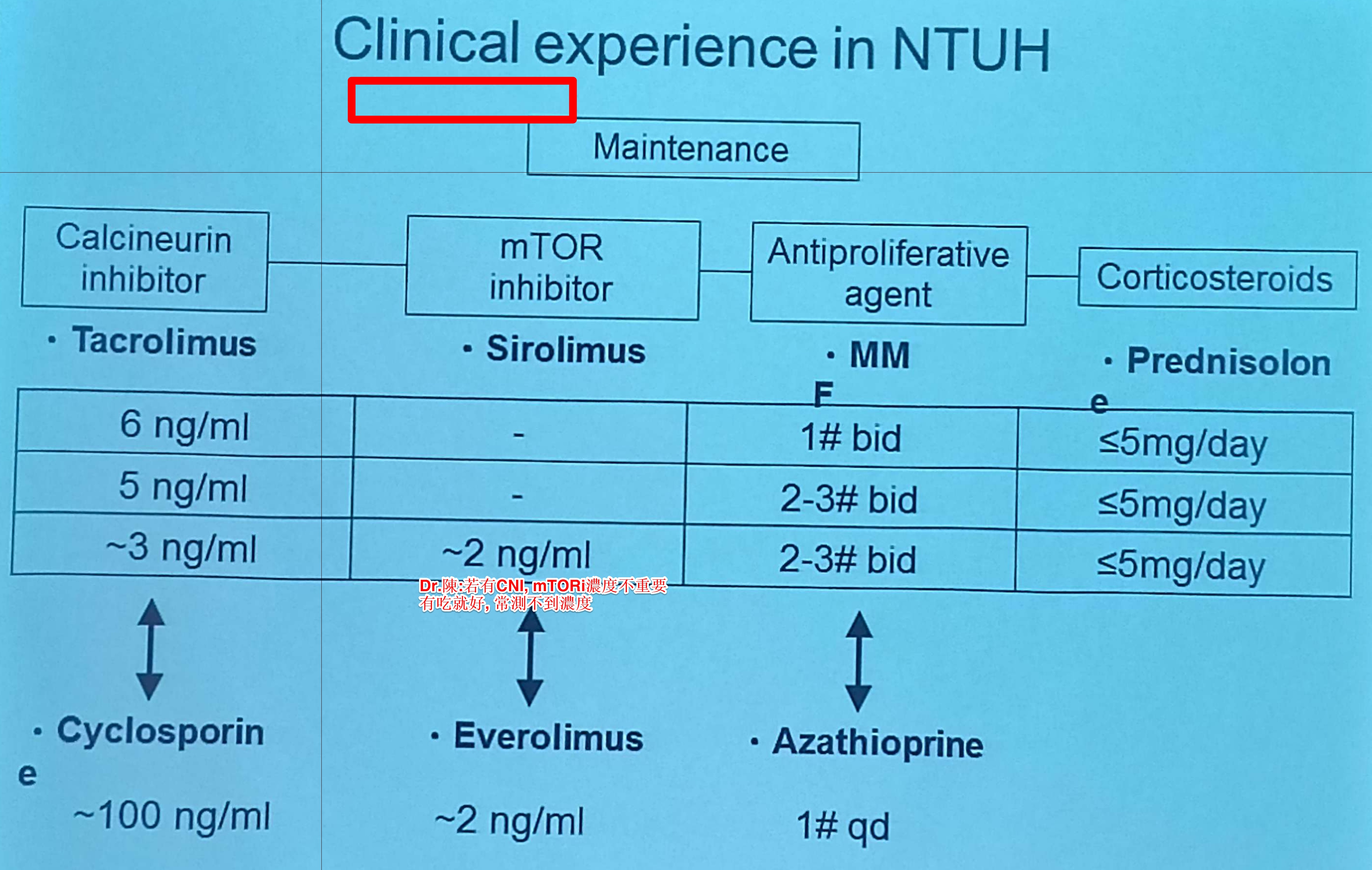
- FK506:post-OP D1:0.08(NTUH:0.1) mg/kg/day(about 5mg/d after discharge)
- titrate to 12hrs trough 7 to 10 ng/mL(brenner寫5-15)(NTUH: 出院至少>5) in the 1st M and 3 to 7 ng/mL after(其實看其他藥的搭配, 見下圖)
- 註:若用CsA
- C0 level of 150 to 300 ng/mL early and 100 to 200 ng/mL late posttransplantation
- or C2 level of 1400 to 1800 ng/mL early and 800 to 1200 ng/mL late posttransplantation
- 註:第二代的cyclosporin(叫Voclosporin)效果似乎不輸FK506, 且較少PTDM(phase II trial); 已於2021核准用於狼瘡腎炎(非移植適應症)
- EC-MPS(enteric-coated mycophenolate sodium):360 mg(=2#) STAT then 720mg BID post-OP until FK506 level ok, then 360mg BID
- 註:Mycophenolate mofetil(MMF; Cellcept) 250mg(為前驅藥, 在腸道與肝臟經酯酶水解為活性 MPA) = mycophenolate sodium(Myfortic)180mg(腸溶錠, 於小腸中性 pH 才釋放, 可減少上消化道潰瘍/胃痛, 但下消化道腹瀉發生率相近)
- Myfortic因為是腸溶錠所以腸胃道副作用少很多但效果沒比較差
- 若上述MMF, Myfortic都不能用就改用AZA(容易BM suppression, keep WBC>3000即可)
- 台大好像都用2# BID, 若可容忍到3# BID可↓CNI dosage
- 註:Mycophenolate mofetil(MMF; Cellcept) 250mg(為前驅藥, 在腸道與肝臟經酯酶水解為活性 MPA) = mycophenolate sodium(Myfortic)180mg(腸溶錠, 於小腸中性 pH 才釋放, 可減少上消化道潰瘍/胃痛, 但下消化道腹瀉發生率相近)
- Steroid:Solumedrol 7mg/kg(upto 500mg) at OP room, then predonine 1 mg/kg/day(upto 80mg/day) for post-OP 3 days, then lowered to 20 mg/day(我看NTUH是Solumedrol 50mg Q6H->40mg Q6H->30mg Q6H->20mg Q6H->20mg Q8H->20mg Q12H->20mg QD->Predonine 20mg QD剛好一週變成Predonine 20mg QD) for the 1st W, then ↓5mg QW, then 5mg QD
- 有人try steroid free regimen, 但是↑rejection, 所以還是會維持low dosage
- Triple therapy:CNI/mTORi[uptodate建議FK506>CsA>Sirolimus, 因為tolerance較好且較少acute rejection(reference:NEJM 2007 Dec 20;357(25):2562-75(Reduced exposure to calcineurin inhibitors in renal transplantation); RCT都triple Tx); Grade IIB; extended release form>immediate released form因為較少toxicity] + antimetabolite (MMF>AZA, 因為acute rejection較少且graft survival較長且S/E較少, extended release GI S/E又更少; 不過MMF會畸胎, 所以生育年齡女性改用AZA) + Predonine
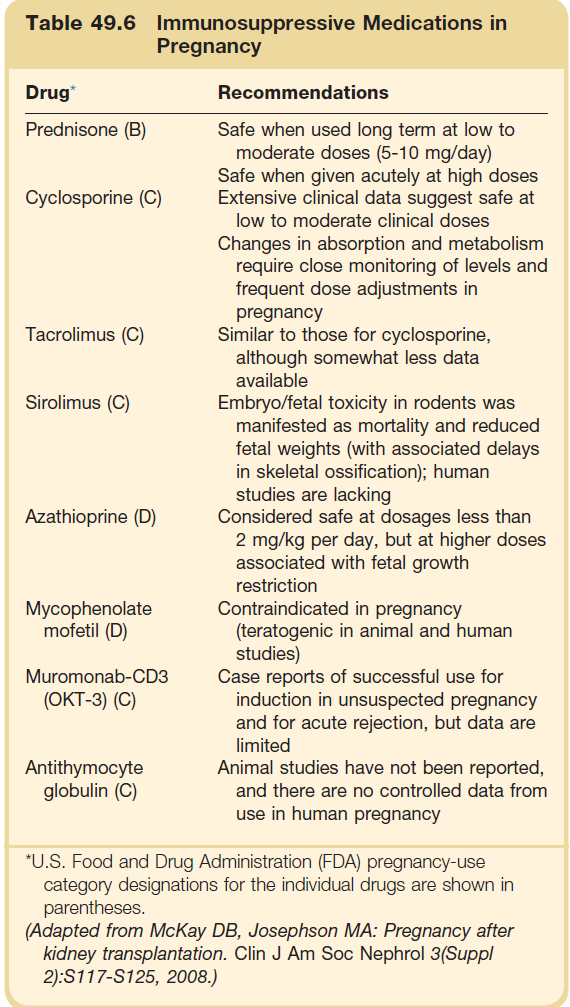
- 註:mTOR inhibitors 非第一線(傷口癒合延遲、蛋白尿、抗排斥較弱;抗腫瘤與無 CNI 血管攣縮毒性等特性詳見§3 mTORi段)
- 註:pregnancy category B:Predonine, Basiliximab; C:CNI, ATG, Rituximab; D:MMF, AZA, mTOR inhibitors(sirolimus雖然是C但是teratogenic, 但好像不一定(所以還是有人用))
- 懷孕期可用 CNI 與 prednisone,AZA 亦可接受(取代 MMF)(不過AZA雖然是category D, 用在pregnant transplanted Pts似乎是安全的)
- Rituximab似乎也能用
- Brenner(p2078)
NTUH experience
- 註:acute rejection其實不太調maintenance immunosuppressions, 因為可能是一些有的沒的如感染引發的, 所以就用acute Tx打下來, chronic Tx不動!
- if low risk of acute rejection
- Similar approach except
- 外國人:HLA two-haplotype-identical, living, related allografts--->triple therapy then [taper CNI(Ex:FK506 troughs of 3 to 5 ng/mL or CsA troughs of 50 to 100 ng/mL) or DC CNI]
- Allograft from a monozygotic twin: immunosuppression for 1-3M--->then discontinuation
- 為何要immunosuppressions??
- Similar approach except
6.大多post-OP 3M後stable maintenance immunosuppression就建立了, 之後就維持, 不taper也不DC(除非infection/cancer/toxicity/allograft failure/pregnancy/surgery), 不然容易acute rejection or accelerated chronic rejection#
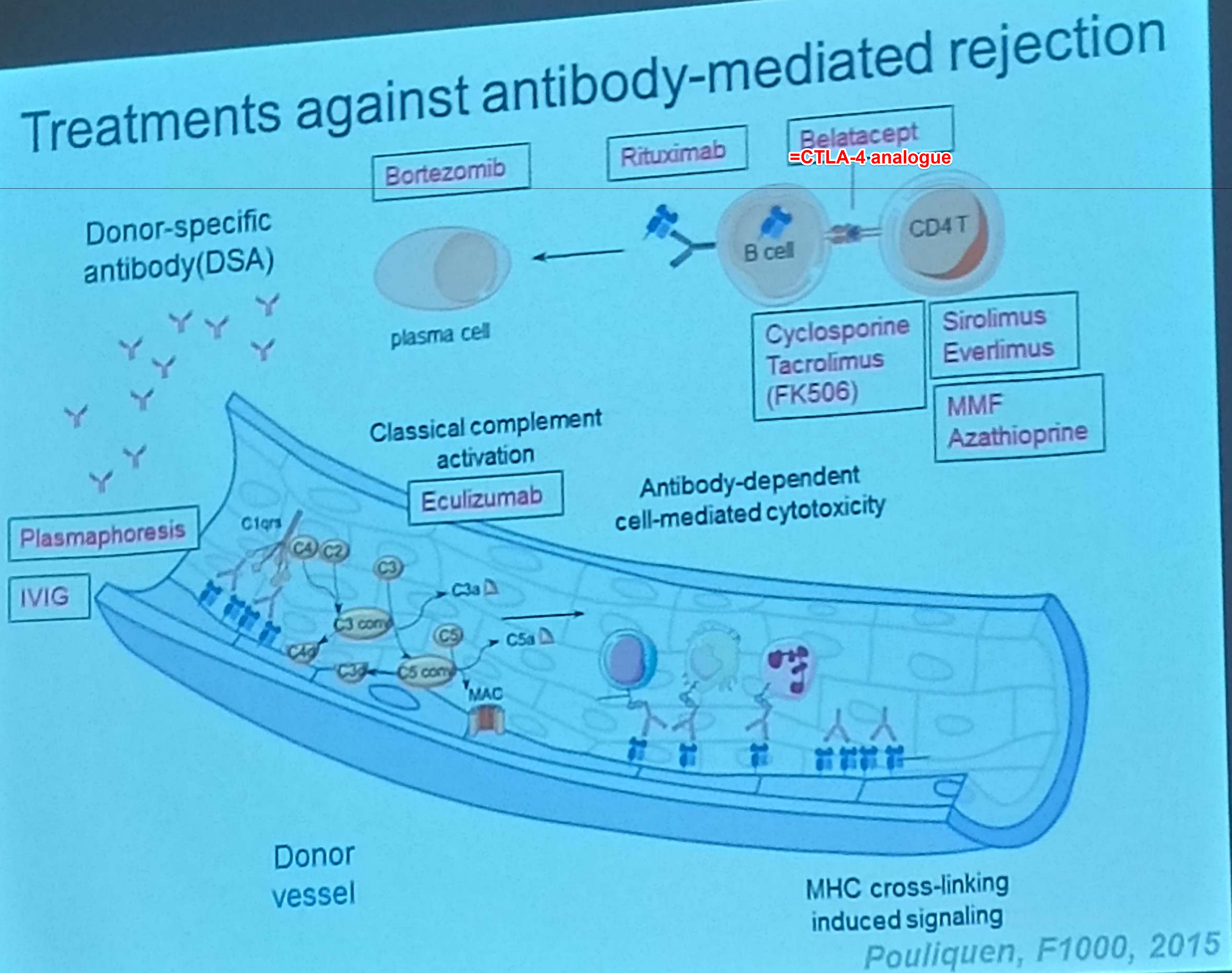
- 晚期多為ABMR, 不太好治療(organ仍會漸漸failure(見Renal allograft dysfunctionRenal allograft dysfunction-prognosis)), 如下圖, 此外也可try IdeS protease(immunoglobulin-degrading enzyme from Streptococcus pyogenes) and anti-IL6 antagonist
7.Others:prophylaxis(依血清狀態分層)#
-
CMV 預防(valganciclovir/Valcyte): 高風險 D+/R−(受者 CMV IgG 陰性)給 6 個月(KDIGO 2009); D+/R+ 或 R+ 部分中心給 3 個月或採 pre-emptive 監測; 「吃到 CMV IgG 轉(+)」非停藥規則
- 不耐受/骨髓抑制或難治抗藥:letermovir(JAMA 2023; PMID 37279999):D+/R−預防非劣於 valganciclovir 且 leukopenia/neutropenia 較少〔PMID 37279999〕;maribavir 400mg BID(Clin Transl Sci 2024; PMID 38071422):SOLSTICE 第8週 CMV 清除優於 investigator-assigned therapy〔PMID 38071422〕
-
PJP 預防(Baktar/TMP-SMX): ≥6 個月(KDIGO 2009; 部分中心延長/終身)(also prevent UTI, Toxoplasma, Nocardia, listeria)
-
台大還會吃Nystatin(during hospitalization)
-
Brenner(補充)
- Anti-viral agent(HBV, HSV, VZV, EBV, CMV) for 3-6M
- 註: HSV/VZV 預防是 valacyclovir(acyclovir 家族), Valcyte(valganciclovir)主攻 CMV
- 也有些人作法是監測CMV viral load with pre-emptive Tx, 兩者cost and 效果都差不多
- 若發生排斥用 ATG or steroid pulse therapy, 則考慮再加 Baktar and Valcyte
- Anti-viral agent(HBV, HSV, VZV, EBV, CMV) for 3-6M
8.S/E of CNI#
- Nephrotoxicity(CsA > FK506):(suppress renin, vasoconstriction(上2者主要是因為↑NCC(如同Gordon's syndrome); acute, dose related and reversible); TMA(因為inhibit prostaglandin-->PLT aggregation and endothelial dysfunction; 不過似乎↑TXA2??)(註:有時候將CsA換成FK506可resolve), 也可傷害glomerulus(也是因為ischemia?), cTIN; (chronic injury reveals an obliterative arteriolopathy, ischemic collapse or scarring of the glomeruli, global and focal segmental glomerulosclerosis, vacuolization of the tubules(D/D contrast, mannitol, dextran, IVIG, massive proteinuria; = osmotic nephrosis?), and focal areas of IFTA(producing a picture of "striped" fibrosis); 也會Bartter's syndrome type V due to ↑CaSR(only CsA?))
- From Dr.林維洲
- Acute(1W~3M?)
- Functional(afferent arteriole vasoconstriction):no histologic change
- Acute arteriopathy:TMA(請見TMA-5.Drugs mediated TMA(dose-dependent toxicity-mediated reactions)), endothelial and myocyte necrosis
- Toxic tubulopathy:Microcalcifications(chronic CNI toxicity也可以吧?), isometric tubular vacuolization(chronic CNI toxicity也可以吧?), tubular giant mitochondria
- Indicator of acute CNI toxicity
- FK506>15-20ng/ml or CsA>350ng/ml
- Severe tremor(neurotoxicity)
- Cre↑>25%
- Chronic(>3M?)
- Vascular:new onset hyaline arteriopathy
- Glomerulopathy:secondary FSGS
- Tubulointerstitial:Striped cortical fibrosis(pathognomic; subjectively defined by a dense striped cortical fibrosis and atrophic tubules demarcated against areas of adjacent normal cortex)(as a result of vasoconstriction and arterial narrowing), diffused IFTA
- Acute(1W~3M?)
- 所以所有種renal toxicity都有!!
- From Dr.林維洲
- Hyperkalemia/type IV RTA(renin↓(due to volume expansion and ↓COX2 in macula densa)+aldosterone resistance↑+↑NCC+↓ROMK+↓principal cell的basolateral Na-K pump)
- Neurotoxicity(多reversible, 但常是FK506換成CsA的原因)(FK506>CsA):tremor(35-55%), CNS(encephalopathy, seizures, focal neurologic abnormalities), CNI pain syndrome(uncommon; 似乎due to vasomotor effect; symmetrical bone pain(!!!) in the lower limbs(診斷前須排除其他bone disease); Tx by ↓CNI dosage and CCB)
- Osteoporosis(?)
- HTN(CsA > FK506):renal vasoconstriction and Na+ retention(促 NaCl cotransporter(NCC)(類似Gordon's syndrome機轉)); develop within the first few weeks
- Post-transplant HTN:>80%(GN病患使用CNI也會有10-30% new onset or worsening HTN)
- Also due to steroid, transplantation renal arterial stenosis, CKD
- Goal BP(KDIGO 2021 血壓指引: 移植受者建議 <130/80 mmHg, 標準化 office)
- (舊制 <140/90 無DM/蛋白尿、<130/80 有DM/蛋白尿 已過時; 註: 一般 CKD 採 KDIGO 2024 SBP<120,移植者為例外仍以 <130/80〔PMID 33637203〕)
- Tx
- as general
- 理論上thiazide不錯?
- Minimize CNI and steroid if feasible
- as general
- Post-transplant HTN:>80%(GN病患使用CNI也會有10-30% new onset or worsening HTN)
- DM(FK 506 > CsA; due to more pancreatic islet toxicity, 所以也較多pancreatitis如下述)/Dyslipidemia(CsA only)/Hyperuricemia(CsA>FK506?)/hyperkalemia(機轉見上述)/hypomagnesium(downregulation of TRPM6; 也↑ claudin-14 expression, which would inhibit paracellular magnesium transport by ↓claudin-16 and ↓claudin-19)
- For PTDM(post-transplantation diabetes mellitus)
- Incidence:7-46%
- Due to CNI, mTOR inhibitors, steroid, statin, hypomagnesium, vitamin D deficiency(?), ...許多因素
- Other risk factors:elderly, obesity, non-white(why?), FH, HCV, CMV, episodes of acute rejection(因為藥物??)
- 診斷標準和一般DM是一樣的(見Diagnosis of DM)
- 但移植後因為RBC production↑, 所以移植後前3M HbA1C不準
- 建議GLUAC Q1W*4 before transplantation, then 3M, 6M after transplantation, then Q1Y
- Tx
- as general
- 特別需要注意的是sitagliptin與高劑量CsA 一起使用時可能↑hypoglycemia, saxagliptin同時影響P-glycoprotein 和 cytochrome P450(CYP450) 3A4/5 可能會影響CNI 的濃度及增加低血糖的風險
- SGLT-2i:Empagliflozin RCT(Diabetes Care 2019; PMID 30862658):用於 PTDM 受者安全且改善血糖與體重(-2.5 kg),未改變 eGFR 或免疫抑制劑濃度〔PMID 30862658〕
- Uptodate建議HbA1c<7%; 不過Brenner建議7-7.5% and 建議不要<6%
- 仍建議維持predonine 5mg QD(不要因為DM停steroid)
- 不建議因此將FK506換成CsA, 因為FK506排斥較少
- 至於mTOR inhibitor的好壞處(?)
- as general
- For dyslipidemia
- Due to CsA, sirolimus, steroid
- Tx
- 原則上都要用statin, 不過小心CNI(尤其CsA)會↑statin concentration, 所以intial dosage要↓
- For PTDM(post-transplantation diabetes mellitus)
- Infection(15-40%):T cell dysfunction
- Risk of malignancy(due to stimulating TGF-B? and T cell dysfunction?):SCC, lymphoma(上述是西方人data, 見-Evaluation of potential recipient and prognosis-7.prognosis)
- GI(FK506>CsA):N+V, abdominal pain, acute pancreatitis(0.4% in FK506, 因為more pancreatic islet toxicity), diarrhea
- Cosmetic:Gingival hyperplasia(25%) and hirsutism/hypertrichosis(50%!)(only in CsA but not FK506); alopecia(in FK506)
9.Main S/E of MMF#
- 主要為骨髓抑制(leukopenia/anemia)與腸胃道不適(N/V、腹瀉)等,處置與機轉詳見§3 MMF段
10.S/E comparison#
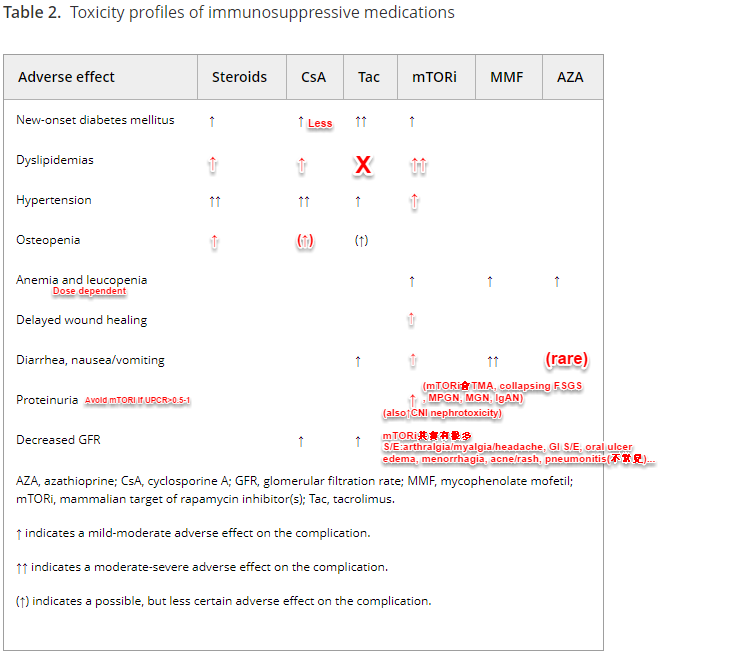

- Reference:Special Issue: KDIGO Clinical Practice Guideline for the Care of Kidney Transplant Recipients 2009